Automotive Supply Chain Consulting
P&C Global's Automotive Supply Chain Consulting
An automobile is the sum of tens of thousands of parts that must all arrive, and automotive supply chains became so good at arranging that miracle daily that the industry forgot what fragility feels like. Recent years reissued the lesson: one missing two-dollar chip can park a six-figure vehicle, and a supplier fire two tiers down can idle plants on three continents. Automotive supply chain consulting now carries a double mandate — keep the cost discipline a century of competition built, and add the resilience the coming decade demands — because a network optimized only for price has already determined where it is most vulnerable when disruption occurs.
P&C Global’s automotive supply chain strategy consulting was built where the network’s promises are kept or broken: supplier plants, ports, and the sales and operations planning (S&OP) room, across more than a decade of premium-automotive programs. Visage™ AI gives that experience its instrumentation — the multi-tier supplier map and the semiconductor and battery risk model run as living systems rather than annual studies — while the 4D Methodology stress-tests every network redesign before the network bets on it. The counsel we bring is an operator’s: which exposures deserve capital, which deserve contracts, and which deserve nothing but honest monitoring.
Automotive Supply Chain Challenges Facing Senior Operators
Automotive supply networks fail quietly before they fail loudly. The pressures that finally stop a line rarely announce themselves in the metrics leadership watches; they build in the tiers below the contracts, in planning seams between regions, and in concentrations everyone approved one sensible decision at a time. Serious automotive supply chain advisory exists to move those risks into view — priced, owned, and worked — while they are still cheap to fix. Sooner or later, each of the pressures below claims its hour at the supplier review, and the only remaining question is whether leadership addresses the issue proactively or during an operational crisis.

Just-in-Time Networks Run With Little Buffer
Just-in-time was the industry's proudest discipline: inventory measured in hours, parts arriving in sequence, working capital freed for better uses. The same design means the network holds almost nothing in reserve. A port strike, a border delay, or one supplier's bad week now reaches the assembly line at the speed of a truck schedule, because the buffers that would have absorbed it were engineered away on purpose. The saving showed up in every quarterly close; the fragility shows up all at once, on a day nobody chose.

Planning Split Across Plants & Regions
Most automotive networks plan in fragments: each plant its own demand picture, each region its own materials plan, and a monthly reconciliation that arrives too late to matter. The result is three versions of the truth and an expediting culture that ships urgency around the network instead of parts. Operators pressing for auto supply chain consulting often name planning first — maturity of the kind APS consulting builds in one plant while spreadsheets still run five others, so the network's left hand keeps promising what its right hand has already sold.

Scarce Automotive Supply-Planning Talent
The planner who understands semiconductors, battery chemistry, ocean freight, and a takt time is now one of the rarest profiles in the industry — and much of the generation that held the old network in their heads is retiring out of it. What leaves with them is not tool knowledge but judgment: which supplier's promise is real, which shortage is noise, when to break the plan. Planning systems without that judgment run precisely and wrongly, and every departure makes the next disruption a little harder to read.

Concentrated, Single-Source Critical Suppliers
Single-sourcing is rarely an accident; tooling economics, qualification cost, and volume leverage all argue for it, one component at a time. The concentration that results is discovered later — often when a map of tier-two and tier-three suppliers reveals that four rival vehicle programs share one casting house nobody at headquarters could name. The exposure usually traces to procurement strategy choices made a decade ago, when consolidation read as pure savings and the risk column simply was not on the sheet.

Chip, Battery & Raw-Material Supply Volatility
The inputs that now decide vehicle output are the ones automotive procurement grew up without. Semiconductors are allocated by fabs whose bigger customers outbid the industry; battery materials answer to mining timelines and trade policy rather than model cycles; and a lithium or nickel swing can move a program's economics between board meetings. These markets do not respect the industry's planning calendar — allocation seasons, price windows, and export rules arrive on their own schedule, and the network either preserves strategic flexibility or accepts unnecessary exposure.

Limited Visibility Across Multi-Tier Suppliers
Most automakers know their tier-one suppliers well, their tier-two suppliers barely, and their tier-three suppliers not at all — the map ends where the contracts end. Yet the disruptions of recent memory almost all began in that invisible territory: a resin plant, a wafer line, a wiring-harness cluster in a region suddenly at war. A network that cannot see below its first tier learns about its real dependencies from the evening news, which is the most expensive intelligence service there is.

Our Approach to Automotive Supply Chain Consulting
P&C Global’s automotive supply chain strategy consulting runs on two operating convictions: a network cannot be managed beyond the point it can be seen, and protection should never be funded beyond the point it can be priced. So we make the network visible to its third tier, price its exposures like the capital questions they are, and rebuild flow so continuity and cost discipline reinforce each other instead of trading places at every budget review.

Gauging Multi-Tier Auto Supply Risk & Cost
P&C Global maps the network as it is, not as the contracts describe it. The multi-tier supplier map is built down to the casting houses and wafer lines the purchase orders never mention, then crossed with the line-stoppage risk heat map so every dependency carries a number: days to stoppage, cost per idle day, time to recover. The advanced analytics behind the map matter less than what the map ends: the era of discovering a critical supplier by losing it.
Anchoring an Automotive Supply Chain Resilience Strategy
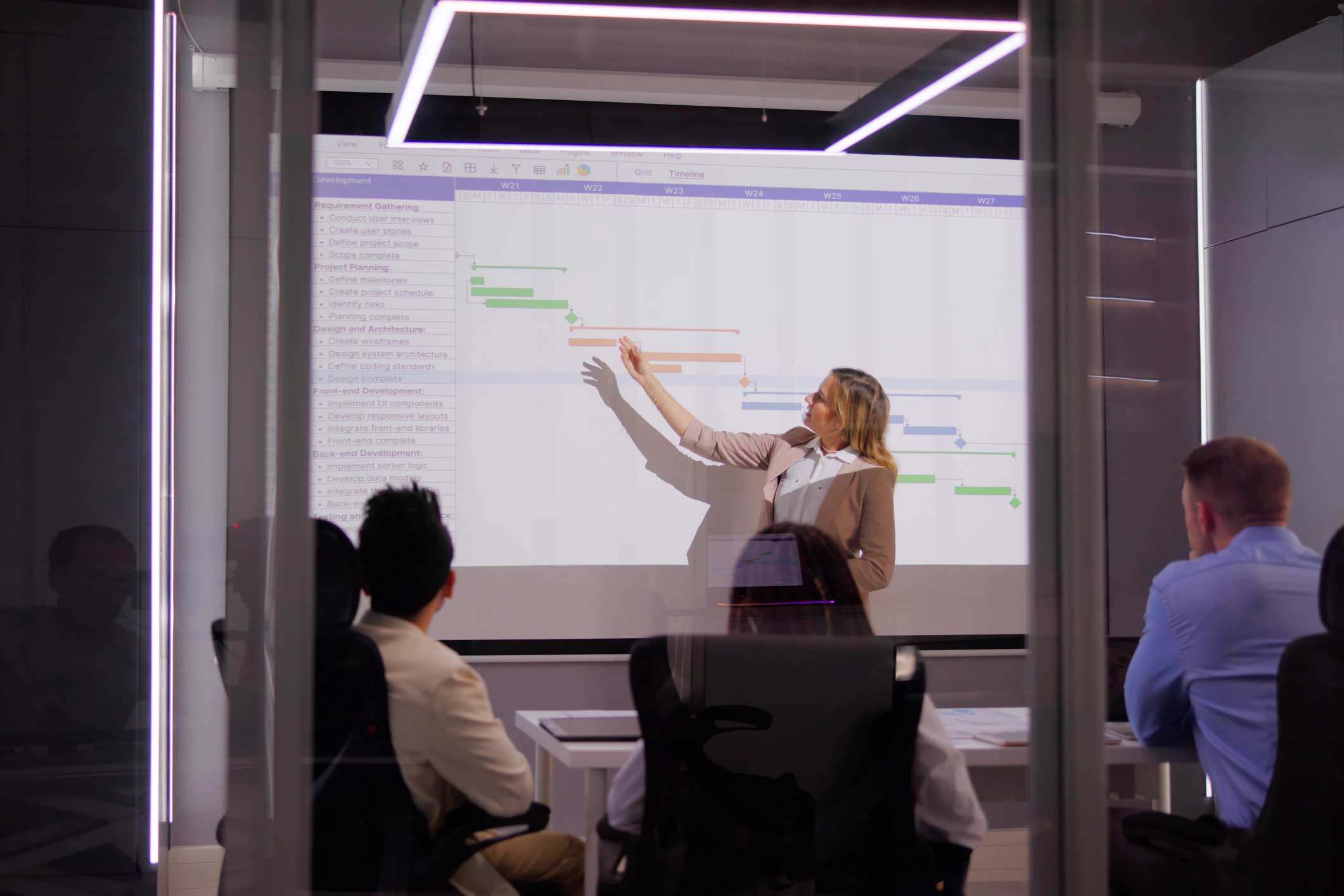
P&C Global sets the resilience strategy with the chief supply chain officer and confirms it where it will be enforced — the supplier review, with the COO and CFO at the table. The strategy sorts every mapped exposure into one of three honest categories: engineered out with capital, covered by contract, or knowingly carried. Risk appetite is set per vehicle program rather than network-wide, because a halo launch and a run-out model deserve different insurance, and pretending otherwise is how protection budgets get spent where the headlines are instead of where the exposure is.

Devising Resilient Auto Sourcing & Networks
Our supply chain resilience consulting then redesigns the flows the strategy singled out. The second-source list moves from aspiration to qualified reality, sourcing footprints are rebalanced where regionalization pays its way — and left alone where it merely feels safer — and inventory buffers are positioned according to quantified operational risk rather than precaution alone. Every candidate network runs first as a model, in the manner of digital supply chain work, so redesigns are rehearsed against the lead-time waterfall before a single contract or brick commits.

Executing Playbooks to Deliver Auto Supply Resilience
P&C Global turns the strategy into rehearsed response. Line-stoppage playbooks are written per critical dependency — who calls whom, which alternates activate, what the first seventy-two hours look like — and drilled with the plants rather than filed. Supplier development brings fragile but essential partners up to standard, the inventory plan repositions buffers where the heat map says they earn their carrying cost, and escalation rights are settled in advance, because the worst time to design a response is during the event it was for.

Replicating Resilience Across Vehicle Programs
One protected program proves the method; the portfolio pays for it. P&C Global codifies what the first program learned — mapping standards, qualification templates, playbook formats — and carries it across vehicle lines and regions so each program inherits resilience rather than rediscovering it. The standards are folded into existing operating discipline, including the standard work that lean manufacturing already enforces on the floor, so continuity practice rides cadences the organization respects instead of competing with them.

Embedding Auto Supply Efficiency, Risk Management & Continuity
The network's risk picture becomes a permanent instrument, not an engagement artifact. The S&OP cadence owns the refreshed heat map and the semiconductor and battery risk model; the supplier review reads concentration and recovery-time trends the way it has always read piece price; and buffer positions are re-earned annually rather than grandfathered. The return shows up as measurable production continuity supported by governance that continually validates the investment required to sustain it.
Outcomes Clients Can Expect
- Supply chain cost and working capital held to the discipline the industry expects, with buffer and dual-source spending justified line by line against priced exposure
- Vehicle launches and allocation seasons survived on plan — chip and battery supply secured before the ramp needs it, not negotiated during it
- Delivery promises the commercial organization can make with a straight face, and planners equipped with judgment-grade visibility instead of heroic spreadsheets
- A network visible to its third tier, with lead-time waterfalls, stoppage playbooks, and recovery paths rehearsed before they are needed
- Single-source concentrations reduced deliberately, continuity governed on the S&OP cadence, and the next disruption arriving as an agenda item rather than an emergency
Why Automotive Supply Chain Resilience Matters Now
The automotive supply base is being rewired in place, and the transition itself is creating new categories of supply chain risk. Electrification is swapping a century-old supplier pyramid for a new one — cells, power electronics, rare-earth motors — whose tiers are young and concentrated. Semiconductor content per vehicle keeps climbing while automakers remain minority customers of the fabs that make them. Trade policy is redrawing sourcing maps faster than qualification timelines can follow. All of it lands on a network still running just-in-time assumptions written for a calmer world. Operators bringing in auto supply chain consulting now act on a plain calculation: the next disruption is already somewhere in the network, and the only real question is whether it is on the map before it is on the news.
Strengthen the Automotive Supply Chain with P&C Global
A vehicle program is only as dependable as the least visible supplier in its network. Automotive supply chain consulting with P&C Global puts the entire network on one priced, stress-tested, living map — buffers where they earn, second sources where they matter — so cost discipline and continuity finally compound instead of competing.
Frequently Asked Questions — Automotive Supply Chain Advisory
P&C Global runs the network as one priced system — multi-tier map, stoppage economics, sourcing redesign, and plant-floor playbooks carried by a single accountable team — rather than as a strategy phase handed to an implementation phase. The field holds respected specialists across that spectrum. Clients typically keep us for the combination: premium-automotive formation, so the work is tuned to launch cadences and marque stakes rather than generic throughput; vendor neutrality across logistics providers, planning software, and data platforms; and consultants who stay through supplier drills, not just supplier assessments. The score that matters is the client’s own heat map trending quieter while cost stays honest.
By making both visible in the same ledger. Purchasing organizations are paid to win on piece price; plants live or die on continuity; and until stoppage risk carries a number, the piece-price argument wins every meeting because it is the only one with a spreadsheet. We give continuity its spreadsheet — priced exposure per sourcing decision — and adjust measures so a buyer who pays slightly more for a qualified second source is recorded as saving money, not spending it. Supplier relationships are rebuilt on the same footing: development and transparency for the partners the network depends on, rather than squeeze tactics that starve the exact suppliers whose failure costs the most.
Around the exposure that is actually live. An automaker fresh from a disruption needs recovery and redesign in the same motion — stabilize the line, then fix what let the event through. A company entering its EV ramp needs a new supply base mapped, qualified, and buffered before volume arrives. A tier-one supplier needs its own upstream network held to the standard its automaker customers now demand of it. Scope follows the exposure; in every configuration the map, the models, and the playbooks are built for the client’s planning organization to run as our involvement steps back.
Additional Sectors in Manufacturing Industry
Success Stories
A dynamic showcase of P&C Global’s transformative engagements and the latest industry trends.
Demonstrated Outcomes. Significant Influence.
Witness the remarkable achievements we’ve enabled for ambitious clients.