
Commercial Real Estate Sustainability Consulting
P&C Global’s Commercial Real Estate Sustainability Consulting Services
Sustainability targets only create value when they are effectively translated into governed, asset-level action across the portfolio. P&C Global’s commercial real estate sustainability consulting services support owners and operators with execution-led leadership, clear decision rights, and practical delivery models that align internal teams, vendors, and tenants around shared outcomes. We establish governance that connects strategy to capital planning, operations, and reporting—providing the structure needed to manage trade-offs, sustain momentum, and ensure sustainability initiatives remain accountable, resilient, and embedded in day-to-day asset management as market conditions evolve.
As climate and energy priorities increasingly influence investment decisions, leaders need a practical way to convert ambition into portfolio actions that withstand scrutiny. Our commercial real estate sustainability consultants apply an end-to-end framework that establishes clear decision models, aligns targets to asset and tenant realities, and defines the governance required to execute at scale. Capital planning, incentives, and operating budgets are integrated through a sequenced funding roadmap—enabling disciplined trade-offs, sustained delivery, and measurable outcomes across the portfolio.
Industry Challenges Facing CRE Leaders
Leadership teams increasingly find that decision-making slows as operating conditions shift faster than internal alignment can keep pace. Volatile energy costs, rising sustainability expectations from tenants and stakeholders, and uneven confidence in asset-level performance data complicate ROI judgments and delay commitment, even when the need to act is evident. Differences in building condition, system age, and data maturity across portfolios further fragment priorities across leasing, asset management, development, and finance, creating inconsistent definitions of feasibility, risk, and return. Layered governance—shaped by regulatory scrutiny, disclosure obligations, and risk oversight—then compounds the challenge, as concerns over disruption, compliance exposure, and reporting credibility leave critical decisions caught between committees and incomplete information.

Energy-Price Volatility & Retrofit Financing Constraints Complicating ROI
Utility costs swing quarter to quarter, forcing repeated rework of retrofit pro formas as power and gas assumptions shift, while lenders and capital committees tighten terms that make paybacks harder to underwrite. Approvals stall and execution becomes uneven across assets, amplified by inconsistent hurdle assumptions, fragmented ownership of measurement and verification, and misaligned approaches to capital allocation and tenant cost recovery.

Tenant ESG Expectations & Green-Lease Pressure Raising Reputational Risk
Leasing teams increasingly face tenant RFPs and renewal negotiations that require measurable sustainability commitments, data transparency, and green-lease provisions. Across many portfolios, asset-level metering, vendor reporting, and legal positions remain inconsistent, creating friction between ambition and execution. Heightened reputational exposure and deal complexity follow, compounded by unclear ESG decision rights, non-standard lease language, fragmented data governance, and under-aligned operating and CAPEX planning.

Building-System Age & Diverse Asset Vintages Limiting Retrofit Feasibility
Across mixed portfolios, teams encounter incompatible controls, undocumented sequences, and equipment approaching end of life, complicating efforts to standardize retrofit scopes and validate savings assumptions asset by asset. Uneven execution, budget overruns, and stalled timelines follow, reinforced by the absence of portfolio-level decision rules for repair versus replacement, inconsistent funding and approval thresholds, and the lack of a repeatable retrofit playbook.

Regulatory Change, Disclosure Rules, & Audit Raising Compliance Exposure
Teams spend increasing time reconciling tenant and asset data across leasing, property management, and finance systems to respond to expanding disclosure and audit requirements. Manual processes introduce version-control issues and inconsistent narratives, driving higher compliance costs and elevating the risk of audit findings—amplified by unclear ownership of reporting, fragmented control frameworks, and inconsistent data standards and operating cadence.
Retrofit Disruption Risk To Occupancy & Service Levels During Construction
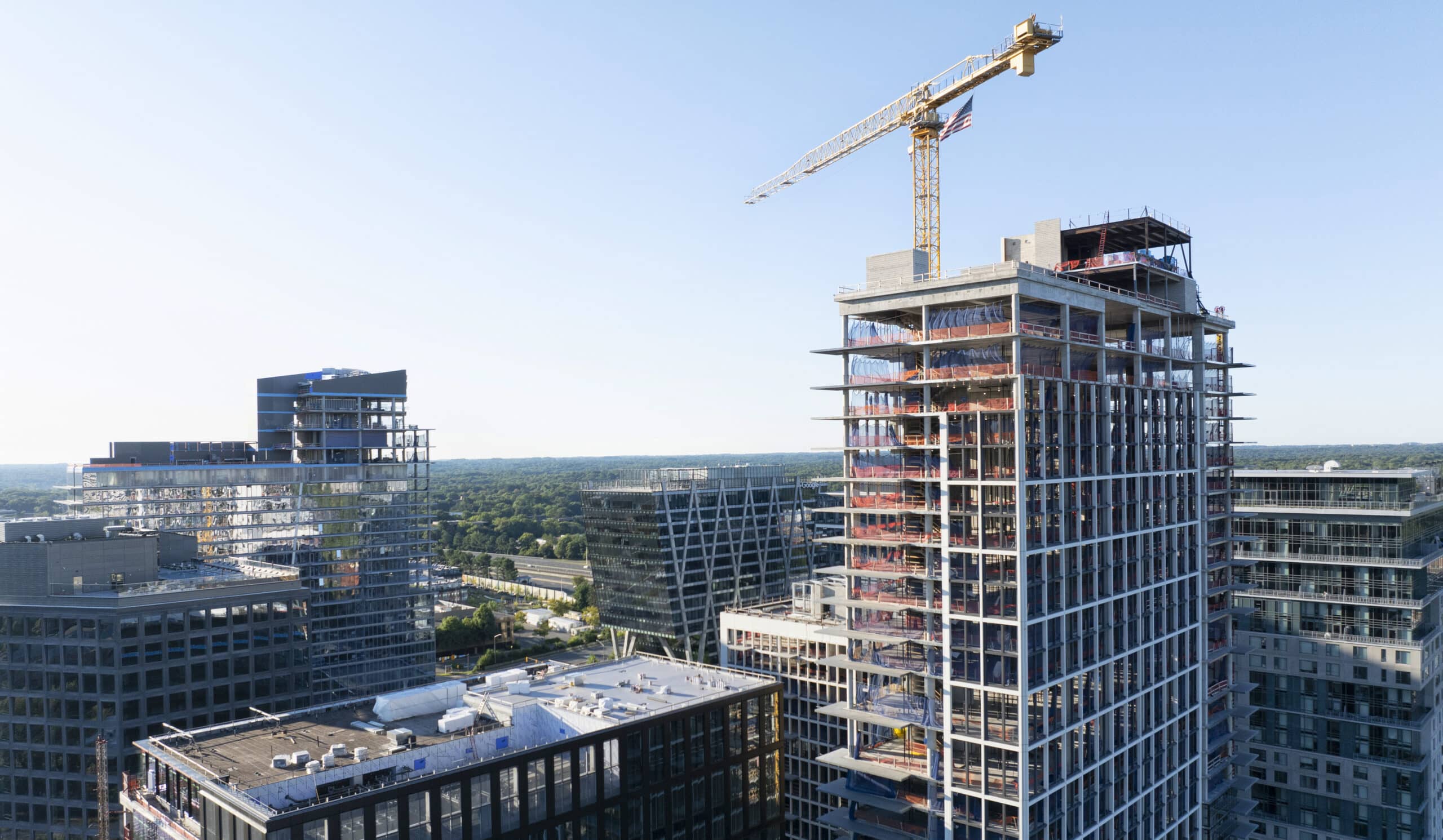
Tenants and on-site teams feel the impact when retrofit work introduces after-hours noise, intermittent HVAC and elevator shutdowns, and shifting construction zones that complicate security, deliveries, and life-safety routes. Without consistent phasing, communication, and escalation discipline, disruption intensifies—creating lease friction, service degradation, and unplanned cost exposure across affected assets.

Emissions Metering Gaps & Inconsistent Carbon Data Eroding Reporting Trust
Portfolio teams reconcile tenant submeter reads, utility bills, and manual spreadsheets that often fail to align by asset boundary, time period, or emissions factor, triggering repeated restatements of reported figures. Delayed disclosures, higher audit and assurance effort, and misaligned CAPEX decisions follow—compounded by unclear data ownership, inconsistent metering and estimation standards, and weak change control over carbon-accounting assumptions.
Our Approach to Commercial Real Estate Sustainability Consulting
We translate sustainability ambition into consistent delivery through an execution-led approach grounded in clear accountability from day one. Our commercial real estate sustainability consulting establishes the governance, decision rights, and operating model required to align owners, operators, and asset teams across the portfolio. A disciplined KPI cadence connects portfolio-level targets to asset-level action, enabling transparent performance tracking, timely escalation, and course correction. Benefits realization is managed as a core discipline, with defined outcomes, ownership, and timelines to ensure progress is sustained across assets and tenant-facing initiatives.

Portfolio ESG Baseline & Energy Performance Diagnostic
We establish a portfolio-wide view of sustainability performance by consolidating asset-level utility, emissions, and operational data, then diagnosing energy drivers and ESG gaps across property types and tenant profiles. The approach produces a baseline scorecard, asset heatmap, and prioritized opportunity register—supported by defined KPIs, reporting cadence, and governance controls—to guide implementation and track progress toward verifiable performance improvement.

Target-Setting Aligned to Regulations, Tenants, & Investors
We convert compliance obligations, tenant requirements, and investor expectations into clear, asset-level targets and decision rules applied consistently across the portfolio. A structured target-setting framework, defined KPIs, and a disciplined governance cadence—covering ownership, controls, and reporting—support execution and enable sustained, auditable performance improvement.

Retrofit & Decarbonization Roadmap With Investment Sequencing
We convert audit insights and asset constraints into a portfolio-ready retrofit strategy that sequences no-regrets actions, aligns capital deployment with lease events and major works, and defines electrification and low-carbon heat pathways at the building level. Execution is guided by a structured roadmap, integrated CAPEX/OPEX economics, and defined delivery charters—underpinned by governance that sets milestones, performance metrics, and change control from design through commissioning and ongoing verification.

Data, Metering, & Reporting Architecture for ESG Disclosure
We establish a portfolio-wide data and metering framework that aligns utility, submeter, and tenant data with ESG disclosure requirements and asset-level operating realities. Standardized reporting architecture, consistent data definitions, and a complete inventory of meters and data sources are governed through a defined KPI and control cadence—enabling reliable collection, validation, and exception management across the portfolio.

Program Governance, Vendor Strategy, & Implementation PMO
We put in place clear decision rights, align internal teams and external partners, and stand up coordinated delivery governance to manage workstreams across the commercial real estate portfolio without disrupting ongoing asset operations. The approach is supported by a defined governance charter, role clarity, vendor selection and contracting standards, and an integrated program plan—reinforced through risk and issue management, KPI dashboards, and regular operating cadences with stage-gate controls and performance reviews to maintain scope, schedule, and outcome discipline.

Performance Tracking & Continuous Optimization of Initiatives
We embed CRE-relevant KPIs and data capture across leasing, operations, and capital projects, then monitor performance to surface variances and optimization opportunities. Execution is supported by integrated KPI dashboards and initiative scorecards, governed through a defined operating cadence—weekly execution reviews, monthly portfolio readouts, and quarterly steering checkpoints—with clear ownership and controls to sustain execution discipline and drive measurable performance improvement.

Outcomes Clients Can Expect
- Enhanced reputation through target-setting aligned to regulatory requirements, tenant commitments, and investor expectations
- Disciplined, sequenced capital deployment guided by a portfolio-wide sustainability roadmap that aligns energy, resource efficiency, and environmental compliance with investment timing.
- Audit-ready disclosure posture supported by a governed reporting architecture and defensible data standards
- Stable tenant experience during retrofits maintained through coordinated delivery oversight, vendor strategy, and execution governance.
- Trusted portfolio reporting driven by continuous tracking, variance management, and ongoing optimization of initiatives
Why CRE Sustainability Consulting Matters Now
Regulatory expectations, tenant requirements, and lender scrutiny have intensified, making sustainability performance a core operating requirement across real estate portfolios. Delayed action increases exposure to compliance costs, stranded-asset risk, and missed opportunities to protect net operating income. P&C Global’s commercial real estate sustainability consulting brings execution discipline to this challenge—establishing clear ownership, KPI-led oversight, and a structured reporting cadence that translates ambition into measurable progress. Leaders who act decisively can set direction, align stakeholders, and deploy capital with confidence before regulatory, financial, and operational constraints narrow available options.
Strengthen Commercial Real Estate Sustainability with P&C Global
P&C Global engages CRE industry leaders through trusted introductions and long-standing relationships to strengthen commercial real estate sustainability and generate sustained, measurable performance across portfolios.
Frequently Asked Questions — CRE Sustainability Advisory
P&C Global helps commercial real estate leaders address sustainability challenges where investment uncertainty, tenant expectations, and portfolio complexity intersect. These challenges often include prioritizing sustainability investments amid volatile energy costs and constrained retrofit funding, managing rising tenant and green-lease requirements, and avoiding reputational or leasing risk when performance and reporting vary across assets. Our commercial real estate sustainability advisory services address these issues by establishing clear governance, decision rights, and an execution-led roadmap that accounts for aging building systems and mixed asset vintages, ensuring retrofit choices are feasible and aligned to asset strategy. We provide hands-on program leadership to coordinate owners, operators, engineers, and tenant stakeholders, guiding initiatives from business case through delivery and ongoing performance management.
Execution starts with closing the metering and carbon-data gaps that undermine disclosure confidence, by standing up a fit-for-purpose data, metering, and reporting architecture with clear data owners, validation rules, and audit-ready workflows. As Commercial real estate sustainability consultants, P&C Global mobilizes a delivery team and implementation PMO that assigns accountable owners across asset management, property operations, and vendors, then runs a governance cadence where progress, risks/issues, and change requests are reviewed and decisions are made. Stage gates tie each initiative to measurable outcomes, with vendor performance and site readiness assessed before scaling across the portfolio. Ongoing performance tracking and continuous optimization keep initiatives on track, ensure benefits realization, and prevent sustainability plans from stalling after design.
P&C Global helps commercial real estate leaders move faster by turning tenant sustainability demands and tightening disclosure requirements into clear hypotheses, then testing them through controlled pilots tied to specific asset and portfolio outcomes. We establish an ESG baseline and energy-performance diagnostic to pinpoint where innovation will reduce compliance exposure and reputational risk, and we define scaling criteria up front so only solutions that meet performance, cost, and operational thresholds expand across the portfolio. A sequenced retrofit and decarbonization roadmap provides execution accountability, with governance that clarifies decision rights, funding gates, and audit-ready documentation to prevent drift as initiatives scale. This approach accelerates innovation while keeping delivery disciplined, measurable, and aligned to portfolio priorities.
P&C Global measures success in commercial real estate sustainability engagements by first establishing a defensible baseline at the asset and portfolio level, closing emissions-metering gaps and reconciling inconsistent carbon data so reporting is trusted. We then define a KPI set aligned to the operating plan—such as energy use intensity, Scope 1 and 2 emissions, renewable energy progress, water and waste performance, and tenant participation—and track variance to plan through an agreed governance cadence, supported by a program PMO and vendor performance reviews. When results deviate, root-cause analysis is used to adjust sequencing, update accountabilities, and reprioritize initiatives. Sustained KPI improvement, reduced data exceptions, and predictable delivery against the sustainability roadmap demonstrate continuous optimization across the portfolio.
P&C Global integrates emerging technologies into commercial real estate sustainability by grounding technology decisions in a trusted portfolio baseline and clear sustainability objectives, rather than leading with tools. Technologies are selected and governed based on their ability to improve performance, reporting confidence, and capital efficiency within existing operating and data environments. Where AI is used, responsible governance and human oversight ensure outputs can be relied on for investment and compliance decisions. Deployment is sequenced within the broader decarbonization and asset strategy to limit disruption to tenants and operations. Success is measured through sustained improvements in energy, emissions, and asset performance, with leadership retaining clear visibility and control over outcomes.
Resilience is built into long-term decarbonization strategy by stress-testing the roadmap against energy-price swings and financing constraints that can change retrofit ROI, then defining decision triggers that adjust sequencing and capital allocation. Plans also account for mixed building-system ages and asset vintages by setting flexible pathways—ranging from low-disruption operational measures to targeted equipment upgrades—so feasibility is maintained across the portfolio. Governance is anchored in targets that stay aligned with evolving regulations, tenant requirements, and investor expectations, supported by a durable data, metering, and reporting architecture for credible ESG disclosure. Repeatable routines—regular performance reviews, variance analysis, and continuous optimization—keep initiatives on track while enabling timely course corrections.
More in CRE Strategy & Innovation
Success Stories
A dynamic showcase of P&C Global’s transformative engagements and the latest industry trends.
Demonstrated Outcomes. Significant Influence.
Witness the remarkable achievements we’ve enabled for ambitious clients.

Enhancing Brand Experiences with Integrated Retail Partnerships
Evolving Property Management into an Integrated Services Platform
Streamlining Property Service Requests with Digital Innovation