FinOps Consulting

P&C Global's FinOps Consulting Services

The FinOps decision in front of leadership has shifted from a tooling-led optimization exercise to a unit-economics conversation the CFO now owns. FinOps consulting addresses a more strategic question than most cloud finance teams were set up for: how the cloud bill maps to product margin, where reserved-capacity coverage is eroding efficiency, and which team owns the variance when AI workload demand swings the forecast. The result has to be a defensible cloud unit cost baseline, a showback model engineering trusts, and forecast discipline the audit committee can evaluate with confidence — rather than a recurring variance issue identified after the reporting cycle.

P&C Global’s FinOps consultancy establishes unit-economics discipline for the CFO who has been carrying unattributed cloud variance — not a tooling dashboard the platform team alone maintains. The initial diagnostic evaluates where allocation rigor, commit coverage, and forecast discipline diverge from the business trajectory. The split is often unattributed spend hiding behind tagging gaps, or AI workload volatility overwhelming the existing showback model. The outcome is sustained unit-cost discipline, accountability, and forecast outcomes the executive team can defend across the rollout. Six decisions move in sequence between those bookends: diagnose, define, model, roadmap, govern, measure. Each is tied to measurable operating baselines leadership has committed to protect.

FinOps Challenges Facing CFOs

Hyperscaler renewal pricing and AI workload demand have elevated FinOps to a board-level issue this cycle, rather than a procurement-led optimization exercise. The pressures are increasingly familiar across enterprise cloud estates. Cloud spend variance widens when reserved-capacity coverage drifts. AI workload demand outruns the forecast model. Showback and chargeback reporting reaches the business units a quarter after the over-commit landed. Reserved and savings-plan coverage gaps drive avoidable on-demand burn. Telemetry and tagging inconsistency erodes confidence in the cloud signal. Accountability for variance sits between platform, finance, and product without clear operational ownership. FinOps consultancy work that holds up under this load integrates unit-economics discipline in the management cycle the CFO already runs.

Two professionals discuss organizational strategy consulting while looking at a laptop in an office.

Cloud Spend Variance Compressing CFO Confidence

Engineering velocity outpacing cost accountability is the friction most CFOs feel before any other cloud cost issue. Product delivery cycles now move faster than finance attribution models. Variance widens on the monthly close. Cloud spend becomes a financial exposure the CFO defends without owning the inputs that drove it — autoscaling behavior and workload spikes and autoscaling thresholds often turn out to be the real drivers. The accountability gap, not the absolute spend, is what weakens confidence in the forecast.

Two organizational strategy consultants in suits discuss documents at an office desk with laptops.

Reserved-Capacity Overcommit Draining Working Capital

Cloud cost inflation and variable pricing push the reserved-capacity decision into the foreground. Overcommitment absorbs working capital while under-commit leaves on-demand premium on the table. Reserved-capacity coverage that appeared appropriate at the time of commitment drifts as workloads migrate between landing zones. The lock-in question sits next to a broader cost reduction decision the executive team has yet to land.

Man discussing organizational strategy consulting services with two colleagues at a conference table

Showback & Chargeback Fragmenting Across Business Units

Account, tag, and service sprawl fragments cloud cost attribution. Showback rollups handed to the business no longer reconcile cleanly to engineering activity they are meant to describe. Tagging discipline — the labels that tell finance which team owns which spend — drifts across product lines, and untagged resources accumulate in shared accounts. Chargeback discussions then devolve into disputes over attribution well before it becomes the budget conversation leadership actually needs.

Two businesspeople discuss Law Firm CRM Consulting in a bright office hallway.

AI Workload Cost Volatility Stalling Forecast Discipline

Reserved and savings-plan coverage gaps driving avoidable on-demand burn is most visible in AI workloads. GPU utilization drives significant cost variability in ways the forecast model was never built to carry, and inference demand spikes outside the modeled forecasting ranges. The same volatility drives most demand for cloud consulting advice on workload placement and committed-spend strategy.

Man presenting Law Firm CRM Advisory to three colleagues in a meeting room with laptops.

Forecast & Telemetry Obscuring Unit Economics

Cost-telemetry and tagging inconsistency hides waste behind dashboards that appear comprehensive but cannot support the unit-economics view product owners are now asked to manage. Cost-allocation rules reconcile to a different number than the engineering chargeback. Anomalies surface late. Inconsistent tagging conventions compounds the gap, and the forecast model becomes a reporting exercise rather than an operational management tool rather than a tool operating teams use to steer spend.

Two interviewers discuss Law Firm CRM Consulting Services with a candidate in a bright office.

Vendor Lock-In & Commit Risk Exposing the Roadmap

Fragmented FinOps ownership without clear operating governance is the third constraint pulling on the program, alongside coverage exposure and forecast volatility. Multi-year commits, sole-source clauses, and proprietary pricing models constrain architectural flexibility in places the platform team had not flagged as strategic. Vendor renewal cycles begin to dictate the technology roadmap rather than the other way around.
Our Approach to FinOps Consulting

Each phase of P&C Global’s FinOps approach produces the operating evidence the executive team needs to commit to the next decision — a defensible spend baseline, an accountability model engineering trusts, an allocation rule set the CFO underwrites. Each stage is tied to measurable financial and operating outcomes leadership commits to defend. The maturity and spend baseline is established before accountability principles are defined. The unit-economics model is defined before the capability roadmap is sequenced. Commit governance and the operating calendar are settled before forecasting and unit-cost reporting are integrated in executive reporting. Senior FinOps consultants from P&C Global lead each stage alongside the client’s finance, platform, and product leaders.

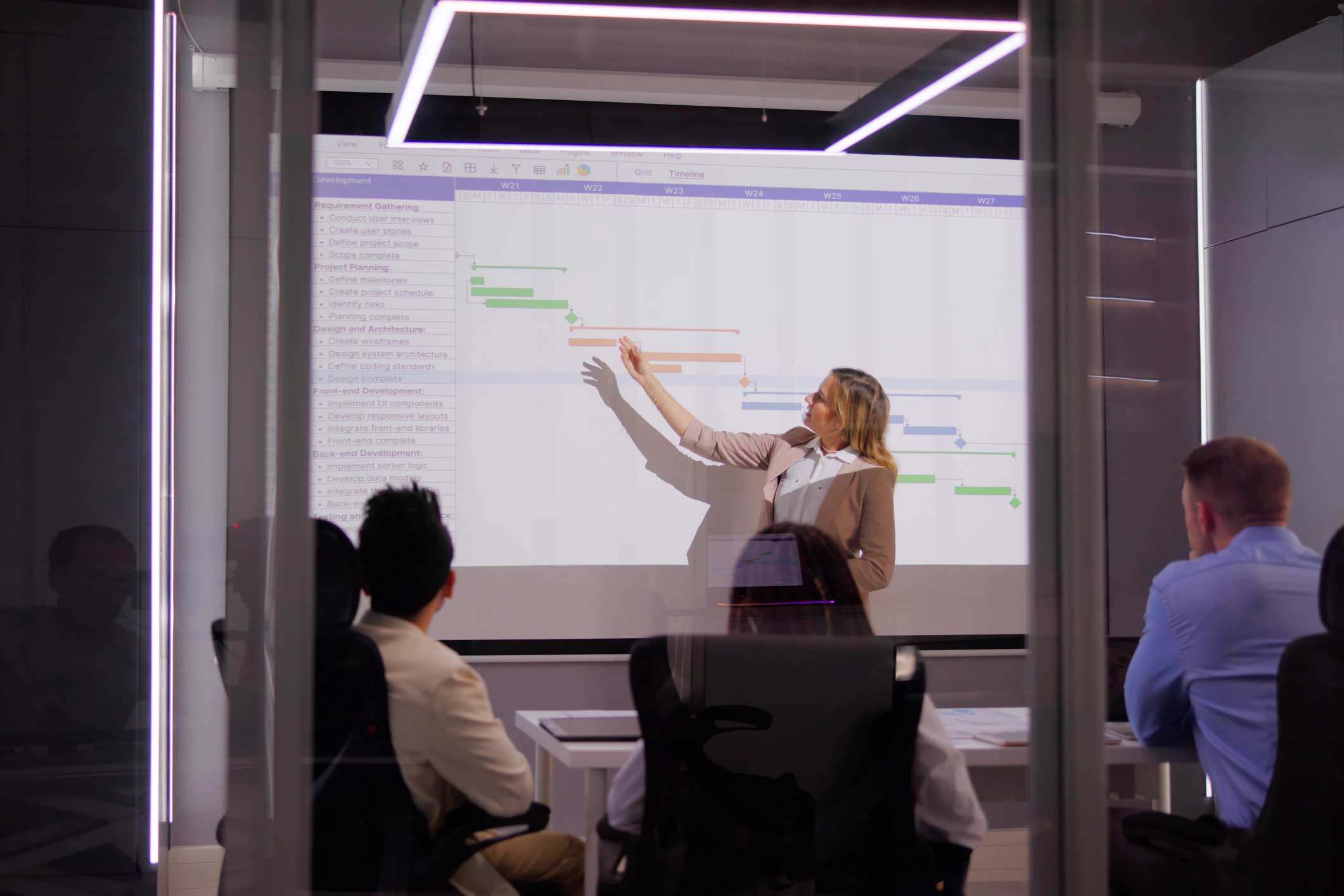
Woman presenting a Gantt chart on CAL Model Optimization to colleagues in a modern conference room.

FinOps Maturity Diagnostic & Spend Baseline

A FinOps maturity diagnostic opens the engagement, identifying allocation gaps, how reserved-capacity coverage tracks against actual consumption, and where accountability gaps are creating financial inefficiency. Reserved-capacity coverage and tagging accuracy are scored against the cost data the CFO already reviews. The diagnostic is integrated into the broader IT governance cycle the C-suite runs, so cloud cost lands inside the management cycle rather than beside it.

Smiling team members brainstorming TAR Training ideas with colorful sticky notes on a glass wall.

Cloud Unit-Economics Architecture

Operating principles follow the diagnostic. FinOps operating principles and the accountability framework are refined before any chargeback model goes live. Product-team ownership boundaries, platform-team service rates, and finance-side allocation rules converge into a small set of principles leadership applies consistently as exceptions emerge. The same principles also guide engineering decisions when tagging exceptions are requested mid-quarter.

Four people discuss eDiscovery data management around a table in a modern meeting room.

Workload, Cost & Tagging Modeling

Modeling turns principles into where each cost lands, how workload costs are allocated, and what forecast ranges and exposure levels look like. Allocation, showback, and forecast models are built end-to-end. GPU utilization, recovery-window costs, and reserved-capacity coverage targets are formally defined. Paired with operational excellence, the model carries unit-economics insight to operating teams rather than trapping it in a dashboard.

Two men in business attire discuss Cross-Matter Intelligence at a desk with notebooks and a tablet.

FinOps Operating Calendar & Roadmap

Sequencing and rollout planning follow. The FinOps capability roadmap and tooling activation plan are finalized locked. Each capability is sequenced by dependency, readiness gates are named per business unit, and go-live dates are assigned to the product owner who carries the budget. Rollback paths are agreed before each capability moves into the management cycle, so the rollout can absorb revisions without disrupting sequencing.

Three people smiling at a computer, exploring NLP Workflow Automation in an office setting.

Commit, Pricing & Reservation Governance

Implementation governance, tagging discipline, and approval workflows anchor commit and reservation governance. Purchase approvals, tagging audits, exception reviews, and renewal forecasts operate within a unified governance calendar. Where commit timing drives architecture choices, FinOps integrates with IT modernization sequencing so the reservation strategy and the platform roadmap remain aligned rather than conflicting during renewal cycles.

Cost, Forecast & FinOps Outcomes

Measurement closes the loop. Once the operating cadence is established, unit economics, coverage, and FinOps outcome tracking are integrated into the operating-review process the C-suite enforces. Unit cost by product, committed-use efficiency, and forecast variance are shared across finance, engineering, and product through a unified reporting model. Operational improvements begin to materialize during the engagement itself, not in a later operational phase.


Outcomes Clients Can Expect

  • Stronger cloud unit cost and committed-use efficiency matched to actual business demand rather than locked against a stale forecast.
  • Sharper product-team accountability for the unit economics on customer-facing workloads as showback and chargeback land at the operating review.
  • Higher engineering-team confidence in the cloud cost signal because tagging, allocation, and the forecast model finally reconcile.
  • Improved forecast accuracy and chargeback adoption across business units as the management cycle absorbs cloud spend the way it already absorbs CapEx.
  • Cleaner reserved-capacity exposure and budget-variance discipline as commit governance moves into the renewal calendar the CFO defends.

Why FinOps Matters Now

Cloud-cost volatility and hyperscaler renewal pricing have reshaped the FinOps agenda across two budget cycles. Cloud cost is no longer treated as an IT-led optimization exercise — CFOs now own the unit-economics conversation, and the operating model is evolving accordingly. Hyperscaler price changes and reserved-capacity renewals this cycle have widened the gap between committed spend and actual consumption for most enterprises, placing renewal terms under tighter scrutiny than the prior cycle’s commitment terms ever were. The FinOps Foundation’s most recent State of FinOps report shows many programs still leave a substantial portion of cloud spend unattributed at the team level. AI workload spend has become the fastest-growing and hardest-to-forecast category, breaking the showback assumptions FinOps consulting services were originally designed around.

Sequence FinOps with P&C Global

P&C Global scopes FinOps consulting, to establish unit-economics discipline, and forecast accuracy leadership can evaluate in real time — rather than through retrospective quarterly reconciliation.

Frequently Asked Questions — FinOps Advisory

Success Stories

A dynamic showcase of P&C Global’s transformative engagements and the latest industry trends.

Demonstrated Outcomes. Significant Influence.

Witness the remarkable achievements we’ve enabled for ambitious clients.

turkishcargo white

Integrating Capabilities to Drive Air Cargo Excellence

Client Outcomes Listing
Further Reading
Beko white

Strengthening Brand Awareness Through High-Impact Sports Sponsorships

Client Outcomes Listing
Further Reading
Board Executives

Enhancing Brand Experiences with Integrated Retail Partnerships

Client Outcomes Listing
Further Reading
amadeusitgroup white

Transforming Air Travel with NDC and Personalized Offers

Client Outcomes Listing
Further Reading

Our Insights

Research & Insights
From Occupancy to Affiliation: The New Economics of Luxury Hospitality
Further Reading
Research & Insights
AI Agents & Autonomous Workflows: Redesigning Enterprise Execution
Further Reading
Research & Insights
Aviation Strategy: Turning Constraints into Advantage
Further Reading
By using this website, you agree to the use of cookies as described in our Privacy Policy