
Culture Transformation Consulting
P&C Global's Culture Transformation Consulting Services
Culture transformation consulting matters most when leadership teams stop treating engagement scores as proof of progress and start asking whether organizational behavior is changing in the moments that materially affect performance. Executives reviewing transformation programs today are less interested in refreshed value statements than n whether leaders are reinforcing a defined set of behaviors consistently across decision-making, escalation management, customer commitments, and day-to-day operations. P&C Global combine operator-led diagnostics with leadership reinforcement, ritual redesign, accountability structures, and recognition-system alignment to embed new ways of working into how the enterprise actually operates under pressure.
What executive teams typically need from this work is not a new aspiration statement, but clarity around a more practical set of decisions: which leadership behaviors the organization will reinforce, which operating rituals need redesign, where incentives and consequences must change, and how progress will be measured beyond annual engagement surveys. As a culture transformation consultancy, P&C Global guides organizations from behavioral baseline assessment through target-state definition, intervention design across leadership systems and workplace norms, manager enablement, and ongoing measurement that demonstrates whether the change has taken hold. The result is an operating environment that sustains new behaviors through successive operating cycles rather than reverting once communications campaigns and launch initiatives fade.
Culture Transformation Challenges Facing Executives
C-suite leaders engaging a culture transformation consulting firm consistently encounter a similar set of pressures, though they rarely resemble the traditional model of cascading values statements across the enterprise. Workforce expectations evolve faster than legacy operating norms can adapt. Customer expectations increasingly outpace internal behaviors and decision-making practices. Acquisitions introduce competing management styles and workplace dynamics that weaken organizational cohesion. Variability in frontline leadership slows adoption of new behaviors, while employee-feedback systems often provide signals too delayed or incomplete to support timely intervention. At the same time, performance management, recognition structures, and operating cadence frequently continue reinforcing the very behaviors leadership intends to change.
These recurring conditions — shifting workforce expectations, customer-driven behavior gaps, post-merger fragmentation, inconsistent leadership practice, weak organizational feedback loops, and misaligned reinforcement systems — explain why many culture programs struggle to sustain measurable behavioral change over time.
Workforce Expectations Outpacing Legacy Norms & Talent Retention
Talent-market have evolved materially faster than many enterprises’ established management norms and operating practices. Flexibility, purpose, development opportunity, and leadership transparency increasingly shape retention and engagement decisions across the workforce. Tensions between stated values and day-to-day employee experience become most visible when leadership teams cannot point to specific management behaviors that demonstrate the organization’s intended direction.

Customer Expectations Exheeding Internal Behaviors
Customer expectations increasingly move faster than internal decision-making and service behaviors can support. Customer experience demands outpacing internal behavior and mindset change show up as service-recovery failures and teams stuck behind policy that punishes judgment. Culture transformation consulting services identify these gaps which trace back to decision rights within organizational design.

Sub-Culture Fragmentation Diluting Brand Identity & Integration Value
Acquisitive growth frequently leaves organizations managing multiple operating norms, leadership styles, and workplace expectations simultaneously. Over time, fragmented ways of working weaken organizational alignment, slow integration progress, and erode the value creation expected from acquisitions. Legacy rituals and inherited practices often remain unresolved, requiring leadership teams to determine which behaviors should scale across the enterprise, which should retire, and which require deliberate integration.

Leadership Variability Slowing Adoption of New Cultural Norms
The lived operating culture is set by the front-line manager, not by the C-suite memo. Variability in leadership practice often determines whether new behaviors become embedded or remain isolated to executive messaging. Organizations typically see these inconsistencies emerge through uneven coaching quality, differing management standards, and employee experiences that vary significantly across teams performing similar work.

Engagement Telemetry Gaps Limiting Diagnostic & Decision Confidence
Annual engagement surveys are not telemetry, and most C-suite leaders now know it. Weak workforce signals typically appear through delayed feedback, inconsistent participation, fragmented listening mechanisms, and limited visibility into behavioral trends as they emerge. Without stronger pulse measurement, qualitative listening, and operational indicators tied directly to leadership reviews, organizations struggle to identify cultural drift before performance consequences become visible.

Reinforcement Systems Misaligned with Culture-Strategy
Cultural ambitions lose momentum when operating systems continue rewarding prior behaviors long after leadership has announced new priorities. Misalignment often becomes visible in promotion criteria, recognition structures, executive scorecards, and meeting cadence that continue reinforcing legacy operating norms. Sustainable behavioral change requires the organization’s management systems, incentives, and operating rhythms to consistently reinforce the future-state behaviors leadership expects to scale.
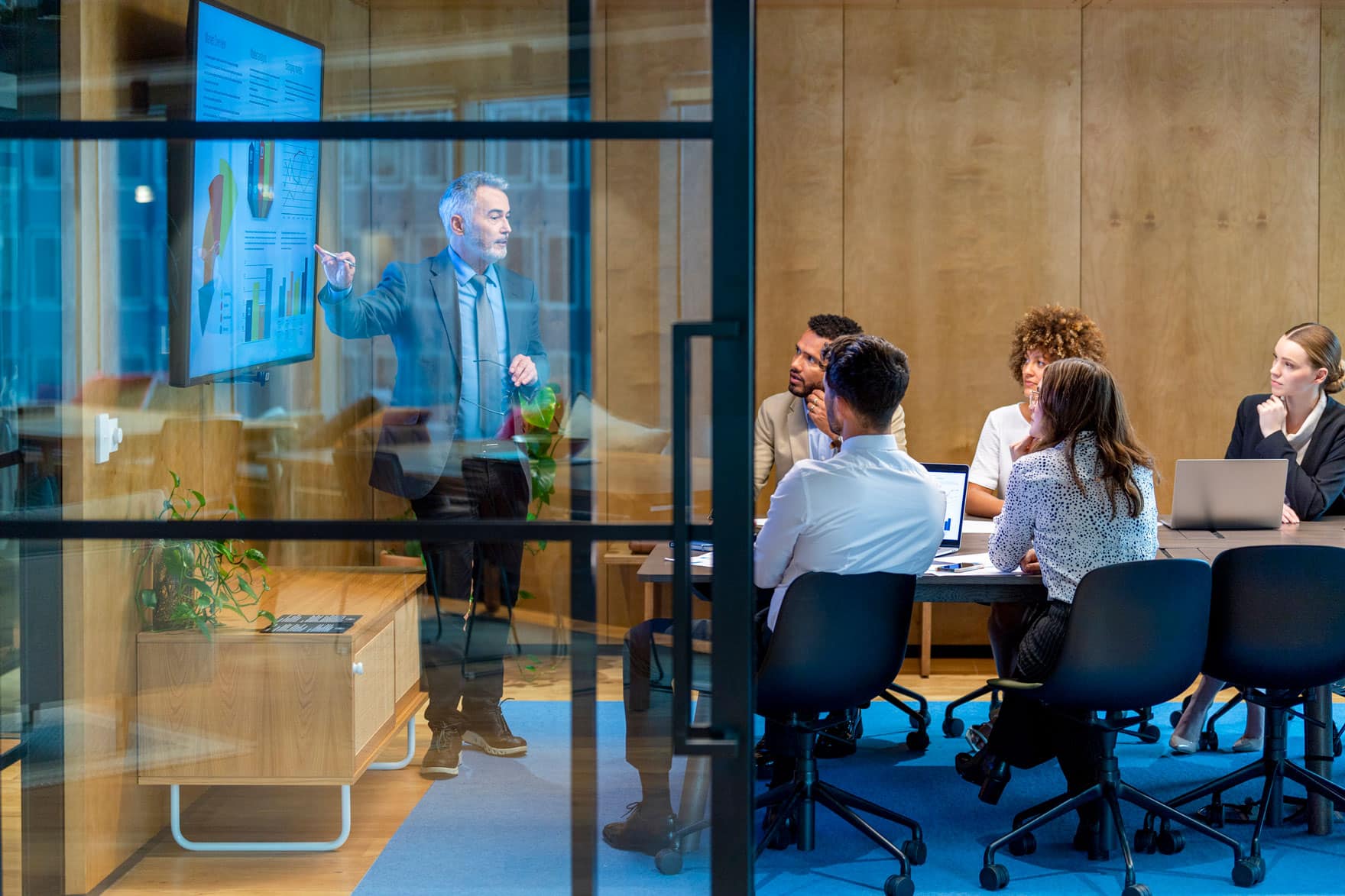
Our Approach to Culture Transformation Consulting
C-suite leaders engaging a culture transformation consultancy need more than messaging campaigns or enterprise-wide value statements. They require a structured program that translates leadership intent into measurable behavioral change sustained through operating cadence, management practice, and organizational accountability. P&C Global structures culture transformation consulting around six integrated decisions executed in sequence: establish the lived-culture baseline before defining target behaviors; align the target culture to business strategy before redesigning rituals and operating systems; finalize intervention design before sequencing activation; then activate the manager reinforcement loops, communication cadence, and measurement systems that sustain the program through rollout and scale. Each stage is tied to an executive decision, a measurable baseline, and a defined operating outcome leadership agrees to reinforce over time.
Culture Diagnostic & Behavioral Baseline
The engagement begins with a culture diagnostic and behavioral baseline that establishes how lived culture actually operates across functions, leadership layers, and frontline teams. Engagement signals, qualitative listening, operating-rhythm observations, and manager-interaction patterns are consolidated into a unified fact base that identifies where organizational behaviors support or undermine strategic priorities. This diagnostic also shapes the broader change management sequence that follows.

Target Culture Definition & Behavior Architecture
Once the diagnostic is complete, the team defines the target culture and behavior architecture required to support the enterprise strategy. Culture transformation consulting at this stage focuses on narrowing leadership expectations into a specific set of observable behaviors managers can reinforce consistently through day-to-day operations. Each behavior is tied directly to operating decisions, escalation patterns, customer interactions, or leadership expectations so the target culture becomes measurable, actionable, and testable rather than aspirational.

Intervention Design Across Rituals, Symbols & Systems
As the roadmap develops, the culture transformation consultants redesign the rituals, symbols, systems, and operating mechanisms that shape organizational behavior daily. Meetings, decision forums, recognition structures, communications patterns, and policy frameworks are aligned to reinforce the target culture across the enterprise. Interventions are instrumented so HR Technology systems, management workflows, and operational reporting structures support reinforcement at scale.

Culture Activation Roadmap & Communication Strategy
Before execution begins, the team sequences the culture activation roadmap and communication strategy across leadership layers, operating rhythms, and workforce audiences. Leadership cascades, enterprise communications, symbolic operating decisions, and management routines are staged deliberately to reinforce credibility and reduce organizational fatigue. The culture transformation consulting roadmap is aligned to executive bandwidth and business cadence so activation supports, rather than disrupts, core operational priorities.
Manager Reinforcement Cadence & Recognition Systems
Through the execution layer, the team resets how culture is reinforced. Manager reinforcement, feedback loops, and recognition systems retools the routines leaders run weekly — coaching, recognition, decision reviews — so new behaviors are practiced because the underlying operational excellence cadence surfaces them.

Engagement Tracking & Culture Outcome Refinement
As the culture transformation program matures, leadership evaluates progress against the outcomes the organization committed to achieve: sustained behavioral adoption, stronger employee retention, improved organizational alignment, and measurable customer impact. Engagement tracking and culture outcome refinement monitor manager behaviors, pulse-survey trends, team-level climate indicators, behavioral adoption rates, and regrettable attrition across priority segments so leadership can identify drift early and sustain progress over time.

Outcomes Clients Can Expect
- Productivity and EBITDA contribution from culture-enabled programs that hold their gains beyond launch.
- Customer-experience improvement traceable to employee-experience signals and front-line behavior change.
- Higher engagement and lower regrettable attrition with measurable adoption of new ways of working.
- Faster decision-velocity and cleaner accountability because behaviors match the operating cadence.
- Strengthened ethics, conduct, and trust posture that protects brand and capital-market standing.
Why Culture Transformation Matters Now
The current environment for culture transformation consulting services has shifted in ways executive leadership can no longer address through refreshed values statement or communications campaigns alone. Hybrid and distributed operating models have exposed organizational gaps that informal workplace norms once concealed, making frontline manager behavior and operating cadence the primary mechanisms through which culture is experienced day to day. At the same time, AI adoption is increasingly constrained by trust, decision-making habits, and workforce readiness rather than by technology availability itself, elevating culture from an HR initiative to a broader enterprise enablement priority.
Mergers, reorganizations, and operating-model redesigns are also being evaluated against accelerated integration timelines and measurable value-capture targets, linking culture transformation directly to financial performance, execution risk, and operational resilience. As a result, today’s C-suite evaluates culture transformation consulting not by engagement-score movement alone, but by its ability to reinforce leadership alignment, sustain workforce adoption, and support measurable business outcomes over time.
Sequence Culture Transformation with P&C Global
C-suite leaders working on culture transformation engage P&C Global to design and run culture transformation consulting through to sustained behavior change — not just to ship a slide deck — pairing an operator-led bench with the cadence that holds the change in market.
Frequently Asked Questions — Culture Transformation Advisory
P&C Global approaches culture transformation advisory as an operator-led execution discipline rather than a standalone assessment or communications initiative. Our teams work directly with executive leadership to connect behavioral expectations, manager reinforcement, operating cadence, recognition systems, and organizational accountability within a unified transformation model designed to sustain change beyond launch. Rather than separating diagnostic work from implementation, P&C Global carries the engagement from culture assessment through behavior architecture, intervention design, manager enablement, and ongoing measurement. The result is a culture transformation program built not only to define leadership expectations, but also to reinforce them consistently through management routines, operating systems, and day-to-day decision-making across the enterprise.
A culture transformation consulting firm working across multiple business units has to combine a shared enterprise methodology with activation calibrated to each unit’s operating realities. P&C Global applies that pattern by beginning with a common behavioral framework and leadership model, followed by business-unit calibration across management routines, decision-making practices, and reinforcement mechanisms. This approach allows leadership teams to align around a unified operating culture while preserving the flexibility needed for different customer environments, workforce structures, and operating models. The result is a coordinated transformation program that strengthens enterprise cohesion without forcing uniformity where it does not belong.
Culture programs derail when the new behaviors are not reinforced by the meetings, scorecards, and recognition events leaders actually run. The culture transformation consulting work pairs the behavior architecture with executive scorecards, leader-of-leader rating criteria, and the operating-review cadence so the behaviors the target culture requires — clearer escalation, faster trade-off resolution, more candid risk-voicing — are the behaviors that get rewarded. The cultural alignment is built into the cadence, not bolted on through a separate communications workstream after the activation event.
Culture transformation consultants scope engagements to the client’s situation. A short-form behavioral diagnostic is shorter than a multi-quarter implementation program that carries through activation, manager-cadence retooling, and post-launch adoption tracking; both are scoped against the KPI baseline the executive team wants to defend. The work is matched to the decision the leadership team is making about the culture, not selected from a fixed menu, so the program advances at the pace the business can absorb and is measured in metrics the executive team has already committed to defend.
Culture transformation consulting touches employment-rights frameworks, employee-data privacy, and conduct codes at the same time. The design is built to align with EEOC adverse-impact considerations in the US, to support compliance efforts under GDPR for the employee data used in diagnostics and listening, and to align with industry codes of conduct that govern behavior expectations in regulated sectors. P&C Global maintains ISO 27001 and SOC 2 certifications, so compliance is a discipline the firm lives by, not just designs for clients, and that posture governs how employee sentiment, manager-feedback, and behavioral data are handled during the engagement.
C-suite leaders looking for evidence can review the published account of how P&C Global helped a client confronting flat engagement scores rebuild leader behaviors and reinforcement rituals, with the work traced through to measurable lifts in engagement, manager practice, and team-level climate in elevating employee engagement and workplace culture. The companion research piece argues that durable culture change rests on aligning the program to what employees actually value rather than cascading a poster — and that values fit, not communication volume, predicts whether new behaviors take, in building a culture that aligns with people’s values.
Success Stories
A dynamic showcase of P&C Global’s transformative engagements and the latest industry trends.
Demonstrated Outcomes. Significant Influence.
Witness the remarkable achievements we’ve enabled for ambitious clients.