How Luxury Demand and Supply Access Shape the Investment Case
On October 15, 2026, Reuters reported that Richemont was considering joining a consortium seeking Anglo American’s 85% stake in De Beers, with the diamond group reportedly valued at approximately $1 billion. The reported discussions raise a consequential question: what is reliable access to suitable diamonds worth to a luxury group whose jewelry houses transform those stones into distinctive creations and enduring client relationships?
P&C Global’s work across luxury strategy, client experience, and operations, including with leading jewelry maisons, informs our assessment of this opportunity. Lab grown diamonds, also called laboratory-grown diamonds, are transforming the economics of accessible jewelry and much of the bridal market. But the characteristics that distinguish exceptional natural gemstones remain central to luxury desirability. For clients buying geological rarity, provenance, and artistry together, natural origin is part of the creation’s value.
That distinction supports an investment thesis extending beyond mining returns. A strategic interest in De Beers could create value both in the producer and in the jewelry businesses that turn stones into finished creations. These downstream benefits include commissions made possible by better stone availability, sales retained through reliable delivery, and lower external processing costs. Their value depends on what improved supply access enables beyond existing purchasing arrangements.
Natural Diamonds Remain a Source of Luxury Value
Natural and laboratory-grown diamonds share essentially the same chemical composition and physical and optical properties. They differ in origin. For a collector seeking an exceptional natural gemstone, its geological history forms part of what is being acquired.
Natural origin alone does not establish exceptional rarity. The relevant scarcity is the combination of characteristics: size, color, clarity, cut, natural origin, documented provenance, and suitability for a particular creation. Some designs also require closely matched stones: two diamonds of the same carat weight may differ in color, proportions, and visual character. Assembling a harmonious pair or suite requires additional selection. Access to the right material can therefore determine the commission a maison can accept or the collection it can bring to clients.
This distinction also operates in fine jewelry. An engagement ring, anniversary gift, or personally significant fine jewelry purchase can carry a preference for natural origin without belonging to the highest jewelry tier. Natural diamonds therefore have an enduring addressable market extending beyond exceptional collector pieces.
Consumer research supports that position. De Beers’ 2025 US Diamond Acquisition Study, based on responses from 18,500 US women aged 18–74, places natural-diamond jewelry ahead of laboratory-grown diamonds, other gemstones, and gold jewelry among the luxury jewelry choices considered. Non-bridal gifting and self-purchase together accounted for 75% of US natural-diamond demand by value. These findings demonstrate the importance of occasions beyond engagement and marriage.
Affluent consumers remain important participants. Rapaport’s account of the study reports that natural-diamond acquisition among women in households earning at least $150,000 increased from 12% in 2023 to 15% in 2025. Acquisition includes both purchasing and receiving jewelry.
For luxury jewelry businesses, the commercial implication is direct. When clients value natural diamonds, maintaining access to suitable natural stones protects a source of product differentiation. Falling prices for manufactured alternatives do not automatically eliminate the willingness to pay for a different set of attributes.
More detailed market evidence shows why aggregate laboratory-grown penetration can obscure commercially important differences.
The Jewelry Market Is Separating by Use Case and Purchase Motivation
More detailed market evidence shows why aggregate laboratory-grown penetration can obscure commercially important differences.
High Jewelry Makes Natural Diamonds Part of the Product
Fine jewelry encompasses pieces made from precious metals such as gold, platinum or silver, with or without gemstones. It ranges from everyday adornment to elaborate creations, with prices spanning a few hundred dollars to tens of thousands and beyond.
High jewelry is the most exceptional tier of fine jewelry: wearable works of art combining extraordinary gemstones, original design and master craftsmanship. Often unique or produced in very small numbers, these creations may be designed around a particular rare stone or a painstakingly assembled group of matching gems. A single ring, bracelet or necklace may cost $100,000, $500,000 or several million dollars, with exceptional creations commanding still more. The stones themselves can inspire the entire design, making their individual character inseparable from the finished creation. These US dollar prices illustrate scale; there is no universal price cutoff separating high jewelry from the wider fine-jewelry category.
In traditional high jewelry, natural origin often forms part of what the client purchases: geological rarity, distinctive provenance, and a stone whose individual characteristics shape the creation itself. The strategic question is whether a maison can consistently secure exceptional natural material and transform it into objects clients cannot readily obtain elsewhere.
Richemont provides unusually direct evidence. Its 2024 Non-Financial Report states that the diamonds used by its maisons are guaranteed to be natural and requires suppliers to provide only natural, untreated diamonds meeting its sourcing and traceability standards. This establishes an all-natural procurement requirement across the group, including its high-jewelry businesses. For diamonds covered by its certificate, Tiffany also warrants natural origin in its Lifetime Diamond Commitment. These commitments embed natural diamonds in the product proposition of major luxury jewelry houses.
The industry also invests in enforcing that distinction. The Swiss Gemmological Institute, SSEF, reports testing more than one million small, colorless diamonds annually for the Swiss watch and jewelry industry to prevent synthetic stones from entering natural-diamond assortments. Natural origin matters even for the small stones surrounding a spectacular centerpiece.
FRED’s Force 10 Duality high-jewelry set combines its Audacious Blue laboratory-grown diamonds with natural white diamonds. It demonstrates how a maison can create a distinct luxury proposition around technological and artistic innovation. The strategic distinction is the promise made to the client and the materials needed to fulfill it.
The strategic importance of high jewelry can extend beyond the sale of an individual creation. Exceptional pieces can demonstrate a maison’s craftsmanship and strengthen relationships with its most valuable clients. Access to suitable stones therefore affects product development, client commitments, and the reputation supporting the wider fine-jewelry business.
Fine Jewelry Adoption Varies by Purchase Occasion
BriteCo’s Jewelry, Diamond & Watch Price Index provides a useful view across jewelry categories:
Jewelry category | Lab-grown share of new appraisals, 2025 |
Engagement rings | 47.0% |
Earrings | 39.1% |
Eternity bands | 28.7% |
Bridal sets | 25.2% |
Anniversary bands | 23.6% |
Bracelets | 20.4% |
Wedding bands | 18.5% |
Other rings | 16.5% |
Necklaces | 15.4% |
Pendants | 15.1% |
Percentages measure new diamond-jewelry appraisals within each category in BriteCo’s US data, rather than global market share.
The variation is substantial, but it is evolving. In BriteCo’s first-half 2026 data, laboratory-grown diamonds accounted for 51% of new engagement-ring appraisals and 50.8% of earrings, compared with 22.4% of pendants. Strategy must follow the client’s purchase motivation and willingness to pay within each category as adoption changes.
Unit share also tells only part of the economic story. In his August 2026 analysis, diamond analyst Edahn Golan reported that laboratory-grown engagement rings had represented the majority of units sold since early 2025, while revenue from natural-diamond engagement rings remained more than twice that from laboratory-grown alternatives. His analysis of bridal jewelry economics demonstrates that volume displacement and value displacement are different phenomena.
Golan’s separate analysis of the US fine-jewelry market describes a split by spending level. Below $1,500, consumers were buying fewer pieces, with laboratory-grown jewelry providing an important area of growth. Above $1,500, consumers were purchasing more units and spending heavily on bridal jewelry, diamond studs, and tennis bracelets, most often featuring natural diamonds. The distinction appears well before the price points associated with high jewelry.
Corporate positioning reinforces this segmentation. Titan introduced beYon as a separate laboratory-grown diamond jewelry brand targeting accessible, contemporary, everyday adornment. HDFC Securities’ January 2026 assessment describes its role alongside the more emotionally significant, occasion-led positioning of Titan’s natural-diamond businesses. Titan’s own description emphasizes modern design, accessibility, and self-expression.
Industrial diamonds serve a different market again. USGS reports that synthetics accounted for more than 99% of global industrial-diamond production and consumption in 2025. Drilling, cutting, and abrasive applications principally reward performance, consistency, and cost. Industrial demand therefore provides a separate investment rationale from natural gemstones used in luxury jewelry.
Together, these findings support a segmented view: manufactured diamonds expand access and compete strongly where appearance and affordability dominate; natural diamonds retain a substantial value proposition where origin, significance, and exceptional quality influence the purchase. Luxury strategy should distinguish these motivations within each maison’s client base.
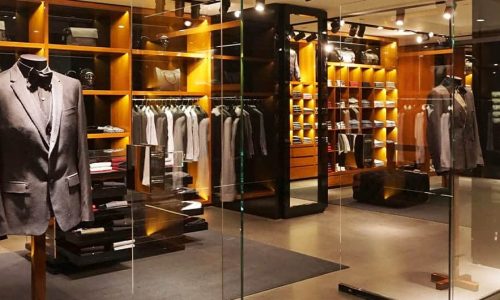
Explore Our Luxury Retail Consulting Services
P&C Global’s luxury retail practice helps maisons turn access to exceptional natural diamonds into lasting product differentiation.
Tiffany Shows How Diamond Supply Control Becomes Competitive Advantage
Tiffany demonstrates how a jewelry house can translate sourcing capabilities into differentiation
Its operating model includes diamond polishing workshops, a gemological laboratory, and jewelry manufacturing facilities. The Diamond Craft Journey connects newly sourced, individually registered diamonds with information about where they originate and are crafted. These capabilities give the house influence over selection, transformation, quality, and the evidence presented to clients.
Access to exceptional natural diamonds also shapes the product offering. In January 2023, Tiffany announced the acquisition of 35 rare Argyle pink diamonds, including a Fancy Red diamond, from a collection offered exclusively to the house. The stones came from the final production period of Australia’s closed Argyle mine. That acquisition illustrates the commercial importance of relationships that secure distinctive materials.
The value is tangible. Suitable stones enable commissions and collections. Cutting and polishing expertise help realize their potential. Traceability gives the sales organization evidence supporting the promise made to the client. These capabilities reinforce one another.
Responsible diamond sourcing contributes to that promise. De Beers’ consumer sustainability research identifies environmental protection, fair treatment of workers, conflict-free sourcing, community support, and origin among the principal considerations influencing diamond buyers.
Natural origin describes how a diamond formed; provenance documents where it came from and its subsequent journey. Responsible sourcing requires additional evidence about the conditions under which it was produced. The Kimberley Process addresses a defined category of conflict diamonds; a maison’s broader commitments require supplier oversight and evidence concerning labor, environmental, and community practices throughout the chain.
Tiffany’s example supports a clear principle: a luxury house should control the capabilities that substantiate its differentiation. Ownership, long-term sourcing agreements, processing expertise, and traceability systems are complementary ways of exercising that control. As in other product-specific supply-chain strategies, the appropriate investment follows the economics of the finished product.
De Beers Offers a Strategic Entry Point During a Market Reset
De Beers’ current financial pressure creates the opportunity—and defines the work required to capture it.
The company’s 2025 results reported $3.493 billion of revenue and an underlying EBITDA (earnings before interest, taxes, depreciation, and amortization) loss of $511 million in 2025. Within that result, Botswana and Namibia generated positive underlying EBITDA of $381 million and $89 million, respectively, while trading losses reached $424 million. The results reveal a business with valuable producing assets inside a group undergoing a difficult adjustment.
Demand also differs across its assortment—the mix of diamond sizes and quality grades it sells. In its first-half 2026 results, De Beers reported resilience in larger, higher-quality natural diamonds alongside pressure on smaller, lower-quality goods. Its October production update reported signs of more stable trading, continued pressure on lower-value stones, and a planned pause at Venetia. It also reduced full-year unit-cost guidance to approximately $70 per carat from $80.
The investment thesis should therefore center on profitable assortments, disciplined production, inventory management, and the commercial value of supply access. It does not require every natural-diamond category to recover equally.
Mines produce a range of natural diamonds, so buyers must evaluate the complete recovered assortment. De Beers’ public reporting does not allocate production or revenue by eventual high-jewelry, fine-jewelry, and industrial destination. The acquisition model must consequently be grounded in each mine’s production, costs, and achievable selling prices, with downstream benefits assessed separately.
Richemont’s 2026 Non-Financial Report states that the group exclusively purchases cut diamonds. A mining investment would therefore need to connect access to rough, uncut stones with cutting and polishing expertise, quality standards, traceability, and allocation arrangements that deliver material its maisons can use. The value lies in a reliable path from suitable rough material to finished creations.
Rights matter as much as ownership. A minority equity interest does not by itself secure preferential supply. De Beers operates through significant producing-country partnerships, including its long-term relationship with Botswana. A luxury participant should negotiate access to suitable assortments, traceability information, allocation arrangements, and governance rights while respecting those existing commitments.
That structure could combine mining expertise and producer partnerships with the demand insight and long investment horizon of a luxury group.
Modeling the Benefits of Better Supply Access
Richemont’s scale makes a larger downstream contribution worth examining. Its Jewellery Maisons generated €16.539 billion in revenue and €5.037 billion in operating profit in the year ended March 2026. The reported results establish the substantial earnings base against which improved sourcing capabilities should be evaluated. The segment includes products other than diamond jewelry; the model must isolate the sales that actually depend on diamond availability.
At an illustrative exchange rate of $1.10 per euro, that revenue equals approximately $18.2 billion. An additional $400 million of annual sales would represent approximately 2.2% of the segment total.
A sourcing investment could contribute to such growth through better fulfillment of high-value commissions, stronger availability of matching stones, and collections enabled by preferential access to suitable materials. The associated benefit depends on the sales that improved access actually enables or preserves.
The following scenario illustrates an annual after-tax operating benefit of $135 million:
Source of downstream benefit | Illustrative assumption | Annual benefit |
Incremental or retained jewelry sales | $8bn of sourcing-sensitive revenue × 5% improvement in realized sales × 40% contribution margin | $160m |
Operating efficiencies | Lower external processing costs, reduced rework, and lower inventory-related operating costs | $40m |
Additional operating requirements | Sourcing, assurance, coordination, and commercial support | −$20m |
Incremental operating profit | Total before tax | $180m |
Tax | Illustrative 25% rate | −$45m |
Annual downstream benefit after tax | After operating costs and tax | $135m |
Illustrative assumptions, not Richemont guidance. The $8bn affected revenue base is a modeled input, not reported diamond-jewelry revenue. Benefit rates are also modeled; the contribution margin includes variable selling and fulfillment costs. Converting the $135m after-tax operating benefit into cash assumes no additional annual capital expenditure or working-capital requirement after implementation. Any initial maison-level investment would also increase the buyer’s total cash commitment.
The scenario shows how a relatively small improvement in total segment sales could produce a meaningful operating benefit. Establishing that benefit requires evidence of customer demand that better stone access can unlock, capacity to create and deliver the jewelry, and demonstrable external cost savings.
The benefits must arise beyond what existing sourcing arrangements could deliver. A lower internal diamond price merely reallocates earnings between the miner and the maison. The model instead counts additional customer sales and reductions in external costs, with no separate credit for an unmeasured brand premium.

Explore Our M&A Advisory Services
P&C Global’s M&A advisory services help strategic buyers structure sourcing-driven deals and the rights that make them pay.
A Consortium Investment Can Combine Mining Cash Flow With Maison Earnings
A recovered De Beers generating $250 million of annual distributable cash flow is an illustrative underwriting case. A simple bridge assumes $700 million of EBITDA, less $350 million of capital expenditure and $100 million for remaining cash requirements, leaving $250 million available to De Beers shareholders. Actual distributions would depend on reinvestment needs, debt obligations, liquidity, and the applicable governance arrangements.
The recovery case can be tested against disclosed operating results. De Beers’ 2025 results show approximately $360 million of combined geographic mining EBITDA despite a $511 million group loss, with inventory-related trading losses weighing heavily. Reversing those trading losses alone would not restore group profitability; wider operating performance and recurring group costs must also improve. Trading returned to a $30 million profit in the first half of 2026, while unit production costs declined from $87 to $64 per carat. The modeled $700 million EBITDA remains below half of 2022 earnings of $1.417 billion. Achieving it requires further improvement in prices, mix, mining performance, and group costs.
Consider a luxury group taking 25% of a consortium acquiring an 85% interest in De Beers. For this illustration, assume the consortium pays $1 billion in equity consideration for that acquired stake and commits a further $400 million for De Beers recovery funding, transaction costs, and consortium implementation. The luxury group’s total cash investment would be $350 million, giving it an indirect 21.25% economic interest in De Beers.
At the assumed $250 million of distributable cash flow, the luxury group would receive approximately $53 million annually through its consortium interest. Adding the modeled $135 million of downstream cash benefits produces approximately $188 million of annual cash benefit.
Illustrative strategic-buyer economics | Calculation | Result |
Acquisition investment | 25% × $1 billion | $250 million |
Share of additional funding | 25% × $400 million | $100 million |
Total cash invested |
| $350 million |
Annual De Beers distribution | $250 million × 85% × 25% | $53 million |
Annual downstream benefit after tax | Retained within the buyer’s maisons | $135 million |
Combined annual cash benefit |
| $188 million |
Steady-state annual cash yield | $188 million ÷ $350 million | Approximately 54% |
The full downstream benefit belongs to the luxury buyer’s operating businesses; it is not divided among consortium shareholders. That distinction explains why a strategic investor could justify economics unavailable to a purely financial buyer.
A lower-benefit sensitivity illustrates the effect of reduced operating gains. At $100 million of annual distributable De Beers cash flow and $50 million of downstream benefits, the buyer would receive approximately $71 million annually, equivalent to a 20% steady-state cash yield on its $350 million investment. This still assumes positive mining distributions, successful realization of sourcing benefits, and no further capital calls. A full investment assessment must also test delayed recovery, additional funding needs, and limited or unrealized sourcing benefits.
These returns describe annual cash generation once the recovery and downstream improvements are established. They assume full distribution of the modeled available cash, no additional initial investment within the maisons, and no exit proceeds. This is a steady-state annual cash yield. The investment’s internal rate of return would also reflect the timing of the initial investment, subsequent funding, cash distributions, and any eventual sale proceeds.
The strategic proposition is compelling: a luxury buyer can participate selectively in the recovery of a natural-diamond producer while capturing a separate earnings stream within its own maisons. At an appropriately structured entry price, enduring demand for exceptional natural stones can support both sides of that equation.
A disciplined acquisition assessment must connect the buyer’s funding commitment to enforceable rights covering suitable assortments, allocation, traceability, and continuity. The modeled $1 billion is the assumed price for the acquired 85% stake, not a statement of confirmed transaction terms. The additional $400 million is an illustrative consortium funding commitment.
Long-term contracts remain a relevant alternative. Equity should deliver incremental influence over allocation, investment, and continuity that contractual purchasing alone cannot secure. As with other supply-chain investments, ownership earns its place when control creates measurable operating value.
Invest in the Attributes Luxury Clients Will Continue to Value
Laboratory-grown diamonds have expanded access to diamond jewelry and changed the economics of important categories. Their success does not erase the value of exceptional natural diamonds. The evidence instead points to different patterns of demand across products, price levels, and purchase motivations.
For luxury maisons, that distinction makes the gemstone supply chain a strategic asset. Reliable access to suitable natural diamonds supports the creations they can offer, the provenance they can substantiate, and the client relationships they can develop.
For a luxury group considering De Beers, the decision turns on three questions: can the producer generate sustainable cash flow; does the investment secure enforceable access to suitable stones; and do those rights create more value in the maisons than long-term purchasing contracts can deliver?
At the reported valuation, that combination merits serious consideration. The investment becomes persuasive when capital committed can be linked to supply rights, additional client sales, and cash returns after all funding requirements. Luxury leaders should evaluate a critical supply asset through the creations and client relationships it makes possible.