Delta Air Lines won Skytrax’s 2026 Best Business Class in North America award, yet Delta One business class ranked 13th globally. The airline has built a successful premium business in North America but has yet to demonstrate the consistent experience needed to compete with the world’s leading international carriers. Strong financial performance, loyalty revenue, and domestic rankings can reinforce executive confidence while obscuring gaps between what clients expect and what they receive. When leadership fails to recognize these gaps, client retention, pricing power, and returns on capital investments are at risk.
Key Takeaways
Current Context
- 13th globally: Delta’s business-class ranking in the 2026 Skytrax World Airline Awards, despite being named Best Business Class in North America.
- 97% of clients surveyed: Delta One customers who cited flat-bed seating as a reason for choosing the cabin.
- 90% by 2030: Delta’s target for Delta One seats equipped with sliding privacy-door suites.
- $6.82 billion: Delta’s Q3 2026 premium-ticket revenue, up 18% year over year across all premium products.
P&C Global’s Point of View
- A flagship product does not establish a premium brand when clients cannot reliably know which cabin generation they will receive.
- Delta’s domestic satisfaction and loyalty strength do not establish parity with global long-haul leaders.
- Premium-revenue growth can conceal product shortcomings when network position and loyalty economics constrain client choice.
How Does Delta One Business Class Rank Against Global Leaders?
In August 2026, Delta CEO Ed Bastian expressed his ambition for the airline to be recognized alongside Singapore Airlines, Emirates, and other leading international carriers.
Delta’s North American performance partially supports that ambition but does not establish its achievement. In the 2026 J.D. Power North America Airline Satisfaction Study, Delta ranked second in the first/business segment with 750 points, ahead of American Airlines at 698 but behind JetBlue at 759.
Delta Versus the Best Business Class Airlines in 2026
Internationally, the 2026 Skytrax World Airline Awards ranked Delta 13th for business class, compared with first for Qatar Airways, second for Singapore Airlines, and third for Cathay Pacific.
The depth of highly ranked premium competition differs significantly by region. Eight of the world’s top 10 business-class airlines are based in Asia or the Middle East, while Delta is the only North American carrier among the top 20. Although Delta earned Skytrax’s Best Business Class in North America award, international travelers can choose from several higher-ranked competitors. Regional recognition therefore provides limited evidence of global premium leadership.
Delta’s performance across individual premium categories reveals another gap. The airline ranked eighth globally for business-class seats and seventh for its JFK business-class lounge, yet only 13th in the overall global business-class rankings. Premium clients judge more than seats and lounges. Onboard service, reliability, and how an airline handles problems also shape the passenger experience. Strong individual offerings do not necessarily translate into global premium leadership.
The leadership risk is allowing regional success to create confidence that exceeds the airline’s global competitive standing. Delta’s North American position is established, but achieving global premium leadership requires meeting the expectations set by the international airlines its clients can choose.
Delta One Suites vs. Older Cabins: A Challenge to the Premium Promise
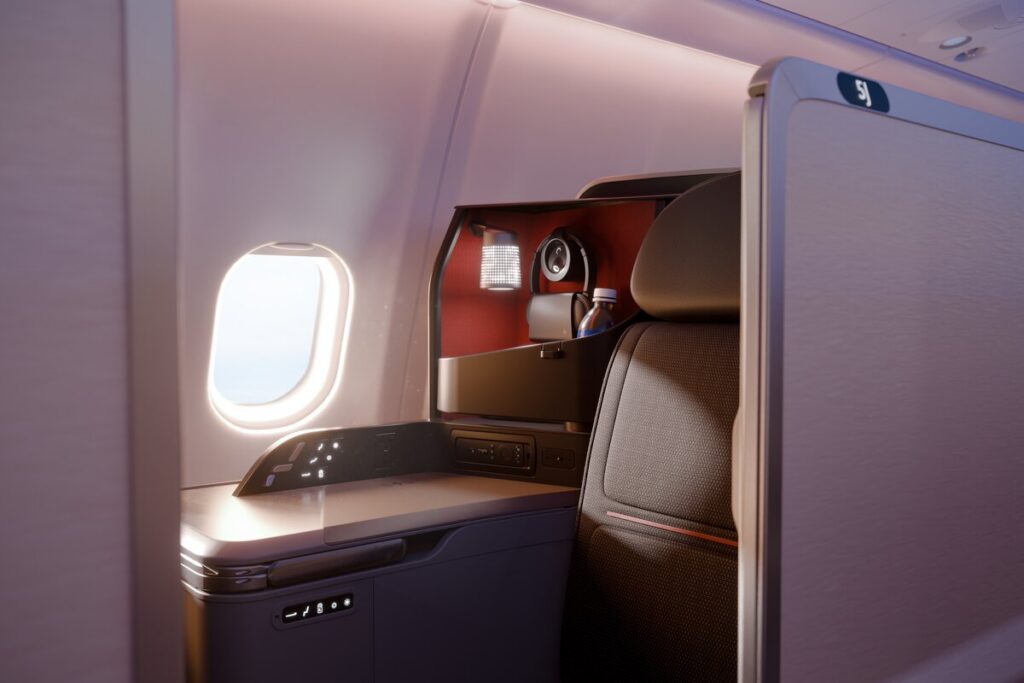
The Delta One experience varies considerably depending on the aircraft operating the flight. Delta’s Boeing 767-300ER offers lie-flat seating without the enclosed privacy-door suites available on newer aircraft. Passengers purchasing Delta One can therefore receive different levels of privacy, personal space, and cabin technology.
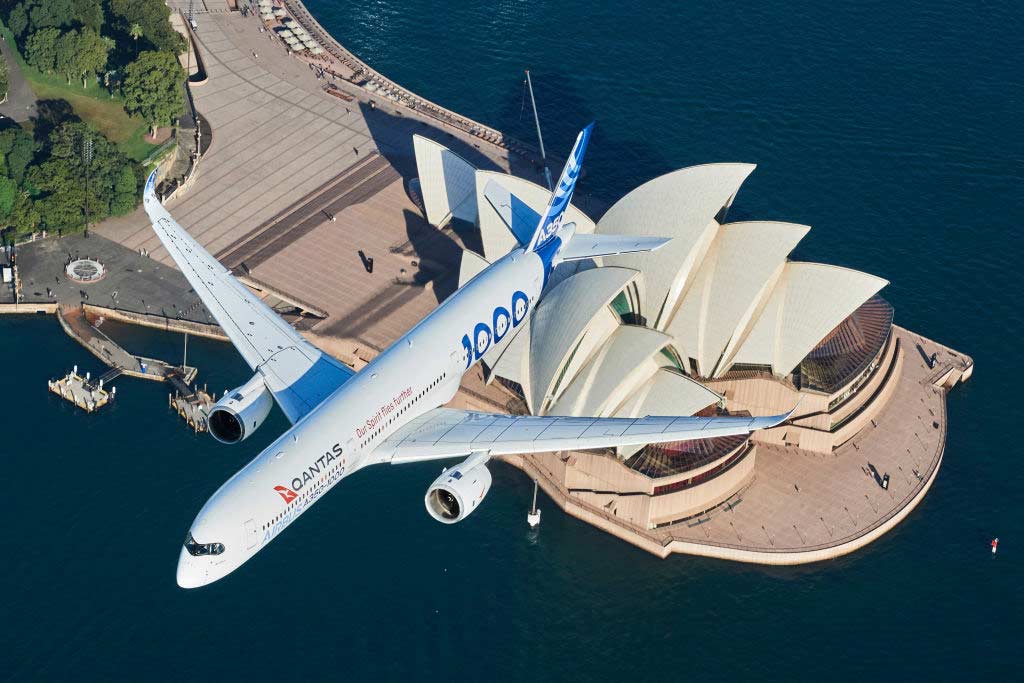
Delta’s April 2026 modernization announcement confirms that these differences will persist during its fleet transition. New Airbus A350-1000 aircraft will introduce next-generation suites beginning in 2027, while its A330-200/300 fleet will receive upgraded cabins. Delta expects 90% of Delta One seats to feature sliding privacy doors by 2030.
Delta’s own research informs what clients value. The airline reported that 97% of surveyed Delta One customers cited flat-bed seating as a reason for choosing the cabin. Because older configurations also offer flat beds, the finding does not establish which additional cabin features influence clients’ purchasing decisions.
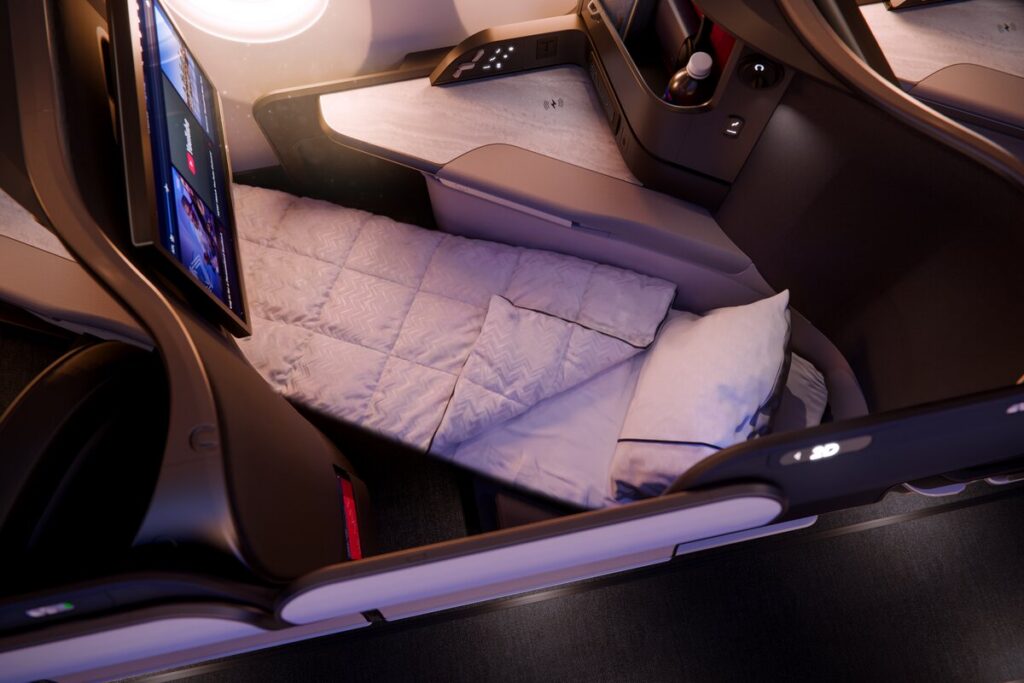
International competitors have developed distinct offerings around these preferences. Qatar Airways’ Qsuite emphasizes privacy and adaptable sleeping arrangements, while Cathay Pacific’s Aria Suite combines enclosed seating with updated cabin technology. Both products are available on selected aircraft and routes, demonstrating the importance of comparing the specific experiences clients can purchase.
Differences in cabin configurations are not the only challenge. Another concern is whether clients actually receive the experience they expected when purchasing a premium ticket. Delta’s contract of carriage permits aircraft substitutions, which in turn can change seat configurations and amenities. When those changes remove features that originally influenced a premium purchase, the airline risks undermining client confidence and willingness to pay.
Exceptional flagship cabins do not establish that an airline consistently delivers a competitive premium product. Delta One must be judged by what clients can book and what they consistently receive, not by the capabilities of its newest aircraft.

P&C Global’s aviation consultants help airlines measure the premium experience passengers actually receive against the international carriers they can choose, and align fleet and service investments with client value.
Delta One Customer Complaints Expose a Potential Leadership Blind Spot
Premium service failures can damage valuable client relationships, particularly when an airline fails to restore confidence after something goes wrong.
What Delta One Travelers Reported in 2026
In March 2026, a traveler reported on Reddit that two Delta One seats on a Salt Lake City–Incheon (Seoul) flight malfunctioned, leaving both passengers without power, entertainment, lighting, or audio throughout the 13-hour journey. Crew members reportedly promised that Delta would follow up, but no response came. After repeated inquiries, the passengers received 10,000 SkyMiles each, which the traveler considered inadequate.
In August 2026, frequent-flyer journalist Anthony Losanno reviewed a Delta One flight from Atlanta to Rome, reporting dirty seat controls, rushed meal service, no drink refills, and flight attendants making disparaging remarks about passengers. Despite rating the seating and food 9 out of 10, he gave onboard service just 4 out of 10.
These accounts do not establish how widespread the service failures are, but they illustrate how shortcomings in equipment reliability, hospitality, and service recovery can undermine client confidence. Combined with Delta’s 13th-place global business-class ranking, they reinforce the need for leadership to determine whether these are isolated incidents or signs of broader weaknesses in its premium offering.
How Leadership Gathers Insight on the Client Experience
Delta conducts customer research, and its cabin modernization and October 2026 service redesign reflect feedback, testing, and operational preparation. The more consequential issue is the degree to which senior leadership fully understands what clients experience relative to their expectations, including those situations when service falls short.
Delta CEO Ed Bastian has said he sometimes flies in economy and personally responds to customer emails. Those efforts demonstrate engagement, but an executive recognized by employees is likely to receive a different level of service than regular passengers. Employees are also likely to extend greater attention to nearby passengers, creating an experience that does not reflect normal operations. Flying in economy provides limited insight into the long-haul Delta One experience.
The leadership issue is whether executives understand how the airline performs when they are not present. Customer research and service reports provide valuable information, but neither replaces direct evidence of what paying clients experience and whether failures undermine their confidence in the brand.
Delta’s SkyMiles & Amex Economics Complicate Client Loyalty
Delta’s loyalty ecosystem generates substantial financial value, but continued customer spending does not necessarily establish preference for its premium product.
According to Delta’s 2025 Form 10-K, the airline received $8.2 billion in cash remuneration from American Express, an 11% increase over 2024. These payments support a broad loyalty and marketing partnership rather than Delta One ticket sales. Their financial value therefore does not establish the strength of customer demand for Delta’s premium experience.
SkyMiles, elite status, credit-card privileges, and Delta’s extensive hub network give travelers compelling reasons to remain loyal. Some customers may continue purchasing Delta flights to preserve status benefits or avoid inconvenient connections, even when they prefer a competitor’s international premium experience. Although SkyMiles do not expire, most Medallion members must requalify annually to maintain their status, reinforcing the incentive to concentrate their spending with Delta.
Delta’s public disclosures do not establish how many premium customers make purchasing decisions primarily for these structural reasons, rather than the inherent attractiveness of Delta’s service offerings. Without separating loyalty-driven purchasing from genuine product preference, leadership risks overstating Delta One’s competitive strength.
Our aviation strategy and innovation team helps leadership separate loyalty-driven demand from genuine product preference and build premium strategies that outperform global competitors.
Does Delta’s Premium Revenue Growth Resolve Its Commercial Risks?
Delta reported $6.82 billion in premium-ticket revenue in the third quarter of 2026, up 18% year over year across its premium products. Premium seat capacity increased 6%, with improved yields and load factors contributing to revenue growth. These results demonstrate strong demand across Delta’s premium portfolio but do not establish Delta One’s profitability on individual international routes or the returns generated by its cabin investments.
A frequent traveler may continue flying Delta domestically for network convenience while choosing a competing airline for international business-class travel. Delta would retain the domestic bookings while potentially forgoing the financial contribution from international journeys it might otherwise have captured. Public disclosures do not establish the extent of any such lost business.
The financial exposure extends beyond individual bookings. Inconsistent cabin experiences can weaken pricing power, increase service recovery costs, and reduce the returns on investments intended to strengthen Delta One’s competitive position.
Cabin modernization requires leadership to weigh the cost of investment against the consequences of delay. Refurbishing older aircraft demands substantial capital and can temporarily reduce available capacity. Delaying upgrades risks losing international premium bookings to competitors with more competitive cabins. Both choices have direct consequences for revenue, profitability, and returns on invested capital.
The scale of competing investments adds to Delta’s challenge. Emirates, for example, is undertaking a $5 billion program to refurbish 219 aircraft, with 100 completed by July 2026. The program spans multiple cabin classes and demonstrates the capital international carriers are committing to the passenger experience. Such spending reinforces the importance of ensuring cabin investments generate sufficient demand, pricing power, and financial returns to justify their cost.
Aggregate revenue growth is not proof of global premium competitiveness. Leadership must establish whether Delta One is capturing its full commercial potential and earning adequate returns on its investments.
Delta One Must Earn Global Premium Leadership Flight by Flight
Delta has established a strong North American position and built a commercially successful premium business. However, global premium leadership requires more than financial strength, domestic rankings, and investment in flagship cabins. For Delta One business class, it requires a consistently competitive experience on the flights clients actually purchase.
Delta’s global ambitions ultimately test whether senior leadership understands what distinguishes its premium offering in the eyes of international travelers and whether the airline can deliver that value consistently. The responsibility for closing the gap between ambition and execution rests with leadership.
Global premium leadership must be earned flight by flight, through the experience Delta One delivers and the willingness of international travelers to choose it over credible alternatives.
A companion article will examine how airline executives can avoid these mistakes by validating client demand, evaluating competitive alternatives, aligning product and capital investments with client value, designing distinctive and compelling offerings, and holding operations accountable for consistently delivering the promised experience.
Frequently Asked Questions
What is Delta One, and is it business class?
Yes. Delta One is Delta Air Lines’ business-class cabin. Seating varies by aircraft: newer aircraft offer enclosed suites with sliding privacy doors, while the Boeing 767-300ER offers lie-flat seats without doors. In Delta’s research, 97% of surveyed Delta One customers cited flat-bed seating as a reason for choosing the cabin.
How does Delta One rank among the best business class airlines?
Delta ranked 13th for business class in the 2026 Skytrax World Airline Awards. Qatar Airways ranked first, Singapore Airlines second, and Cathay Pacific third. Delta won Skytrax’s Best Business Class in North America award, is the only North American carrier in the global top 20, and ranked eighth for business-class seats.
Do all Delta international business class flights have Delta One Suites?
No. Delta’s Boeing 767-300ER offers lie-flat Delta One seats without enclosed privacy-door suites. New Airbus A350-1000 aircraft will introduce next-generation suites beginning in 2027, and Delta expects 90% of Delta One seats to have sliding privacy doors by 2030. Aircraft substitutions can also change the seat a passenger receives.
Is Delta One perceived to be worth the price?
Passenger experiences depend on the aircraft and the service on a given flight. Delta One won Skytrax’s 2026 Best Business Class in North America award but ranked 13th globally. In an August 2026 review of an Atlanta–Rome flight, journalist Anthony Losanno rated the seat and food 9 out of 10 but onboard service 4 out of 10.