Modern Luxury Retail Strategies Depend on Brand Governance
Luxury has never been defined by product alone. It derives value from permanence, cultural authority, craftsmanship, belonging, and exclusivity. These intangible qualities allow a brand to command desire across generations. Yet luxury retail now operates in a marketplace that often rewards the opposite: speed over patience, visibility over discretion, novelty over continuity, and constant participation over disciplined selectivity.
That tension is reshaping the luxury leadership agenda. Brand strength is no longer determined only by expansion, awareness, store footprint, or creative heat. It increasingly depends on a more difficult capability: the ability to remain culturally relevant without making the brand feel reactive, overextended, or disposable.
For the C-suite, brand relevance has become a strategic governance issue that now belongs at the center of modern luxury retail strategies. Every collaboration, drop, creative reset, price move, market adaptation, and product extension now carries strategic weight. The brands that lead the next phase of luxury will be those that understand when to engage, when to reinterpret, and when restraint creates more value than participation.
Luxury Retail Growth Strategy Is Under Pressure
For years, many luxury brands could rely on a familiar formula: expand visibility, increase prices, deepen direct-to-consumer control, heighten cultural presence, and use collaborations or limited drops to generate demand and exclusivity. That playbook is becoming less forgiving.
Recent public filings show a sector moving from broad-based momentum to more uneven performance. LVMH reported 2025 revenue of €80.8 billion, with organic revenue growth returning in the second half of the year; however, its Fashion & Leather Goods business experienced a 5% organic revenue decline, while profit from recurring operations fell 13%.
Kering reported 2025 revenue of €14.7 billion, down 13% as reported and 10% on a comparable basis. In the same environment, Richemont posted FY2025 sales up 4% at actual and constant exchange rates, led by high-single-digit growth in Jewellery Maisons, while Specialist Watchmakers declined 13%.
The sector is not moving in one direction; it is separating brands and categories that can defend enduring value from those more exposed to fashion cycles, aspirational pullback, regional demand shifts, or brand repositioning risk.
CXO Takeaway
Growth is becoming a quality-of-demand issue. Luxury executives should look beyond top-line visibility and ask whether demand is coming from durable clients, full-price sell-through, repeat purchase, waitlist depth, margin resilience, and brand codes that remain legible across seasons.
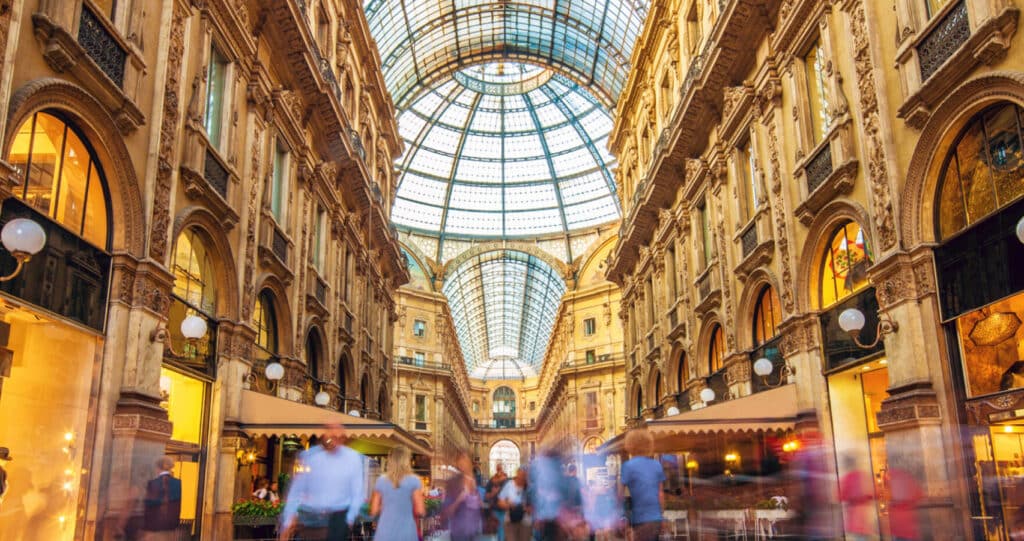
Explore Our Luxury Retail Consulting Services
P&C Global delivers end-to-end luxury retail consulting services with measurable, accountable outcomes.
Cultural Relevance Can Build or Dilute Luxury Brand Equity
Cultural relevance has become a strategic variable. Social platforms, creator communities, limited drops, and collaborations can bring luxury brands into new conversations quickly. They can also compress the distance that once made luxury feel rare.
The tension is especially visible in digital discovery. Social platforms, peer communities, creator content, resale marketplaces, and AI-enabled search are increasingly shaping how consumers encounter, evaluate, and compare luxury brands. But discovery does not translate uniformly into purchase behavior, particularly at the highest end of the market. Industry research consistently shows that a small share of high-spending luxury clients accounts for a disproportionate share of category value, underscoring how distinct this segment is from broader aspirational luxury audiences.
For high-ticket and true-luxury clients, digital channels often play a stronger role in inspiration, product education, social validation, and consideration than in final conversion. The purchase journey still depends heavily on trust, brand-controlled environments, advisor relationships, private access, service quality, and the assurance that a brand’s value proposition extends beyond visibility. This makes digital relevance strategically important, but also difficult to govern: brands must be present where culture forms without allowing platform dynamics, influencer incentives, or algorithmic visibility to redefine the house on their behalf.
The broader consumer shift reinforces the same pattern. One 2025 consumer study found that half of U.S. consumers now consider social media their primary source for discovering new brands and products, while 45% purchased a product through social media in the past month. For luxury brands, that creates both opportunity and risk: social platforms can accelerate discovery, but they also move brand perception into faster, more public, and less controlled environments.
In China, the dynamic is even more ecosystem-driven. Platforms such as WeChat, Xiaohongshu/RedNote, and Tmall Luxury Pavilion connect discovery, peer recommendation, commerce, payment, clienteling, and loyalty within a more integrated consumer journey. For luxury brands, that raises the stakes: relevance must be managed not only through campaigns, but across digital ecosystems where community conversation, service experience, and purchase increasingly converge. The strategic challenge is not only to generate discovery, but to convert that discovery into deeper client relationships through service, access, and ongoing engagement.
As consumers gain more influence over brand meaning, luxury houses are being judged in real time through social content, styling, product reviews, resale comparisons, and public scrutiny of pricing and authenticity. Additional consumer research also suggests that younger luxury buyers increasingly expect brands to offer greater transparency, stronger identity alignment, and a clearer view of the standards, craft, and cultural values behind the product.
But visibility is not the same as authority. A collaboration may generate attention, but it can weaken the brand if it feels opportunistic rather than authentic. A drop that creates scarcity may still damage brand equity if it trains consumers to expect novelty over permanence. A viral product can attract new audiences while making loyal clients question the brand’s direction.
CXO Takeaway
Relevance should build long-term brand value, not simply fill the marketing calendar. The real test is whether a move makes the brand more desirable, consistent, and valuable over time—not just whether it creates attention today.
Fragmented Brand Codes Threaten Luxury Brand Equity
Luxury brands depend on recognizable codes: silhouettes, materials, rituals, service behaviors, icons, language, store environments, and creative principles that make the house identifiable without explanation. When those codes begin to fragment, a brand may remain highly visible, but it becomes harder to command pricing power, defend distinctiveness, and sustain long-term desire.
Scarcity, exclusivity, and consistency remain central to how consumers define value in luxury. Rarity can heighten not only perceived status, but also the emotional and symbolic value attached to a product. Yet the same equity can be weakened when growth moves too far from the brand’s core identity. New categories, broader access, wider distribution, or poorly governed extensions may create near-term commercial upside, but they can also dilute the perception of luxury if they make the house feel less distinctive or less controlled.
The risk compounds when multiple growth levers move at once. Excessive collaboration without scarcity management can make a house feel overextended. SKU proliferation can make its design language harder to read. Diffusion lines can blur the prestige hierarchy. Overexposure through wholesale or digital channels can weaken the sense of controlled access. Localization can create regional relevance, but it can also produce a patchwork identity if each market begins interpreting the brand differently.
Geography makes the dilemma more complex. In some markets, bold logos, statement pieces, and highly visible products may still signal status and cultural currency. In others, the most valuable clients may prefer discretion, material quality, archival references, and quieter expressions of wealth. Luxury brands therefore need to localize expression without allowing the global brand to splinter.
CXO Takeaway
Disciplined distribution is becoming a strategic lever, not just a channel decision. In a lower-growth environment, controlling access can be as important as generating demand.

Explore Our Luxury Retail Strategy & Innovation Services
P&C Global’s strategy and innovation services help luxury retail brands and enterprises move from transaction-based selling to scalable, stewardship-led operating models.
Luxury Pricing Power Now Requires More Proof of Value
The pricing environment has changed. Luxury brands can still command premiums, but consumers are scrutinizing the substance behind those premiums more rigorously.
Leading luxury brands increased prices by an average of 3% between January and May 2025, the slowest pace since 2019 and below the recent high of 8% in 2022. The slowdown signals a more selective market. After several years of steep price increases, even affluent consumers are becoming more discerning about whether a product’s price is justified by its quality, craftsmanship, scarcity, service experience, and long-term desirability.
The implication is not that luxury brands should stop raising prices. It is that price increases must be supported by visible and credible proof of value. Hermès offers a useful reference point. In 2025, the company grew revenue 9% at constant exchange rates, while Leather Goods and Saddlery rose 13%, supported by strong collection desirability and increased production capacity. Hermès’ resilience is not simply a function of higher prices, but of disciplined supply, controlled distribution, visible craftsmanship, and carefully managed access to products consumers continue to value at the highest end of the market.
The caution is equally instructive. Chanel’s classic quilted 11.12 lambskin bag rose from €4,800 in 2019 to €10,300 in 2025, illustrating how aggressively some luxury brands have used pricing as a lever in recent years. Separately, Chanel reported a 4.3% revenue decline and a 30% drop in operating profit for 2024. Although broader market softness also played a role, the example underscores a larger risk: when price, product substance, and perceived value drift apart, pricing power can become a source of consumer skepticism.
The danger is mistaking price for prestige. In luxury, price can reinforce desirability when the brand’s authority is intact. But when identity is blurred, quality is questioned, or products feel too widely available, price can amplify skepticism rather than aspiration. Materials, atelier access, repairability, cultural depth, resale strength, and client service all become part of the value equation.
CXO Takeaway
Luxury pricing power cannot be protected by marketing alone. It must be reinforced through product architecture, scarcity management, service experience, clienteling, distribution control, and proof of craft.
Creative Change in Luxury Requires Brand Continuity
The recent wave of creative leadership changes across luxury underscores a deeper pressure: brands must refresh themselves without destabilizing the signatures that make them recognizable. In a market where luxury consumers are rewarding clarity, familiar codes, and consistent direction, newness alone is not enough.
Jaguar’s recent “Copy Nothing” rebrand, launched alongside its move toward an all-electric future, generated significant public debate because many observers viewed it as a sharp break from the marque’s established cues of British performance, heritage, and refinement. The lesson for luxury leaders is not that brands should avoid reinvention; it is that reinvention must create a bridge between future relevance and inherited equity, or it risks making loyal clients feel that the brand they valued has been left behind.
For executives, the implication is clear: creative change must be managed as enterprise transformation, not seasonal theater. A new creative direction affects merchandising, store design, clienteling scripts, archive use, campaign strategy, wholesale exposure, product icons, and investor expectations. Without a continuity plan, creative reinvention can quickly become brand discontinuity.
Recent demand signals reinforce the point. Chanel’s trajectory illustrates both the risk and the opportunity: after facing scrutiny over price-value alignment and reporting softer 2024 results, the house continued to invest heavily in brand equity, boutique expansion, client experience, savoir-faire, and its creative ecosystem. It also adopted a more disciplined pricing posture, with recent increases closer to inflation than the sharper moves seen earlier in the cycle.
Chanel’s Q1 2026 Lyst Index performance, ranking first overall, with both its pumps and Maxi Flap Bag among the quarter’s ten hottest products—does not prove a full commercial reset on its own. But it does suggest that renewed demand was supported by more than isolated product heat: recognizable house codes, refreshed icons, controlled brand environments, and a creative direction that made the house feel current without severing its heritage. The lesson is not that creative change erases pricing pressure; it is that a well-governed reset can renew demand when it strengthens the operating system behind desirability, not just the visual language on the runway.
The strongest luxury brands do not freeze themselves in time. They evolve with discipline. They know which codes must remain intact and which can adapt. This is why some automotive luxury extensions into branded residences have worked: brands such as Aston Martin and Bentley have translated their core codes—craftsmanship, material quality, performance aesthetics, bespoke detail, and controlled access—into a new category without losing their identity. Reinvention works best when it expands the brand’s world while preserving what made it desirable in the first place.
CXO Takeaway
Creative refreshes should begin with a brand-code audit and continuity plan. Leaders should define what must remain recognizable across product, experience, communication, service, and client relationships—then sequence the transition so clients, teams, and markets understand what is changing and what is not.
Executive Framework: Luxury Brand Governance
The next advantage in luxury will come from strategic governance. As cultural cycles accelerate and consumer scrutiny intensifies, leaders need a disciplined system for deciding when to participate, when to abstain, and how to determine whether newness is strengthening the house or fragmenting it. That requires clear decision rights across creative, commercial, merchandising, regional, and digital teams to prevent disconnected decisions from diluting brand equity.
The framework should address seven core decision areas:
Codify non-negotiable brand codes.
Define the materials, silhouettes, symbols, service rituals, tone, design principles, and experiential cues that must remain consistent across the business. These codes should guide product development, retail environments, collaborations, digital content, clienteling, and regional merchandising.
Govern collaborations through long-term equity.
Partnerships should be evaluated against strategic fit, client relevance, creative legitimacy, scarcity, margin impact, and long-term brand value. The test is not whether a collaboration reaches a new audience; it is whether it reveals something true and distinctive about the house.
Control SKU, category, and access expansion.
Every new category should earn its place in the brand architecture. Entry products can recruit new clients, but they should not dilute the center of gravity, overwhelm the icons that anchor desirability, or weaken the sense of controlled access.
Align pricing with proof of value.
Price increases should be tied to visible signals of quality, craft, scarcity, service, repairability, cultural depth, and resale confidence. Pricing power should be managed as an outcome of brand discipline, not as a substitute for it.
Localize expression without fragmenting identity.
Regional teams need room to respond to cultural preferences, client behaviors, and market-specific expectations. But flexibility must operate within a global code system. Luxury brands should distinguish between adaptive expression and strategic inconsistency.
Manage digital ecosystems as brand environments.
Social platforms, creator partnerships, private client communities, marketplaces, and owned channels should be governed as extensions of the brand experience. Visibility is valuable only when the environment reinforces the house’s brand authority, service standards, and desirability.
Measure heat against enduring equity.
Traditional campaign metrics are insufficient. Leaders should track full-price sell-through, client retention, repeat purchase, waitlist quality, share of sales from iconic lines, repair and aftercare engagement, resale performance, and brand-code recognition. The goal is to understand whether attention is converting into durable desirability.
CXO Takeaway
Luxury brand governance requires an operating model, not only a creative vision. The strongest brands will be those that govern relevance with discipline, protecting the codes that create permanence while allowing enough flexibility to stay culturally alive.
Luxury Brand Strategy Requires Disciplined Relevance
Luxury’s next chapter will not belong to the brands that are simply louder, faster, or more visible. It will belong to those that can translate cultural relevance into lasting equity without weakening the codes that make them distinctive.
That requires a more exacting form of luxury brand governance. Executives must protect the brand’s enduring identity while ensuring it remains alive to the present. They must create space for innovation without turning reinvention into a reflex. They must preserve scarcity without relying on artificial theater. They must engage younger audiences while continuing to honor the clients who built the house. And they must adapt across markets without allowing global identity to fracture.
The central question for luxury leaders is no longer simply, “How do we stay relevant?” It is, “Which forms of relevance make the brand more enduring?”