In March 2026, Rolls-Royce renounced its pledge to go fully electric by 2030, after Spectre EV deliveries fell from 1,890 in 2024 to 1,002 in 2025 while its V12 combustion models grew 22%, according to BMW Group. Rolls-Royce demonstrated that clients would buy an electric luxury vehicle, but not that its broader client base would accept losing the option to purchase V12-powered models. Announced in 2021, the pledge committed the company to withdrawing those models without establishing that electric replacements could sustain demand across its portfolio. The reversal preserves client choice but exposes the weakness of its original commitment.
Key Takeaways
- Rolls-Royce Spectre deliveries fell 47%, from 1,890 in 2024 to 1,002 in 2025, while combustion-model deliveries rose 22%, led by Cullinan (+27.1%) and Ghost (+22.9%), according to BMW Group.
- Rolls-Royce’s 2021 pledge to go fully electric by 2030 committed it to withdrawing its V12 models before demand for electric replacements was proven. It reversed course in March 2026.
- Rolls-Royce describes Spectre as typically a client’s second Rolls-Royce in a seven-car garage, suggesting much of its demand adds to collections rather than replacing existing models.
- Porsche’s 2025 decision to reschedule a new electric platform resulted in approximately €1.7 billion in impairment losses and provisions.
- P&C Global’s view: before withdrawing an established model, luxury automakers must prove its replacement will retain existing clients, preserve the contribution of established sales, and justify the investment.
Why Was Rolls-Royce’s 2030 All-Electric Pledge So Risky?
In September 2021, Rolls-Royce announced Spectre, its first fully electric vehicle, alongside a commitment to eliminate combustion-powered models by 2030. Electric propulsion supported the marque’s signature qualities of quiet operation, smooth acceleration, and effortless performance. But the Rolls-Royce electric commitment went further, establishing a deadline for withdrawing established models before demand for their electric replacements had been demonstrated.
Rolls-Royce’s 2030 commitment carried two significant strategic risks. First, electrifying its entire product portfolio would require substantial engineering and capital investment across multiple vehicle categories. Second, the commitment depended on clients across different vehicle categories accepting electric powertrains in place of the V12 engines central to the marque’s heritage and ownership experience. These assumptions required evidence of replacement demand across distinct client segments, not simply confidence in electric technology or the success of a single model.
How Phantom, Cullinan, Ghost and Spectre Serve Different Roles
The commitment affected vehicles serving different ownership needs. The eighth-generation Phantom, introduced in 2017, was Rolls-Royce’s flagship sedan, with its Extended version emphasizing privacy and chauffeur-driven comfort. Cullinan, introduced in 2018, combined luxury SUV versatility with everyday usability and all-terrain capability. The second-generation Ghost, introduced in 2020, offered a more understated sedan suited to clients who also enjoy driving themselves. Spectre entered the portfolio in late 2023 as a two-door electric grand touring coupé emphasizing personal driving enjoyment, effortless performance, and refinement.
Rolls-Royce Spectre Sales Fell 47% as Combustion Demand Grew
Spectre’s first full year appeared to validate the Rolls-Royce electric strategy. The company delivered 1,890 Spectres in 2024, making Spectre its second-best-selling model globally and its most requested model in Europe. However, the BMW Group Report 2025 subsequently revealed a very different sales mix.
| Deliveries | 2024 | 2025 | Change |
|---|---|---|---|
| Spectre (electric) | 1,890 | 1,002 | −47.0% |
| Combustion models combined | 3,822 | 4,662 | +22.0% |
| Total | 5,712 | 5,664 | −0.8% |
Source: BMW Group Report 2025. Combustion totals calculated from reported model deliveries.
Spectre deliveries declined 47.0%, while combined combustion-model deliveries increased 22.0%, driven largely by growth of 27.1% for Cullinan and 22.9% for Ghost. BMW Group’s October 2026 sales update reported that total Rolls-Royce deliveries fell 12.4% to 3,592 vehicles in the first nine months of 2026, but did not disclose model-level figures to establish whether the 2025 sales mix persisted.
Rolls-Royce should have accounted for the possibility that Spectre’s launch would attract pent-up demand from collectors, early adopters, and enthusiasts, much of which might not recur. Strong initial sales could not establish whether clients would replace their existing V12-powered vehicles with electric alternatives. Leadership needed to distinguish launch-driven purchases from sustained replacement demand in its forecasting and portfolio planning. The subsequent sales shift also requires consideration of other factors, including refreshed Cullinan and Ghost models. Spectre demonstrated demand for an electric Rolls-Royce, but not that electric replacements could sustain demand across the marque’s established portfolio.
Are Spectre Buyers Adding to Collections or Replacing Cars?
Spectre’s ownership patterns raise a critical commercial question: are clients purchasing an electric Rolls-Royce as an addition to their existing collection or as a replacement for a V12-powered model?
In June 2026, Rolls-Royce described Spectre as typically a client’s second Rolls-Royce “within a seven-car garage”. Owners drove approximately 4,000 miles annually, charged almost exclusively at home, and most frequently drove alone.
These patterns suggest that, for many owners, this luxury EV serves a different ownership purpose. A client purchasing the electric coupé may still intend to buy a Phantom, Ghost, or Cullinan. Treating additional purchases as evidence of replacement demand risks withdrawing established models that continue to generate revenue and sustain valuable client relationships.
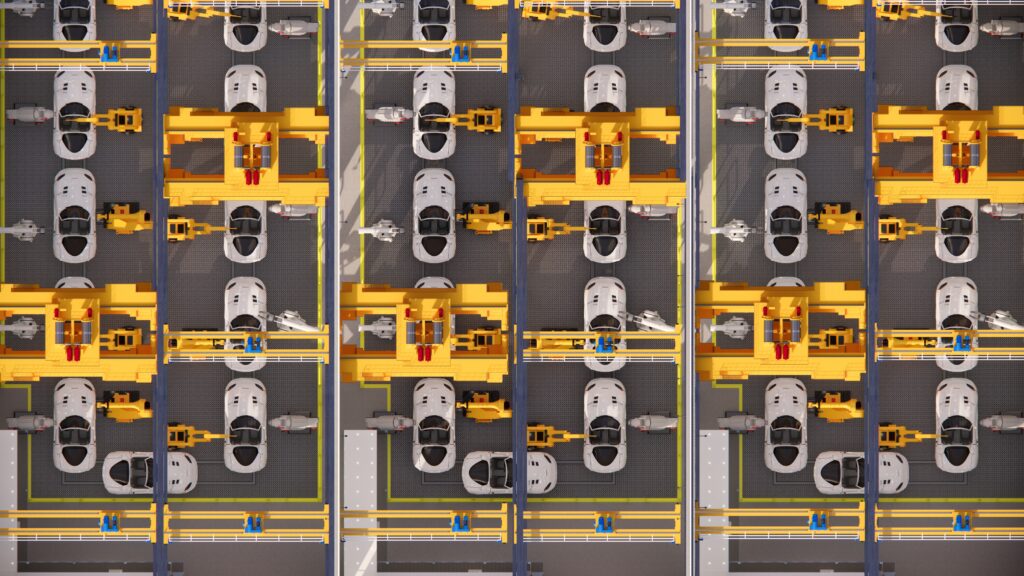
From product portfolio decisions to client retention, our automotive consulting team helps luxury marques align investment with proven client demand.
Why Do Rolls-Royce Clients Still Value the V12?
Luxury clients purchase automobiles for more than technical performance. Design, craftsmanship, heritage, and sensory experiences influence why clients choose one marque over another. For many luxury vehicle clients such as those choosing Ferrari and Porsche, the roar of the engine and its mechanical response are central to that choice. Silent acceleration is available from many luxury electric cars, but it is not necessarily the experience these clients seek.
Rolls-Royce expresses this connection differently. Its V12 delivers effortless power with a distinctive, understated engine sound. The engine configuration also represents an important part of the marque’s heritage, dating back to the Phantom III introduced in 1936. For clients who value that heritage, the V12 represents more than propulsion; it embodies the engineering tradition and refinement associated with Rolls-Royce.
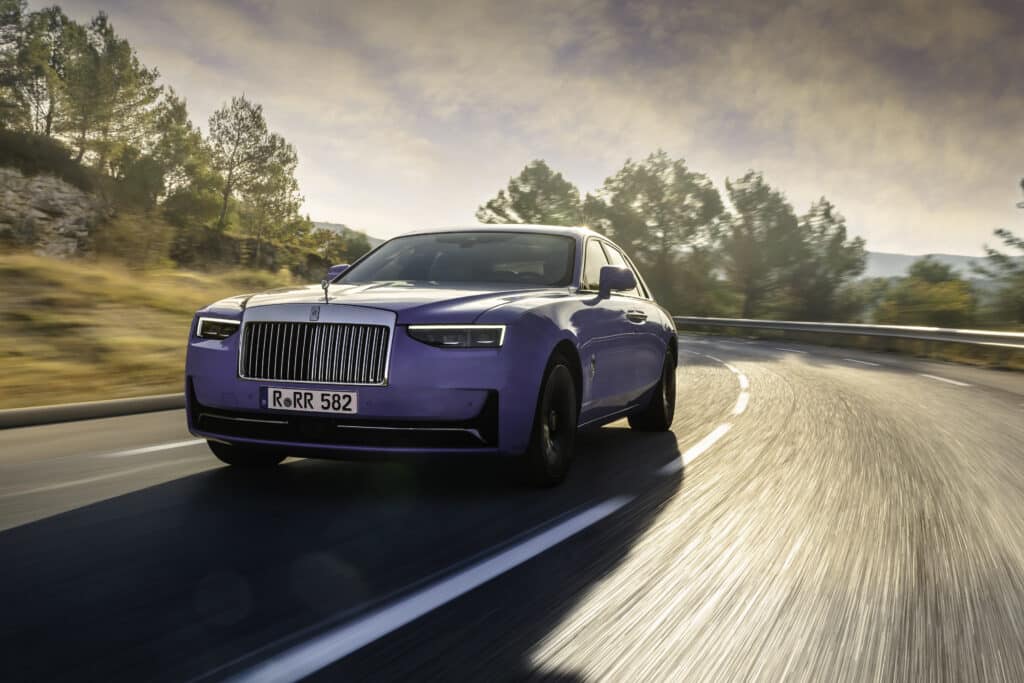
Spectre preserves the marque’s smooth performance but replaces the V12 with electric propulsion, changing the mechanical character of the ownership experience. Rolls-Royce engineers acknowledged that clients valued the V12’s subtle acoustic feedback and incorporated an optional synthesized sound into Spectre. That feature recognizes the importance of sound but cannot fully reproduce the experience of a combustion engine.
A more technologically advanced vehicle is not necessarily a more desirable luxury product. Removing the engine character and driving experience that clients value can weaken brand differentiation, customer loyalty, and future sales.
How Bentley, Porsche and Ferrari Rethought Luxury EV Strategy
Like the Rolls-Royce electric reversal, changing an electrification commitment introduces a new set of financial decisions. Manufacturers must weigh the cost of preserving existing products against the investment consequences of changing course. Bentley, Porsche, and Ferrari have taken different approaches, offering important lessons about the relationship between client demand, capital commitments, and long-term business value.
Bentley Electric Strategy: The Economics of Preserving Choice
Bentley followed a similar path to Rolls-Royce. The company initially committed to an exclusively electric portfolio by 2030, extended that target to 2035, and subsequently abandoned a fixed completion date. Its 2025 Sustainability Report cited changing policies, infrastructure development, technology, and customer sentiment. The reversal exposed the risks of committing to a portfolio-wide transition before market conditions and client demand could support it.
Bentley now faces a different financial challenge. Preserving client choice requires continued investment in combustion, hybrid, and electric technologies, along with the engineering, manufacturing, and supplier capabilities needed to support them. Maintaining these alternatives can protect revenue and client relationships, but may reduce profitability if those benefits do not justify the additional costs. Reversing an ambitious electrification deadline does not, by itself, establish a more profitable strategy.
Porsche EV Reversal: A €1.7 Billion Lesson in Capital Commitments
Porsche’s EV strategy previously targeted more than 80% fully electric deliveries by 2030, subject to market conditions. In September 2025, the company revised its product strategy, extending combustion and hybrid availability while rescheduling development of a new electric platform. According to its 2025 management report, the platform decision resulted in approximately €1.7 billion in impairment losses and provisions.
The financial consequences continued into 2026. In the first nine months, Porsche reported approximately €500 million in broader strategic realignment costs, compared with €2.7 billion during the same period in 2025. Deliveries declined 16% and although nominal operating profit recovered from €40 million to €1.74 billion, this rebound largely reflected lower realignment costs, according to its October 2026 financial results.
Porsche’s experience illustrates the financial exposure created when capital commitments advance faster than the evidence supporting future demand. Making a sales target conditional on demand offers limited protection when substantial capital commitments have already been made.
Ferrari EV Plans: Electric Models Cut to 20% of Its 2030 Lineup
Ferrari’s EV strategy took a different approach from the outset, incorporating combustion, hybrid, and electric vehicles into its long-term product portfolio strategy rather than committing to eliminate any powertrain. At its 2022 Capital Markets Day, Ferrari outlined a 2030 model lineup comprising 40% electric, 40% hybrid, and 20% combustion-powered vehicles. At its October 2025 Capital Markets Day, the company revised those proportions to 20% electric, 40% hybrid, and 40% combustion-powered vehicles. Although its targets changed, Ferrari maintained all three powertrain options. These figures represent the planned model mix, not projected sales volumes.
Ferrari’s decision challenges the assumption that electric propulsion must eventually replace every established driving experience. Its strategy allows clients to choose among technologies without requiring the company to abandon the engines that remain central to its appeal. The financial outcome remains to be demonstrated, but Ferrari has made a consequential choice: technological progress does not have to dictate the elimination of products that clients continue to value.

We help manufacturers set evidence thresholds for major capital commitments before they become costly to reverse.
What Happens When Luxury Leaders Lose Sight of the Client?
Decades of executive leadership, hands-on operational experience, and P&C Global’s consulting engagements across luxury and high-performance manufacturing reveal a recurring leadership risk: companies appoint executives from adjacent industries based on their operational achievements without adequately assessing their understanding of the luxury clients, craftsmanship, and brand value they are expected to protect.
Expertise in manufacturing, technology, and capital investment is valuable, but it does not automatically translate into an understanding of luxury purchasing decisions. Executives may excel at improving operational performance while underestimating the emotional and personal value clients attach to a vehicle’s engine, design, or ownership experience.
This risk is not confined to executives from adjacent industries. Even seasoned luxury leaders can misjudge client demand when strategic forecasts carry more weight than firsthand knowledge of client preferences.
Why Do Reports and Forecasts Miss What Luxury Clients Value?
The risk increases when senior executives rely on management reports and forecasts rather than direct engagement with the clients whose purchasing decisions sustain the business. Sales reports show what clients purchased, while forecasts estimate what they may buy. Neither fully explains why clients remain loyal or which ownership experiences they would refuse to surrender. Client-facing professionals possess this knowledge, yet their insights can lose influence as information moves through management layers.
The Rolls-Royce electric commitment illustrates the consequences of making strategic commitments before demonstrating that clients will accept the alternatives. In 2021, under then-CEO Torsten Müller-Ötvös, the company committed to an exclusively electric portfolio by 2030. His successor, Chris Brownridge, reversed that commitment in March 2026, citing changing regulations and continued client demand for V12-powered vehicles. Public evidence does not establish how those leadership decisions were made, but the reversal highlights the importance of testing product strategy against evolving client preferences.
Misreading client preferences carries a substantial commercial cost. Withdrawing a model that loyal clients still want puts repeat purchases, pricing power, and long-standing customer relationships at risk. Exceptional service cannot compensate for eliminating the very product experience that earned their loyalty.
For luxury executives, operational excellence is not sufficient. Leadership must ensure that firsthand client knowledge informs product strategy, that major commitments are supported by demonstrated demand, and that changing client preferences can trigger timely strategic revisions. Understanding why clients choose a brand, what they value, and what they are unwilling to surrender is fundamental to protecting its long-term financial performance.
P&C Global’s Perspective: Aligning Client Value With Capital Decisions
A credible technology strategy is not necessarily a commercially sound product strategy. Before withdrawing an established model, executives must determine whether its replacement will satisfy existing clients, preserve the financial contribution of established sales, and justify the investment required. Successful product launches alone cannot establish that business case.
As part of our client engagements, P&C Global evaluates client demand, the financial contribution of established products, and the operational implications of preserving, replacing, or withdrawing them. These assessments inform evergreen, demand-based product portfolio plans and integrated roadmaps that connect product decisions with capital investment, manufacturing capabilities, and supplier commitments. As client preferences and market conditions evolve, leadership can reassess priorities, adjust product plans, and direct investment toward opportunities supported by demonstrated commercial value.
Where Luxury Strategy Goes Wrong
- Mistaking initial product success for portfolio-wide demand puts established revenue at risk when clients reject replacements.
- Assuming technological progress preserves luxury’s emotional appeal threatens the experiences that differentiate the brand.
- Preserving client choice without establishing its economic value can erode profitability when the costs of maintaining multiple powertrains outweigh the benefits.
- Committing capital before replacement demand is proven exposes manufacturers to costly reversals and stranded investments.
- Disconnecting executive strategy from firsthand client knowledge puts customer loyalty and repeat purchases at risk.
The next article in this series will examine how luxury automotive manufacturers can apply this discipline to assess demand across products and markets, compare investment alternatives, and establish decision points before commitments become costly to reverse. It will also address how executives can strengthen accountability for financial and commercial outcomes. Subsequent articles will examine the distinct strategic challenges facing Bentley and other luxury manufacturers in greater depth.
Luxury Automotive Strategy Must Not Outpace the Client
The Rolls-Royce electric reversal illustrates how executives can correctly anticipate technological change while misjudging which products and experiences their customers will continue to value. Portfolio decisions based on those misguided assumptions can harm brands, weaken differentiation, sacrifice valuable client relationships, and put substantial capital at risk.
The success of a luxury transformation should be measured by the client value it preserves and creates, not the trend it follows or the bold deadline it announces.
Frequently Asked Questions
Why did Rolls-Royce abandon its all-electric target?
In March 2026, Rolls-Royce abandoned its 2030 all-electric target, citing changing regulations and continued client demand for V12-powered vehicles. The reversal followed a shift in its 2025 sales mix, when Spectre deliveries declined 47% while combined combustion-model deliveries increased 22%.
How many Rolls-Royce Spectres were sold in 2025?
Rolls-Royce delivered 1,002 Spectres in 2025, down 47% from 1,890 in 2024, according to the BMW Group Report 2025. Total Rolls-Royce deliveries were nearly flat at 5,664.
Who buys the Rolls-Royce Spectre?
Rolls-Royce describes Spectre as typically a client’s second Rolls-Royce, kept in a garage of about seven cars. Owners drive roughly 4,000 miles a year, charge almost exclusively at home and most often drive alone.
Does Rolls-Royce still make electric cars?
Yes. The Spectre remains in the lineup. What changed in March 2026 is the deadline: Rolls-Royce no longer plans an all-electric range by 2030 and will continue offering its V12 models, including Phantom, Ghost and Cullinan.
Are other luxury carmakers delaying their electric plans?
Yes. Bentley has moved away from a fixed all-electric date. Porsche extended combustion and hybrid models and rescheduled a new electric platform, at a cost of about €1.7 billion in impairments and provisions. Ferrari cut electric models to 20% of its planned 2030 lineup.