Aviation’s Demand Surge Meets System Capacity Limits
Demand is no longer aviation’s constraint. Passenger volumes have surged past pre-pandemic levels, with load factors reaching record highs and pushing the system to near-maximum utilization. What has not kept pace is the infrastructure required to support it. Across aircraft manufacturing, airport capacity, airspace systems, and workforce availability constraints are now defining the industry’s next phase.
While aviation has operated through demand surges and capacity limits for decades, the current environment stands apart in both intensity and persistence. Demand has rebounded faster—and to higher levels—than the system can absorb. Aircraft backlogs stretch years into the future, and structural limitations across infrastructure and labor continue to restrict growth.
The imbalance is systemic. Competitive advantage now hinges on how effectively airlines secure, allocate, and monetize constrained capacity. This marks a shift—from growth maximization to capacity optimization, from network expansion to resilience engineering, and from volume-driven economics to yield, reliability, and operational precision. Aviation is evolving into a model defined by capacity-orchestrated performance.
These constraints will not ease uniformly. While some pressures, including engine reliability and staffing, may ease, structural limitations—particularly in aircraft production and airport infrastructure—will persist into the next decade. Airline strategy must therefore operate across multiple time horizons, balancing near-term recovery with long-term constraint management.
Aviation Demand vs Capacity: A Structural Imbalance
Passenger demand has returned with remarkable strength across both leisure and business segments. Capacity, measured in available seat kilometers (ASK), has continued to expand at a mid-single-digit pace, while average passenger load factors (PLF) reached 83.6%—near historic highs. Global traffic volumes have surpassed pre-pandemic levels, with aircraft consistently operating at elevated utilization rates.
Demand strength, however, remains uneven across regions and segments, with continued sensitivity to inflation, fuel costs, and shifting consumer confidence.
Yet this recovery has exposed a deeper structural imbalance. The aviation system—comprising aircraft availability, airport throughput, airspace management, and workforce capacity—has not kept pace with demand. The result is a structurally constrained environment where incremental growth is increasingly difficult to unlock.
Airlines are encountering limitations across multiple nodes simultaneously. Addressing one constraint rarely resolves the system, as bottlenecks persist elsewhere—reinforcing the structural nature of the imbalance.
CXO Takeaway
Growth is now defined by the ability to operate effectively within system-wide capacity constraints.

Explore Our Aviation Consulting Services
P&C Global’s aviation consulting practice partners with leading carriers with aviation demand strategy.
Aviation Constraints: What Is Limiting Industry Growth
Aircraft Supply Constraints
Aircraft availability has become one of the most critical limiting factors in aviation growth. Record order backlogs at both Airbus and Boeing now exceed 16,000 aircraft—equivalent to more than 15 years of production at current rates—and continue to push delivery timelines well beyond original expectations. This unprecedented backlog reflects hundreds of billions in locked-in economic value across the global aerospace supply chain, underscoring the scale and persistence of the constraint.
Compounding this issue are ongoing reliability challenges in next-generation engines, most notably in narrowbody platforms, which have forced airlines to ground portions of their fleets for extended maintenance cycles. These pressures are further exacerbated by broader production and quality challenges at major OEMs, including manufacturing defects, certification delays, and heightened regulatory scrutiny following high-profile safety incidents.
While the direct impact is most visible among short-haul operators, the effects extend well beyond narrowbody fleets. Engine shortages and groundings have forced the reallocation of maintenance capacity and critical components, delayed new aircraft deliveries, and tightened availability across leasing and supply markets—creating system-wide limitations across all segments.
As a result, airlines are increasingly forced to extend the lifespan of older aircraft, defer retirement plans, and rely more heavily on leasing markets to fill gaps. The average fleet age has increased to 15.1 years, including 12.8 years for passenger aircraft, 19.6 years for cargo fleets, and 14.5 years for wide-body aircraft. Fleet planning has shifted from a predictable capital allocation exercise to a dynamic risk management discipline.
Beyond operational implications, this shift is also redefining capital strategy. Aircraft orders are increasingly treated as real options rather than fixed commitments, while the balance between owned and leased fleets is becoming a lever for fleet optimization and flexibility rather than cost alone. In a constrained supply environment, balance sheet strength and access to capital can determine whether airlines can secure capacity in the first place.
Competitive advantage will hinge on fleet flexibility—diversified sourcing, adaptable leasing strategies, and resilient maintenance ecosystems.
Air Traffic Control Constraints
While aircraft availability is a visible constraint, air traffic management represents a more structural limitation. In many regions, air traffic control (ATC) systems are constrained by outdated infrastructure, fragmented governance, and limited digital integration—reducing the efficiency of airspace utilization.
Airspace fragmentation, particularly in Europe, continues to prevent optimal routing and capacity expansion. Even in advanced markets, legacy systems and uneven modernization limit throughput. As a result, available airspace is not fully utilized. Airlines may have the demand, but system-level inefficiencies restrict their ability to scale operations efficiently.
These constraints are further reinforced by regulatory and political inertia. Airspace modernization initiatives are often delayed by funding complexity, policy misalignment, and cross-border coordination challenges, placing critical bottlenecks outside airline control. In the United States, for example, next-generation air traffic control programs have faced persistent delays, while aging infrastructure has led to operational disruptions—including temporary radar and communications outages in major markets that have reduced controller visibility and constrained throughput.
Airspace efficiency will increasingly define network scalability and operational reliability.
Airport Capacity Constraints
Airports have emerged as one of the most visible and immediate constraints on aviation growth. Major global hubs are operating at or near maximum capacity during peak periods, with limited ability to add new slots or expand throughput without significant infrastructure investment.
The proliferation of Level 3 coordinated airports, where demand exceeds available capacity, has forced airlines into increasingly competitive slot allocation environments. In these markets, growth is not determined by market opportunity but by airport slot allocation and access rights.
Expansion is also increasingly constrained by environmental regulation and community opposition, which are slowing or preventing airport development in key markets. As sustainability targets tighten and public scrutiny intensifies, physical capacity expansion is becoming as much a political challenge as an engineering one.
This dynamic is reshaping network strategy. As aviation capacity constraints intensify at major hubs, airlines are adapting network strategies, expanding into secondary airports, optimizing schedules around limited slots, and complementing traditional hub-and-spoke models with more flexible point-to-point and multi-hub configurations.
Airport access is now a strategic asset. Network advantage will be determined by how effectively airlines secure and monetize constrained slots.
Workforce Capacity Constraints
Labor shortages represent a long-term structural challenge. The aviation industry faces a significant shortfall of pilots, maintenance technicians, and cabin crew, driven by retirements, training bottlenecks, and insufficient talent pipelines.
These constraints extend beyond staffing levels to affect overall system performance. Limited crew availability can lead to flight cancellations, reduced schedule reliability, and rising operational costs. At the same time, shortages in maintenance personnel are increasing turnaround times and constraining aircraft utilization.
The issue is not confined to airlines. Air traffic controller shortages in key markets, including the United States and parts of Europe, are further restricting system capacity—amplifying delays and limiting throughput across the broader network.
As a result, workforce challenges are no longer tactical—they are strategic. Leading airlines are treating talent as a core operational constraint, investing in training academies, retention programs, and long-term workforce planning to stabilize capacity and support growth.
Workforce strategy must evolve from reactive staffing to proactive management of talent across cohorts. Securing and sustaining talent pipelines is now as critical as managing physical assets.
CXO Takeaway
Aviation is no longer demand-constrained. It is system-constrained. Performance will be defined by how effectively airlines orchestrate capacity across the entire ecosystem.
Explore Our Aviation Strategy Services
P&C Global’s aviation strategies help airlines their future through bold market-defining innovations.
Aviation Customer Experience: Delivering Frictionless Journeys
As these constraints converge, their impact is most visibly felt by the passenger. Airlines cannot consistently deliver frictionless journeys at scale when systems are operating at or near capacity. Delays, disruptions, and schedule volatility are increasingly unavoidable, eroding predictability and the overall passenger experience across the journey.
In this environment, competitive differentiation shifts from service enhancement to reliability and recovery. For premium passengers, value is defined by a predictable, low-friction journey, underpinned by real-time visibility and the assurance that the entire experience is seamlessly managed from end to end.
This shift requires airlines to rethink customer experience as an operational capability. Investments in real-time communication, disruption management, and end-to-end journey visibility are becoming central to maintaining customer trust in a constrained system.
CXO Takeaway
In a capacity-constrained system, certainty becomes the defining driver of customer loyalty and brand value.
Aviation Technology: A Capacity Multiplier, Not a Cure-All
Technology remains a critical enabler of efficiency in managing aviation capacity constraints, but it is not a silver bullet. AI-driven operations, predictive maintenance, and advanced analytics can help airlines optimize existing capacity, reduce delays, and improve asset utilization.
Next-generation air traffic management systems promise more efficient routing, reduced congestion, and increased airspace throughput—advancing operational efficiency across the network. Similarly, digital tools can enhance crew scheduling, maintenance planning, and disruption recovery.
However, the pace of technological implementation, particularly in regulated environments like air traffic control, means that these benefits will accrue gradually rather than immediately. Airlines must operate as if these constraints will persist, rather than relying on technology alone to unlock growth.
Leading carriers are deploying integrated operational intelligence across maintenance, crew, network, and customer systems to improve resilience and decision speed within constrained environments.
CXO Takeaway
Technology should be deployed as a capacity multiplier, enhancing efficiency within constraints, not replacing the need for structural solutions.
Managing Volatility in an Era of Aviation Constraints
In a system shaped by aviation capacity constraints, performance is determined by how effectively airlines allocate, monetize, and protect constrained assets under volatility.
External Volatility: Aviation’s Operating Reality
Airlines contend with economic and geopolitical volatility. Demand remains strong but fluctuates across regions, customer segments, and time horizons, placing new demands on airline revenue management. The ability to respond to these shifts, without the flexibility of rapidly expanding capacity, will increasingly define financial performance.
Beyond economic variability, geopolitical fragmentation is further distorting global capacity. Airspace restrictions, regional conflicts, and shifting regulatory environments are forcing airlines to reroute flights, extend journey times, and absorb higher operating costs. These disruptions reduce usable capacity across networks, even when physical assets remain unchanged.
Network and Capacity Strategy: Allocating Scarce Assets
Leading airlines are shifting toward a model of capacity portfolio management, treating seats, routes, and frequencies as scarce assets to be dynamically allocated.
Rather than pursuing broad network expansion, carriers are prioritizing routes and markets that deliver the highest strategic and economic return. This includes adjusting frequency over footprint, reallocating capacity in real time, and concentrating resources on high-yield corridors where demand resilience is strongest.
This shift is particularly pronounced in premium segments, where airlines are increasingly prioritizing fewer, higher-value passengers over volume-driven growth, aligning limited capacity with the most profitable demand.
Commercial Strategy: Maximizing Yield per Seat
Commercial strategy is evolving in parallel. Distribution capabilities such as New Distribution Capability (NDC) are enabling airlines to move beyond static pricing toward dynamic, personalized offers.
In a capacity-constrained environment, this allows carriers to maximize yield per seat, shape demand more precisely, and exert greater control over indirect channels, transforming distribution from a cost center into a strategic lever.
Revenue Resilience: Expanding Beyond the Seat
Revenue diversification is becoming both critical and more strategically complex. Ancillary services, cargo operations, and loyalty ecosystems provide income streams that are less dependent on seat capacity alone.
These levers help stabilize earnings when passenger demand softens or operational constraints tighten, reinforcing a shift from volume-driven growth to margin resilience.
Operational Resilience: Designing for Disruption
Resilience must be engineered into the operating model. Fuel price volatility, geopolitical disruptions, regulatory changes, and airspace closures all introduce risk into an already constrained system.
Airlines must build operating models that can absorb shocks without triggering cascading failures across networks and schedules. Scenario planning, flexible scheduling, and integrated decision-making are becoming essential capabilities, not optional enhancements.
CXO Takeaway
Competing in a constrained, volatile environment requires a coordinated response—one that adapts to external shocks, optimizes capacity allocation, extracts maximum yield, expands revenue streams, and embeds resilience across the operating model.
Competing in an Era of Capacity Scarcity
The convergence of these constraints is fundamentally reshaping how airlines compete. The traditional growth playbook, including adding routes, increasing frequency, and expanding fleets, is no longer sufficient in an environment where capacity is inherently limited.
Competitive advantage will come from precision. This is reinforcing a broader shift toward premiumization, where value per seat matters more than network scale. Airlines that capture greater value per seat, allocate capacity effectively, and operate reliably will outperform. Achieving this requires tighter integration across network planning, operations, commercial strategy, and partnerships.
Access to constrained capacity is also being redefined. Partnerships are no longer supplementary—they are a primary mechanism for growth. These models allow airlines to extend network reach, coordinate schedules, and optimize capacity across shared routes without adding aircraft or securing new slots.
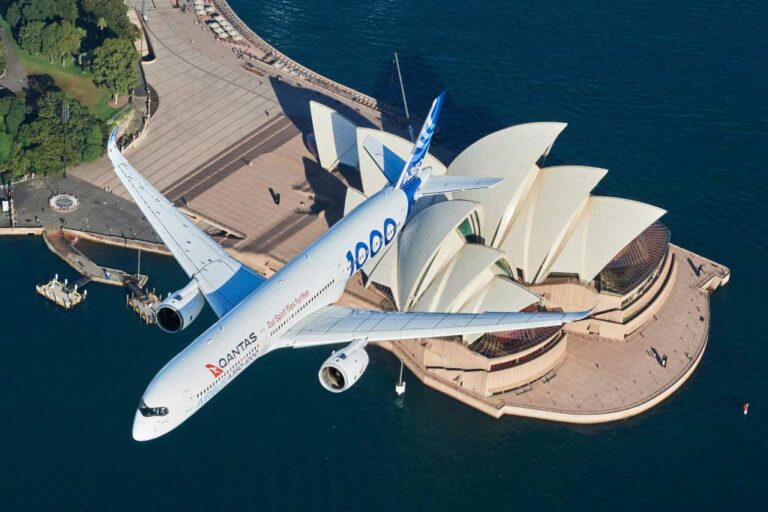
In the premium segment, this is particularly evident. Strategic partnerships such as Emirates–Qantas and joint ventures between Singapore Airlines and Lufthansa enable coordinated scheduling, seamless long-haul connectivity, and integrated customer experiences across congested global hubs. These arrangements extend network reach while maximizing the use of constrained infrastructure, without requiring direct expansion.
Within this broader ecosystem, sustainability is a further constraint on growth. Limited availability of sustainable aviation fuel (SAF), rising decarbonization costs, and evolving regulatory requirements are reshaping route economics and fleet decisions, forcing airlines to balance growth ambitions with emissions targets.
These constraints will not affect all airlines equally. Those with strong balance sheets, diversified fleets, advantaged hub access, and advanced operational capabilities will be better positioned to navigate scarcity. Others that are more reliant on aggressive expansion or constrained by weaker infrastructure access may find growth increasingly difficult to sustain.
Ultimately, airlines can no longer assume constraints will disappear and must operate as if limited capacity is a permanent condition of the industry. Leaders who recognize this shift and adapt their strategies accordingly will be best positioned to succeed.
CXO Takeaway
Aviation leaders must treat scarcity as a strategic variable—optimizing, allocating, and monetizing constrained capacity with greater precision than competitors.
Airline Digital Infrastructure as a Strategic Imperative
The transition toward autonomous airline operations is forcing airlines to rethink capital allocation priorities. Historically, airline investment focused primarily on fleet expansion, route development, and infrastructure partnerships.
While these investments remain essential, digital infrastructure is becoming equally strategic.
Key investment areas include:
- Integrated operational data platforms
- Real-time decision support systems
- AI-driven optimization engines
- Digital passenger experience platforms
- Cybersecurity and data governance frameworks
Airlines that prioritize these digital capabilities will be better positioned to manage operational complexity, respond to disruptions faster, and sustain long-term performance advantages.
CXO Takeaway
Digital transformation and digital operational infrastructure are becoming as strategically critical as aircraft fleets. Airlines that fail to invest in operational intelligence risk long-term competitive disadvantage.
Aviation Growth Strategy in a Constrained Capacity Environment
This shift is already underway. Aviation’s next chapter will be defined by the limits of the system that supports it. Growth will continue—but it will be uneven, capacity-bound, and increasingly shaped by infrastructure, production, and workforce realities.
For airline leaders, the focus must shift from how to grow faster to how to grow smarter, maximizing profitability, efficiency, and resilience within fixed constraints.
Scarcity is no longer a temporary constraint—it is the operating reality shaping aviation economics. The airlines that outperform will not wait for capacity to return—they will redesign their strategies around its persistent absence.