High-Mix, Variable Production Hard to Automate
Automation loves repetition, and much of modern manufacturing refuses to provide it. Short runs, frequent changeovers, and product variants that multiply every year make the classic fixed-automation case collapse. The plants with the strongest labor pressure are often exactly the ones whose product mix punishes rigid automation. What worked in automotive final assembly does not transfer cleanly to a high-mix machine shop, and pretending otherwise is how automation earned its reputation for disappointment.

Lack of Clarity Where Automation Truly Pays Back
Automation business cases have a habit of being right about the robot and wrong about everything around it, from fixturing to the integration hours that never appear in the vendor quote. Without an honest payback model, plants either automate showcases that never return their cost or starve the projects that would. Manufacturing automation consulting services exist in large part to restore that clarity, treating each candidate cell as a capital investment strategy question first and an engineering question second.

Aging Equipment Lacking Standard Interfaces
The machine that has run reliably for twenty-five years is both an asset and an obstacle: too productive to replace, too closed to connect. Much of the installed base predates standard interfaces, so every automation project begins with a bespoke bridge between the new cell and the old iron. Those bridges are where budgets quietly go to die — one-off engineering that cannot be reused on the next line. The equipment is rarely the reason to wait, but it is almost always the reason the estimate was wrong.

Weak Standards for Integration & Safety
Plants that automated piecemeal now own a museum of control systems — each cell safe and functional on its own, none of them designed to work as a system. Without shared standards, every new robot arrives as a fresh integration project, and safety cases must be rebuilt from scratch each time. Mature manufacturers treat a common integration architecture as the foundation of automation planning, because the alternative is a plant where the cost of the next cell never falls.

Automation Owned Separately From Operations
In many organizations automation lives in a central engineering group with its own budget and its own favorite technologies, while the operations leaders who must live with each cell inherit decisions they never owned. The result shows up a year later as equipment the floor works around instead of with. Ownership, not engineering, decides whether a cell becomes part of how the plant runs — and ownership is settled long before the robot is bolted down.

Sparse Robotics & Controls Engineering Talent
Every automation ambition eventually collides with the same shortage: the robotics and controls engineers who make cells work are scarce and heavily recruited. A plant can buy a robot in weeks but may take a year to hire the person who keeps it running, and a single resignation can idle a cell that cost seven figures. The talent constraint shapes what should be automated and how, favoring standard, maintainable designs over clever ones — and it rewards manufacturers who grow their own technicians rather than betting on a market that has already been picked clean.

Evaluating Automation Opportunities & Payback
P&C Global starts by separating the processes that deserve automation from the ones that merely annoy people. We screen the operation cell by cell, modeling labor content and true lifecycle cost rather than vendor payback claims. Because automating waste only accelerates it, we pressure-test each candidate against lean manufacturing principles first — many automation problems dissolve when the process is fixed. What survives the screen is a ranked payback model the CFO can believe, with the marginal cases labeled as exactly that.

Forging an Automation Strategy & Business Case
We then forge the strategy that turns a list of good projects into a program — the level of automation each value stream justifies, and an order of attack that builds capability instead of scattering pilots. The business case is built against the plant's throughput model and the labor market it actually hires in, not a generic robot-density benchmark. Each stage of the automation roadmap carries its own return, so no stage is approved on the promise of a later one.

Engineering the Automation & Integration Roadmap
P&C Global's industrial automation consulting turns strategy into an engineering roadmap the plant can execute — the line-automation map and the controls architecture every future cell will inherit. We design for the second and tenth cell while engineering the first, so integration effort falls with each deployment instead of repeating. Standards are chosen for maintainability by the technicians the plant can realistically hire, which is a quieter decision than robot selection and a more consequential one.
Standing Up Robotics, Cells & Controls
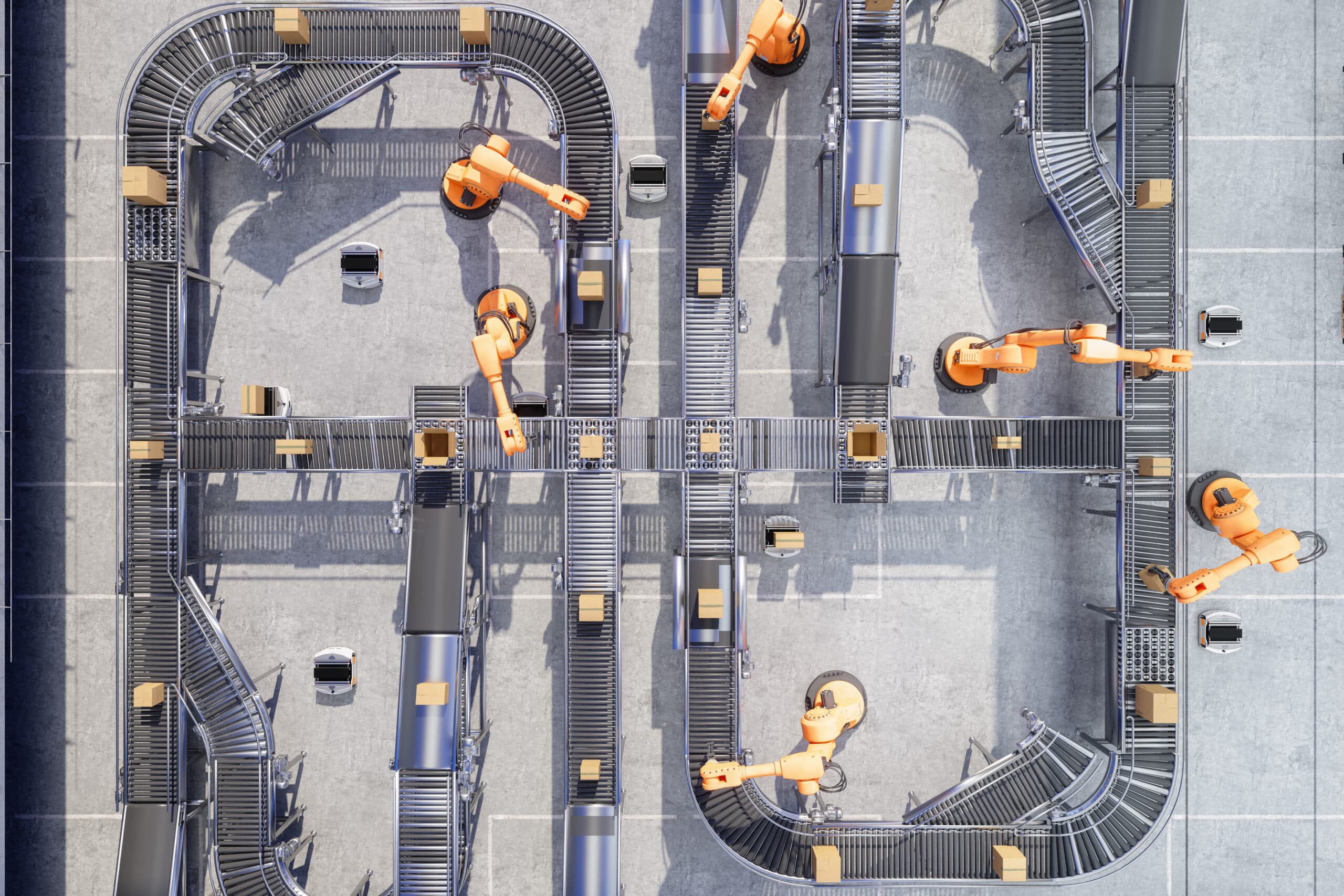
Designs prove themselves in steel and code. P&C Global stands up the first robotics cells and their controls alongside the plant's own engineers, insisting on the unglamorous disciplines — safety validation before commissioning, documentation before handover — that decide whether a cell survives its first bad week. Each robotics cell design is commissioned against the throughput model it promised, and operators are involved early enough to shape the cell they will own. A cell the floor helped build is a cell the floor keeps running.

Propagating Automation Toward Lights-Out Production
One good cell is an exhibit; a spreading program is an operating advantage. P&C Global scales automation along the roadmap, reusing the standards so each cell lands cheaper and quicker than the one before. Where the economics support it, we extend toward lights-out production in deliberate steps — unattended shifts on proven lines before anyone talks about a dark factory. Automation at this scale converges with the broader Industry 4.0 agenda, because unattended production is only as good as the data and systems watching it.

Optimizing Automation Uptime, Safety & ROI
P&C Global measures automation the way finance does: cells either return what the payback model promised or they get engineering attention until they do. We track uptime and safety performance through the plant operations review, and we hold the ROI model honest against actuals rather than against the original slide. Early cells are selected to return their cost quickly, so the program builds credibility while it builds capability. Where a cell underperforms, we treat it as an engineering problem to solve, not a number to reframe.