Complex, Plant-Specific Processes Hard to Standardize
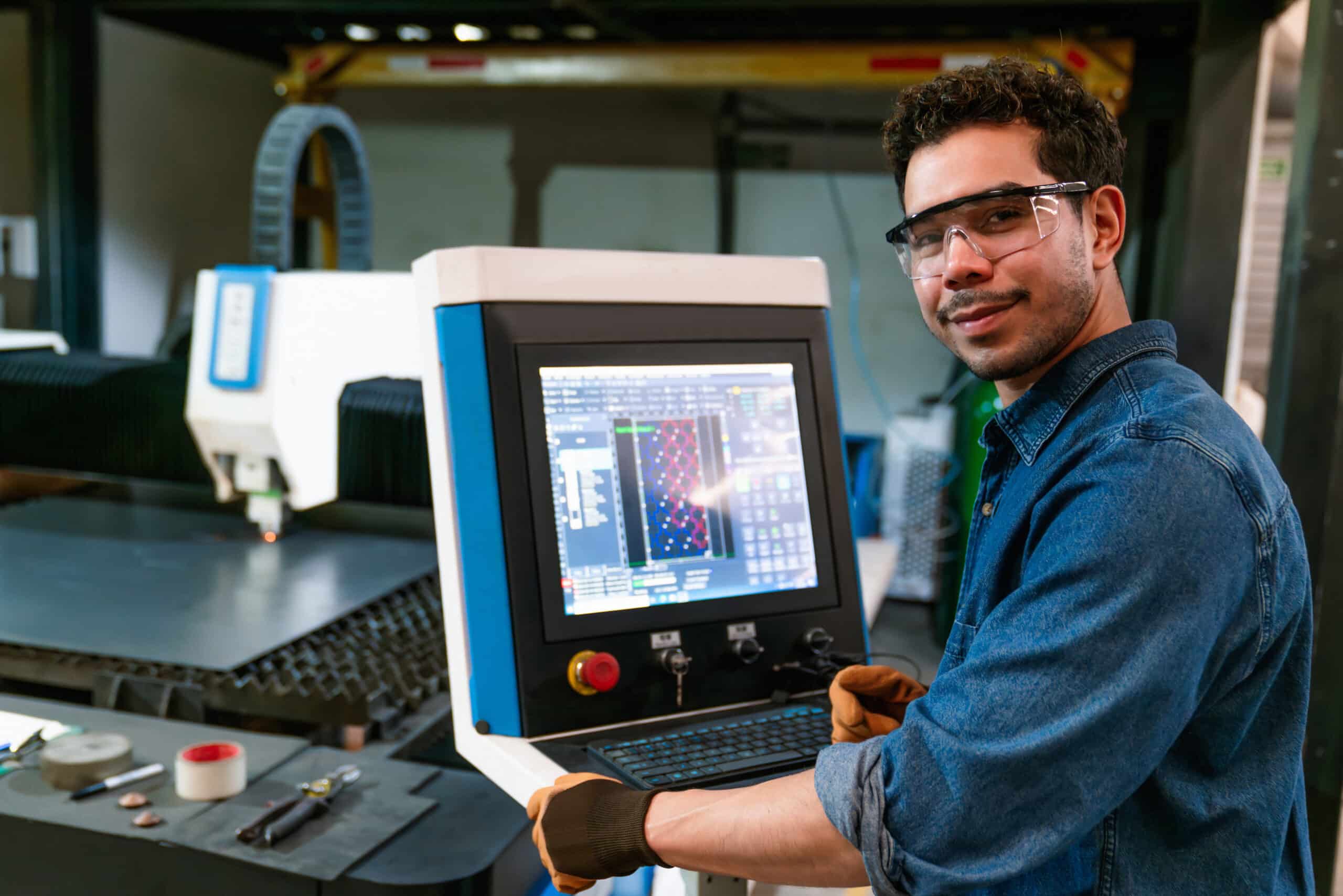
Every plant believes its way of working is the necessary one, and each is partly right. Local processes grew up around specific products, equipment, and customers, and some of that variation genuinely earns money. The rest is history wearing the costume of necessity. An ERP program forces the question of which is which — and few organizations have a forum where that argument can be settled on evidence rather than seniority.

Weak Master-Data & Governance Discipline
ERP systems run on master data: the material records, bills of materials, and routings that describe how the business actually builds things. In most manufacturers that data has been maintained loosely for years, and duplicate part numbers or stale routings are harmless right up until a new system treats them as truth. Any experienced manufacturing ERP consultant will trace a struggling implementation back to data before software, which is why a real data strategy has to precede configuration. Cleansing after go-live costs many times what cleansing before it would have.

Limited ERP & Manufacturing Process Talent
The people who can hold an ERP data model in one hand and a production schedule in the other are rare, and the market knows it. System integrators bill them out at premium rates; manufacturers struggle to keep them once a program ends. The shortage bites hardest mid-program, when design decisions need someone fluent in both the software and the shop floor. Programs staffed with generalists make those calls by default, and the cost surfaces quarters later as workarounds and rework.

Fragmented ERP Data With No Single Source of Truth
Decades of acquisitions and site-level autonomy leave many manufacturers running several ERP instances, each with its own chart of accounts and its own version of events. Finance reconciles by spreadsheet. Operations reports what its local system says. Leadership decisions wait on business intelligence stitched together after the fact, which means the numbers being compared were never produced to be comparable. The fragmentation is not merely inconvenient; it quietly taxes every decision the enterprise makes.

Heavily Customized Legacy ERP Hard to Upgrade
The customizations written into a legacy ERP were each rational once. Twenty years on, they form a layer of code nobody fully understands, welded to processes nobody remembers choosing. Every vendor upgrade must be tested against that layer; many upgrades are simply not taken, and the system drifts further from supported ground. Vendor support deadlines — the migration cliff facing thousands of manufacturers this decade — turn the accumulated customization into a bill that arrives all at once.

Process Ownership Split Across Functions & Sites
An ERP program needs someone empowered to decide how order-to-cash or plan-to-produce will work everywhere. In most manufacturers, no such person exists. Pieces of each process belong to functions, sites, and regional leadership; each owner can veto, but none can decide. The vacuum fills with committee compromises that satisfy everyone slightly and the design brief not at all. Until ownership is settled, the program is negotiating with itself.

Benchmarking Process Fit, Data & ERP Readiness
P&C Global opens with evidence rather than requirements workshops. We benchmark each plant's processes against industry standards, score master-data quality record by record, and assess how much of the legacy customization still earns money. The fit/gap analysis that results tells leadership the true size of the program before anyone commits to a date. Most clients discover the readiness picture is uneven — some sites nearly ready, others years of discipline away — and the roadmap gets built on that truth.
Shaping an ERP Modernization Strategy & Case
We shape the modernization strategy with the chief financial officer as co-author beside the CIO, because an ERP case that lives only in IT dies in the first budget review. The strategy settles platform direction, single-instance versus federated architecture, and the sequence of sites — framed inside the broader enterprise systems transformation agenda rather than as an isolated swap. The business case is written in operating terms: inventory turns, schedule adherence, close-cycle days. Capital committees fund outcomes, not modules.

Structuring the Target Process & ERP Blueprint
P&C Global's ERP consulting for manufacturing produces a blueprint before it produces configuration: the target processes, the data model, and the integration map that will govern every subsequent build decision. We convene the process owners — settled at last — to standardize where the business benefits and to protect the plant-level variation that genuinely competes, drawing on our manufacturing operations practice to tell the two apart. The architecture review board signs the blueprint, and from that point it governs; changes are argued against it, not around it.

Launching ERP Implementation & Data Migration
Implementation is where P&C Global stays when strategy firms leave. We run the build alongside the chosen integrator, holding the customization log honest — every report, interface, and enhancement justified against the blueprint — so tailoring remains the exception it was promised to be. Data migration is rehearsed until the numbers reconcile on the first pass rather than the fifth, and cutover is planned around the production calendar, never asking a plant to change systems in its peak season. Go-live is a controlled operation with a tested fallback, not an act of faith.

Industrializing ERP Across Sites & Functions
The first go-live proves the design; industrialization proves the program. P&C Global converts the initial deployment into a template — configuration, data standards, and cutover choreography — and rolls it out site by site in a rhythm the organization can absorb. Each deployment wave should be delivered more efficiently than the last, demonstrating that the template is improving organizational performance as intended. Regional exceptions are granted by the process owners against the blueprint, never accumulated silently.

Managing ERP Adoption, Value & Roadmap
P&C Global holds the program to the case that funded it. Through the ERP steering committee we track adoption plant by plant, watch the operating metrics the business case promised, and keep a roadmap of capabilities the new platform makes possible but the program deliberately deferred. Returns start inside the engagement, as early waves generate the inventory and close-speed improvements that help carry the later ones. An ERP is never finished — but it can be governed, and that is the difference between a system and an asset.