Manufacturing Execution System Consulting

P&C Global's Manufacturing Execution System Consulting Services

Every plant answers to two versions of the truth. The ERP holds what production was supposed to do; the shop floor knows what it actually did — and in many factories that knowledge still lives on paper travelers, whiteboards, and the memory of the second shift. The manufacturing execution system is where those two versions are supposed to meet. Manufacturing execution system consulting exists because making them meet is harder than any vendor demonstration suggests, and because the plants that manage it gain a production record the whole enterprise can finally run on.

P&C Global’s MES implementation consulting starts from an unfashionable conviction: the shop floor is the most demanding IT environment a company owns. Our consultants have spent more than a decade proving it, standing up execution systems for premium producers across automotive, appliances, and aerospace whose tolerance for line disruption is zero. We bring the same depth of expertise in ISA-95 manufacturing architectures as we do in the operational and financial disciplines that guide enterprise transformation. The firm’s wider assets travel with us: Visage™ AI, the firm’s cross-practice platform, makes production data legible, and the 4D Methodology takes the risk out of each rollout before a line is touched. What clients notice first, though, is simpler: our people know what a changeover is.

Manufacturing Execution System Challenges Facing Industry Leaders

The difficulty with execution systems is that they must formalize the least formal part of the enterprise. Everything above the plant floor was standardized years ago; the floor itself kept its habits, its local systems, and its exceptions, because output always came first. Imposing a system of record on that world is as much diplomacy as engineering. MES consulting has to manage both at once — both the technical architecture and the organizational alignment — so the system the plants receive is one they will actually feed.

Man in a suit looking thoughtfully out a window, reflecting on law firm client retention strategy.

No Real-Time Visibility of Shop-Floor Execution

Most manufacturing leaders can quote yesterday's output but not this hour's. Production reporting arrives at shift end, keyed in by hand, already old and occasionally optimistic. By the time a problem reaches a dashboard, the scrap has been made and the schedule promise broken. The advanced analytics the enterprise keeps funding cannot fix this, because analysis inherits the latency of its data — and execution data that arrives late is history, not visibility.

Diverse Lines & Equipment Hard to Standardize

A single plant may run a robotic line commissioned last year beside a press older than its operators, each speaking a different protocol or none at all. Multiply that across a network and a "standard deployment" becomes a diplomatic fiction. Credible MES consulting services have to absorb this diversity rather than wish it away, because a template that fits the newest line will stall on the oldest one — and the oldest one usually makes the money.

Two businessmen in suits discuss M&A Advisory documents at a table in a modern office.

Few Standards for Data Models & Workflows

Ask three plants to define a batch, a lot, or a completed operation and expect three answers, each backed by years of local practice. Without shared data models and workflow definitions, every line integration becomes bespoke, every report needs a translator, and no two sites' overall equipment effectiveness (OEE) numbers can honestly be compared. The absence of standards is invisible day to day; it surfaces the moment the enterprise tries to treat its plants as one system.

Two men in suits discuss Statistical Modeling Consulting Services in a modern office setting.

Legacy Line Systems That Resist Integration

Beneath every MES ambition sits a layer of line systems that were never meant to talk to anything: custom controller logic, vendor-locked equipment, historians running on hardware nobody will touch. Each resists integration in its own way, and the integration effort routinely dwarfs the MES license in cost. This is where enterprise application integration discipline matters most and is applied least — connectivity gets solved ad hoc, line by line, and the fragility is built in from the start.

Two businesspeople discuss Law Firm CRM Consulting in a bright office hallway.

IT, OT & Operations Owning Pieces Separately

An MES sits precisely where three organizations meet. IT owns the infrastructure and the integration; engineering owns the machines and their controls; operations owns the people and the throughput the system is meant to serve. Each holds a veto and a budget line, and none owns the whole. Programs stall here more often than on any technical question — an execution system belongs to everyone, which in practice means it belongs to no one.

Older woman in a suit advises on law firm client retention strategy in an office setting.

Sparse MES & Systems-Integration Talent

The MES skill set is a strange hybrid: part manufacturing engineering, part enterprise software, part change management conducted on a factory floor. People who hold all three are scarce, concentrated in a handful of integrators, and booked months ahead. Manufacturers trying to build the capability internally find the market thin and the ramp long. Programs end up paced not by ambition or budget but by how much of this rare capacity they can secure and keep.

Our Approach to Manufacturing Execution System Consulting

P&C Global’s MES implementation consulting is sequenced around a lesson the industry keeps relearning: execution systems fail at the edges, in the unglamorous work of integration and definition, not in the software selection everyone argues about. So we spend the early effort where the failure lives. The steps below carry a plant network from an honest baseline to an execution layer that earns trust line by line.

Woman presenting real-time data & analytics dashboards on colorful charts in a modern office.

Auditing Shop-Floor Systems & Integration Needs

P&C Global starts on the floor, not in a requirements document. We walk the lines and catalog every system a future MES must hear — controllers, historians, and quality stations among them — scoring each for integration difficulty. The MES requirements specification that emerges is written against this reality, so nobody discovers a decade-old bottling line as a surprise in month nine. It is unglamorous work, and it is why the later phases hold their dates.
Man in suit presents data on Law Firm Expense Management in a conference room.

Establishing an MES & MOM Strategy & Business Case

We then frame the strategy question properly: not which MES, but what execution capability the business needs and where manufacturing operations management (MOM) should extend beyond it. P&C Global builds the case with the chief manufacturing officer and the CIO together, priced site by site and paid for in named operating metrics — first-pass yield, schedule adherence, traceability coverage. A board can fund that; nobody should fund a software preference.

Woman presenting data on AI Execution management with a bar graph displayed behind her.

Configuring the MES Architecture & Data Model

P&C Global designs the ISA-95 architecture and the shop-floor data model before configuration begins, defining once what a batch, an order, and a completed operation mean everywhere. An experienced MES consultant treats the data model as the real product — the software operationalizes that model consistently across the enterprise. Built well, that model becomes the foundation for everything downstream, from honest cross-plant comparisons to the digital twins manufacturers increasingly build above the execution layer.

Woman leading eDiscovery Project Management Planning with graphs in a meeting room.

Rolling Out & Integrating MES to the Line

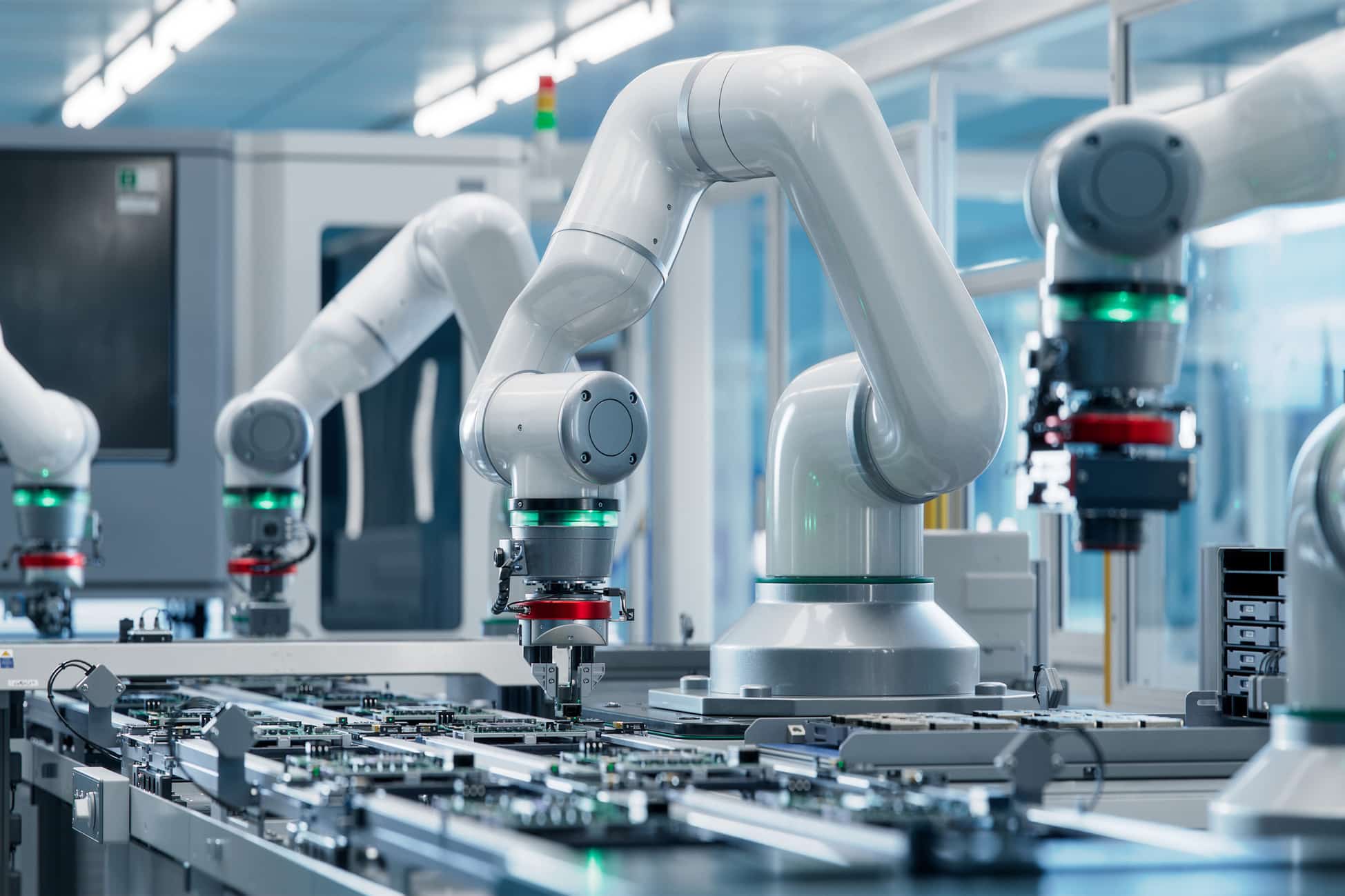
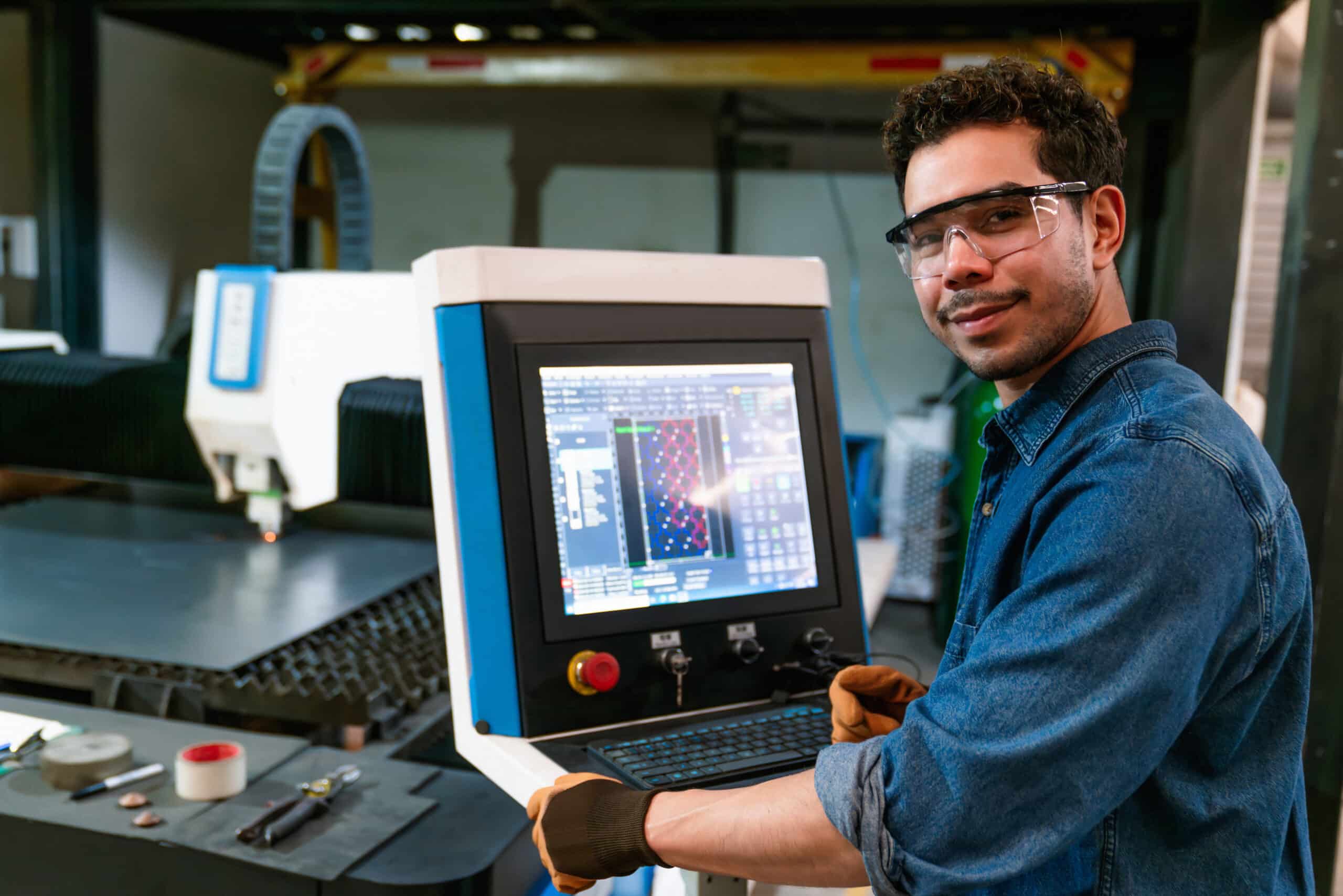
The first deployment is run as a proving ground. We integrate the MES to the line alongside the operators who will live with it, wiring it into equipment through disciplined interfaces rather than one-off scripts, and connecting it to the intelligent automation the plant already runs. Operators shape the screens they will use, which is why they still use them a year later. The line keeps producing throughout — a constraint we treat as absolute.

Digital illustration of a human head with circuit patterns and futuristic technology graphics.

Broadening MES Across Lines & Plants

One proven line becomes a deployment playbook — the templates, the integration patterns, the training. P&C Global manages expansion as industrial repetition, each wave cheaper and faster than the last, rather than as a series of first-times. And because a standardized execution layer is the backbone of any broader Industry 4.0 program, we sequence the rollout so the smart-factory agenda inherits it rather than waits for it.

Man gesturing at desk with charts, discussing CRM technology enablement strategies behind him.

Monitoring MES Data, Uptime & Value

P&C Global stays to make the system pay. Through the plant digital review we watch what the MES now makes visible — OEE, first-pass yield, traceability gaps — and turn the findings into improvement work with owners and dates. Uptime of the execution layer itself is managed like production uptime, because a plant that has learned to trust its MES must never have cause to relearn distrust. The early lines typically fund the later ones; visibility has a habit of paying its own way.
Outcomes Clients Can Expect

  • An MES program funded and measured on operating metrics — yield, adherence, traceability — rather than on software milestones
  • Production promises the commercial side can trust, backed by an execution record instead of end-of-shift estimates
  • Operators and supervisors working from live screens they helped design, with the data-entry burden falling rather than growing
  • One execution truth across lines and plants: comparable OEE, honest schedules, and a shop floor the enterprise can finally see
  • Traceability that satisfies customers and regulators on demand, and an execution layer no longer dependent on scarce local heroes

Why Manufacturing Execution Systems Matter Now

The shop floor remains one of the least digitally integrated parts of many manufacturing enterprises. Planning was instrumented years ago, and finance long before that; execution still reports late and by hand in a remarkable share of factories. What has changed is what now depends on it — AI models, digital twins, and tightening customer traceability demands, all waiting on production data that does not yet exist in usable form. MES consulting services are in demand for precisely this reason: the execution layer has moved from operational convenience to a strategic prerequisite. P&C Global’s edge is having built that layer inside working plants, while the lines ran — which is the only condition under which it is ever really built.

Modernize Shop-Floor Execution with P&C Global

A factory that cannot see its own execution manages by memory, and memory does not scale across lines, shifts, and plants. Manufacturing execution system consulting with P&C Global builds the missing layer as one program — architecture, integration, and rollout — so the production record becomes something the entire enterprise can run on.

Frequently Asked Questions — MES Advisory

Success Stories

A dynamic showcase of P&C Global’s transformative engagements and the latest industry trends.

Demonstrated Outcomes. Significant Influence.

Witness the remarkable achievements we’ve enabled for ambitious clients.

qatar white

Leading Sustainable Airline Fleet Management

Client Outcomes Listing
Further Reading
turkisharilines white

Transforming Cargo Operations: From Regional to Industry Leader

Client Outcomes Listing
Further Reading
Beko white

Strengthening Brand Awareness Through High-Impact Sports Sponsorships

Client Outcomes Listing
Further Reading
_Tommy Test

Delivering Personalized Beauty Experiences at Scale

Client Outcomes Listing
Further Reading

Our Insights

Research & Insights
AI Agents & Autonomous Workflows: Redesigning Enterprise Execution
Further Reading
Research & Insights
Engineering Lifecycle Economics in Premium Manufacturing
Further Reading
Research & Insights
Software-Defined Luxury Vehicles: From Horsepower to Code
Further Reading
By using this website, you agree to the use of cookies as described in our Privacy Policy