Manufacturing HR Consultancy Services
P&C Global's Manufacturing HR Consultancy Services
In manufacturing, an HR problem becomes a production problem within a single shift. An unfilled role on the line is not an open requisition; it is output that did not ship. Yet most HR functions were designed around headquarters populations and desk-based work, and the distance shows on the plant floor. Manufacturers need manufacturing hr consultancy services that treat the plant, not the head office, as the unit of design — because that is where the workforce is, and where it is won or lost.
P&C Global’s manufacturing workforce consultants have worked plant-side for more than a decade, with premium manufacturers whose products leave no room for a hollowed-out workforce. Our client work runs from ultra-premium automotive houses to luxury appliance makers such as V-ZUG and Miele, where craft is the product and the people who carry it are the scarcest asset. We also guide manufacturers through the certification landscape their plants answer to, from IATF 16949 to AS9100. That grounding matters: HR advice that has never met a shift pattern rarely survives one.
Manufacturing HR Challenges Facing Industry Leaders
The tension running through every one of these pressures is distance — between the head office where HR policy is written and the plant floor where it has to hold. Policies that read well at headquarters meet shift realities they were never drafted for. Manufacturing human resources consulting closes that distance, giving leadership one view of the plant workforce so these pressures can be answered as a connected whole rather than plant by plant, crisis by crisis.

Corporate HR Models Misfit for Multi-Site Plants
An HR model tuned for one headquarters rarely fits ten plants. Service centers built for salaried staff struggle with hourly populations three time zones away. Standard processes assume a desk and daytime hours; a night-shift supervisor with a staffing hole at 2 a.m. does not fit the ticket queue. What the center calls consistency, the plant experiences as delay.

Unique Needs of Luxury & Artisanal Production
Luxury and artisanal production run on skills that take years to build and cannot be hired from a job board. A master upholsterer or polishing specialist is closer to a craftsman than to an interchangeable role, yet generic HR practice treats both alike. Manufacturing hr consulting attuned to premium manufacturing protects craft pipelines the way operations protects tooling — as capability the brand cannot ship without.

Thin Plant-HR & Frontline Leadership Capability
In many plants, HR is one overstretched generalist, and the frontline leaders are supervisors promoted for technical skill. Between them sits the entire daily employee experience of hundreds of people. When capability is that thin, retention hangs on individual heroics, and every departure at either level leaves a hole the plant feels immediately.

Inconsistent HR Practices Across Disparate Sites
Plants acquired at different times run on different rules, and the differences surface at awkward moments: a grievance here, a stalled transfer there. Harmonizing them is genuinely hard, since each variation has local history behind it. It takes deliberate change management, because a plant experiences standardization as something done to it unless it is brought along.

Tight Local Labor Markets Around Plant Locations
A plant cannot relocate to follow the labor. It hires from the towns around it and inherits the demographics of its region, competing with every employer in the same radius. When the local pool tightens, wage escalation starts a spiral the P&L cannot sustain — and the constraint arrives years before it appears in any strategy deck.

Little Visibility Into Plant-Level Talent Risk
Headquarters usually learns about a plant's talent problem when production misses. The risk detail lives locally — which line depends on a single certified operator, or which retirements land next year — and rarely rolls up in any form leadership can act on. By the time a talent gap is visible in the output numbers, the lead time to fix it is gone.

Our Approach to Manufacturing HR Consultancy
P&C Global’s manufacturing workforce consultants design HR the way plant engineers design a line: for the conditions it will actually run in. We build plant-first — every element has to work on a night shift in a tight labor market or it does not ship.

Pinpointing Plant Workforce & HR Service Gaps
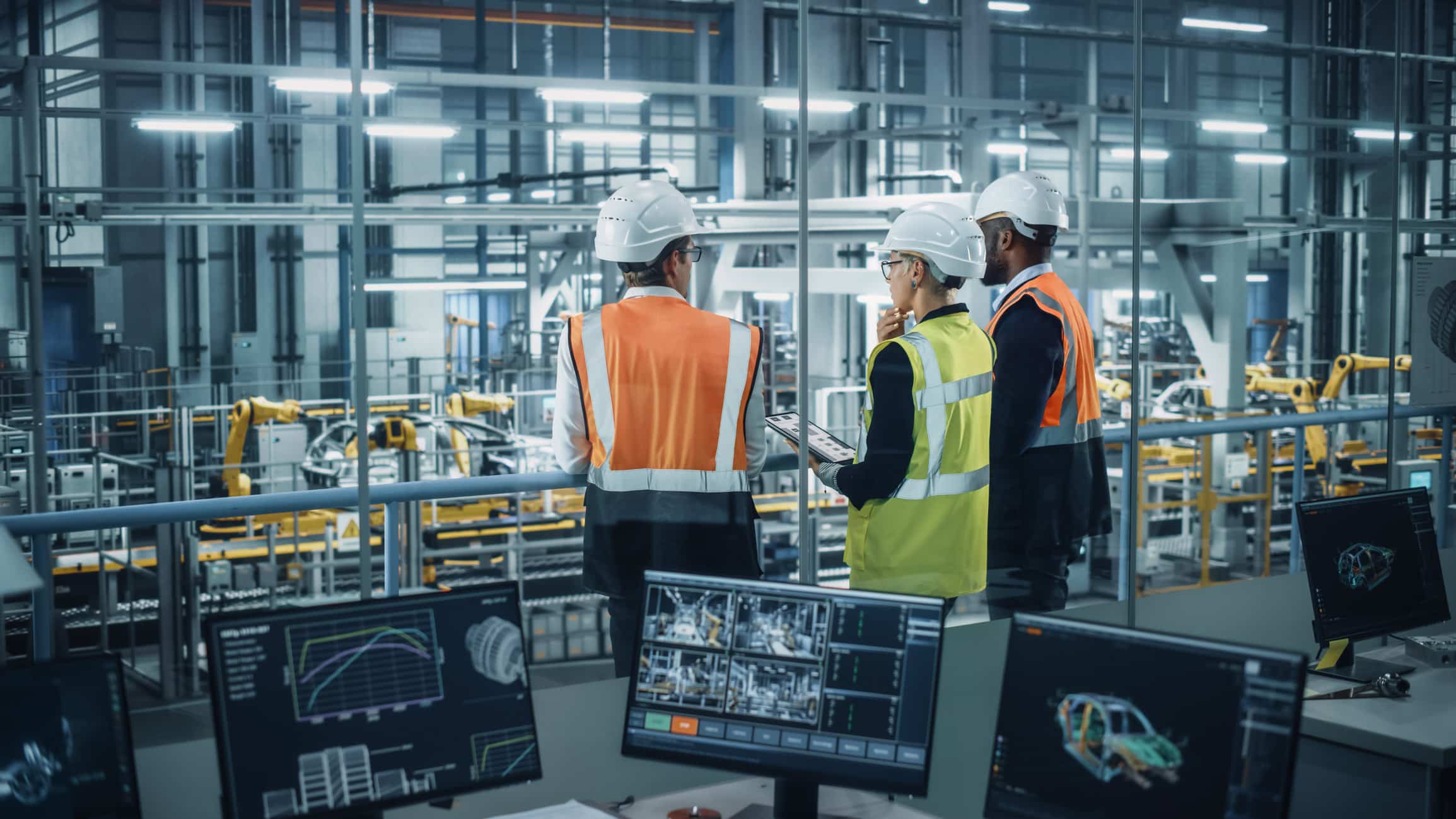
P&C Global goes to the plants first. We walk the sites and measure how HR service actually reaches the floor, plant by plant. A labor-market analysis around each location shows what the site is competing against for people. The CHRO and chief operating officer get one honest picture of where the workforce stands and what each gap costs in output — a baseline plant managers recognize, because they helped build it.

Crafting a Manufacturing-Specific HR Strategy
We then craft an HR strategy written for production rather than adapted from a corporate template. It settles where scale genuinely helps and where plants need local discretion. Where automation is changing what plants need from people, the strategy connects to workforce transformation so reskilling gets planned with the same lead time as equipment. The CEO and CHRO leave with an agenda the plant managers treat as their own.

Modeling the Plant HR Operating Model
P&C Global models how HR operates across the network — what the center owns and what each site decides. Practical HR consulting for manufacturing puts real capability at the plant level, because a works-council negotiation or a 2 a.m. staffing decision cannot wait for a regional service center to open. Plant HR gets sized to the workforce it serves rather than to a headquarters ratio, and every plant knows exactly which decisions are its own.

Operationalizing Hiring, Training & Retention Programs
We make the programs run where they are needed. Hiring pipelines are built around each plant's real labor market, with an employer branding presence that makes the site a known employer in its own town. Training moves onto shift-compatible cadences with certification tracking the line can rely on. Retention work concentrates on the first year and the critical crafts, where losses hurt most and fixes pay back fastest.

Accelerating HR Practices Across Plants
From there, we carry what works from one plant to the rest. Practices are standardized where consistency creates fairness and left local where the site knows better. Each rollout lands through the plant HR review with local leadership in front of it, not headquarters. We pace the harmonization so each site is brought along rather than overwritten — a lesson every multi-site manufacturer eventually learns, cheaply or expensively.

Steering Plant HR Metrics & Compliance
We leave leadership steering the plant workforce by number, not anecdote. A multi-site HR scorecard puts frontline turnover and shift coverage on one page beside the safety scorecard, read side by side with the production numbers. Labor-relations obligations and certification requirements are tracked with the same discipline. Because staffing and retention fixes land plant by plant, the workforce gains start arriving while our consultants are still on site.
Outcomes Clients Can Expect
- Lower cost per hire and per retained employee across the network, with turnover savings that show up in plant-level P&Ls
- Production commitments made with staffing certainty, because expansion and new-line decisions now come with a workforce answer attached
- A reputation in each plant’s local labor market as the employer worth staying with — the cheapest recruiting advantage a site can own
- Plant HR running on one operating model with genuine local strength, measured on a multi-site scorecard leadership reads weekly
- Talent risk visible before it reaches production, with single-operator dependencies and retirement waves flagged early enough to act on
Why Manufacturing HR Matters Now
The demographics are not waiting. Experienced operators and craft specialists are retiring out of plants faster than replacements are entering the trades, while reshoring and capacity expansion add demand for the same scarce people. Plants that once chose among applicants now compete for them, town by town. Manufacturing hr consulting fit for this moment does more than patch vacancies; it installs the plant-level HR strength that lets a manufacturer staff tomorrow’s capacity as reliably as it sources tomorrow’s materials. We have done this work alongside the world’s most demanding manufacturers, where the workforce is the product’s last line of quality.
Strengthen Plant-Level HR with P&C Global
Every quarter a plant runs understaffed, the cost compounds in overtime and missed output. Manufacturing hr consultancy services from P&C Global put durable HR capability where production lives — at the plant — so staffing stops being the constraint the operating plan works around and becomes a commitment each site can keep.
Frequently Asked Questions — Manufacturing HR Advisory
Most workforce advisors know HR or know manufacturing; the rare thing is fluency in both at the same table. P&C Global brings the pair — consultants who have negotiated alongside works councils and stood on the lines their plans affect. We stay through the plant-by-plant rollout rather than departing after the strategy deck, and we are vendor-neutral and operator-led — we have no HR software or staffing service to sell. Plant managers judge whether our work landed, and theirs is the verdict we ask to be measured by.
Yes — and we treat those relationships as structures to work with, not around. Labor representatives hold knowledge about the workforce that no dashboard captures, and harmonization efforts that engage them early move faster than ones that surprise them. We prepare the factual ground a fair negotiation needs, from the labor-market analysis to the staffing evidence, while the relationship itself stays where it belongs — with the client. Our HR consulting for manufacturing has operated alongside works councils across Europe and beyond, and it shows in how we sequence change.
Either entry works. A single flagship or problem plant makes a fast proving ground, and what gets built there becomes the template the network adopts. A network-wide start fits when leadership already knows the model is broken everywhere. The scope decision usually settles itself in the first workforce planning review, once the multi-site picture is on the table.
More in Manufacturing Organization & Human Capital
Success Stories
A dynamic showcase of P&C Global’s transformative engagements and the latest industry trends.
Demonstrated Outcomes. Significant Influence.
Witness the remarkable achievements we’ve enabled for ambitious clients.