Tech Talent Consulting
P&C Global's Tech Talent Consulting for High-Tech
Tech talent consulting now sits at the center of one of the high-tech sector’s most urgent leadership challenges: securing elite technical and executive talent amid rising AI compensation pressure, equity volatility, and tightening cross-border hiring constraints. For CHROs, offer acceptance rates are now tied directly to product roadmaps. For CTOs, candidate quality across AI/ML, principal engineering, and architecture roles has become a strategic risk. And for the broader C-suite, including emerging AI officers, compensation calibration now requires a level of precision traditional hiring committees were not built to provide. Across enterprise SaaS, semiconductor design, and hyperscale technology environments, leadership teams can no longer treat open roles as routine requisitions. They need defensible leveling frameworks, structured offer envelopes aligned to the hiring bar, and engineering governance that protects quality of hire as talent plans scale.
P&C Global’s tech talent consultants help high-tech leaders manage talent as a live operating program, not an annual workforce plan. A tech talent consultancy engagement opens with a skills inventory and leveling baseline. Enterprise SaaS providers competing for AI/ML engineers require different offer models than data-platform vendors hiring vector-store and lakehouse specialists. Telecom operators scaling 5G, edge, and cloud-native network capabilities face different talent constraints than device and hardware OEMs rebuilding embedded-systems, firmware, and hardware-software integration teams. The engagement closes with the quality-of-hire and retention layer that leadership needs to track offer acceptance, ramp-to-productivity, and the new-hire telemetry product organizations use as working measures of talent performance.
Tech Talent Challenges Facing Industry Leaders
The cost of waiting for tech talent compounds across critical-role attrition, missed ramp targets, and product windows that close before the right bench is in place. A tech talent consulting firm brought in mid-cycle often inherits all three at once. AI/ML compensation has moved beyond existing bands, equity packages tied to private-company valuations are harder to price, and immigration tightening has compressed the cross-border hiring window on which many engineering organizations expected to depend. Other risks compound the challenge: thin succession benches in critical roles, inconsistent assessment rigor across engineering teams, and exposure around non-compete and IP-assignment requirements. Telecom operators rebuilding 5G engineering teams and data-platform companies competing for lakehouse specialists face different constraints, but the leadership challenge is the same: helping the CHRO sequence trade-offs in real time while keeping the workforce plan aligned to execution.

AI Engineer Compensation Pressuring Existing Pay Bands
AI and ML compensation is outpacing legacy pay bands, especially for senior engineers, research scientists, and foundation-model talent. Hyperscalers and frontier AI labs have reset expectations for critical roles, creating pressure many planning cycles were not built to absorb. For CHROs, the challenge is calibrating AI premiums without distorting adjacent engineering bands, weakening internal equity, or losing candidates to FAANG and frontier-lab benchmarks. That requires deeper pay-band visibility, role-level segmentation, and a compensation model that separates scarce AI capability from general technical hiring.

Equity-Comp Volatility Straining Offer Construction
Private-company valuation swings have made equity-comp grant size harder to price, while wage inflation and stock-comp pressure are reshaping the total cost of talent. Tech talent advisory services pair this compensation calibration with executive search, helping senior-engineering offers clear without forcing the compensation committee to reopen signing-bonus benchmarks for every critical hire.

Immigration Tightening Compressing Time-to-Hire Windows
H-1B caps, lottery dynamics, and shifting timeframes have compressed the cross-border-hiring window. Specialty sprawl and team-level variability dilute strategic engineering focus, and that becomes visible when the international hires the roadmap depends on slip a quarter or two. Companies with mature global mobility programs absorb that disruption faster. Across telecom, hardware, and enterprise SaaS, the differentiator is operating maturity in cross-border technical hiring.
Technical Pipeline Narrowing Critical-Role Depth
Critical-role pipelines in ML platform, security engineering, and silicon-adjacent disciplines have thinned. Onboarding, ramp, and retention risk erodes engineering throughput when bench depth two levels below the senior IC is shallower than the staffing plan assumed. Operators close the gap by tightening leveling discipline, and the same package architecture underwrites compensation strategy when labor-market pressure stretches the bands.

Assessment Rigor Fragmenting Across Hiring Loops
Hiring processes often vary across engineering teams, weakening workforce decisions when rubrics diverge across a shared engineering ladder. Inconsistent bar-raiser calibration, aging take-home exercises, and gaps in productivity telemetry make quality-of-hire harder to measure. For data-platform organizations, that variance becomes a CTO-level risk without a leveling rebaseline and clearer hiring-manager feedback.

Non-Compete & IP-Assignment Restrictions Raising Mobility Risk
FTC non-compete rulemaking, state-level enforcement shifts, and inconsistent IP-assignment terms have raised the cost of missteps in technical hiring. When hiring bars, leveling, and compensation calibration drift across functions, the legal position becomes harder to defend. Semiconductor design teams moving engineers across foundry-adjacent IP and hardware OEMs hiring from competitor benches face a similar concern: talent mobility must be managed with the same rigor as compensation, role fit, and quality of hire.

Our Approach to Tech Talent Consulting in High-Tech
P&C Global’s tech talent approach starts with the engineering-talent outcomes high-tech leaders must protect: offer acceptance, ramp-to-productivity, and critical-role retention. Our tech talent consultants tie the work to the decisions executive teams must make under labor-market, compensation, and immigration pressure. A tech talent consultancy engagement brings together the CHRO, AI officers, C-suite, and engineering leaders to align leveling, hiring bar, and offer construction with the product roadmap from day one. The program pairs strategic clarity on critical-role pipelines with a planning calendar leadership can trust, sequenced against engineering deployment cycles and finance close processes. This allows leadership to act before slates stall, offers miss, or roadmap risk compounds.

Tech Talent Diagnostic & Skills Inventory Baseline
The engagement begins with a tech talent diagnostic and skills-inventory baseline across engineering. This identifies skill strengths by discipline, leveling consistency across teams, and the points in the engineer lifecycle where critical-role attrition or ramp delays first appear. Production-incident logs and live hiring-loop reviews ground the assessment in operating reality. The work also sits within the broader talent acquisition strategy, so external hiring and internal mobility are managed against one critical-role map.

Tech Talent Strategy, Leveling & Career Architecture
Strategy, leveling, and career architecture follow the baseline. The work clarifies individual contributor and management tracks, defines senior engineering ladders, and sets decision rights between the CHRO, CTO, and engineering leaders. The architecture sizes against the AI/ML, platform, and security disciplines the product roadmap depends on, with stretch assignments designed into the model.

Sourcing, Capacity & Comp Modeling Across Functions
Sourcing, capacity, and compensation modeling convert strategy into a sized hiring plan across functions. Equity-comp packaging, refresh-grant timing, and the source-of-hire mix are priced against retention outcomes, paired with a talent management plan that ties development paths and manager toolkits to the executive reporting cycle, rather than an annual review.

Tech Talent Roadmap & Capability Build-Up Execution
The work turns into a sequenced tech talent roadmap. Critical-role searches, internal redeployment, and leveling updates are phased against the capabilities the business needs most. Investment is released against quality-of-hire and ramp-to-productivity milestones. Leadership gets a clear delivery plan, while engineering managers work from a role-specific backlog tied to measurable hiring and capability outcomes.

Tech Talent Development, Hiring Bar & Calibration
Development, hiring-bar, and calibration work then become part of the operating cycle finance and engineering already use. This includes bar-raiser ownership, assessment-rubric refresh, stay interviews for critical roles, and the periodic leveling reviews co-owned by the CTO and CHRO. Where cross-border sourcing carries weight, the program pairs with global mobility so visa sequencing, relocation, and on-the-ground onboarding move as one workstream, not two.
Quality of Hire, Retention & Tech Talent Outcome Tracking
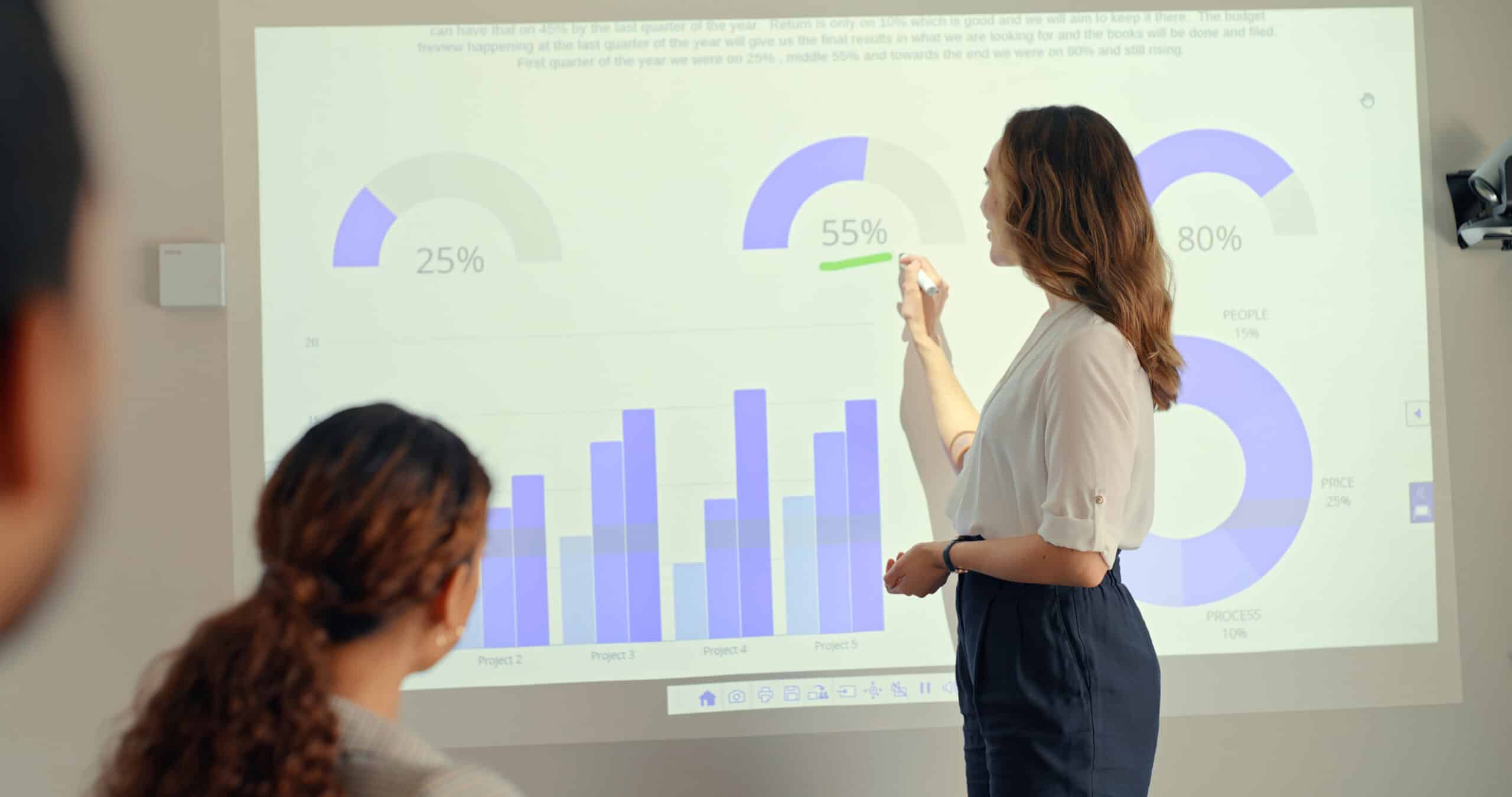
After rollout, attention narrows to quality of hire, retention, and tech talent outcome tracking. Measurement covers offer-acceptance rates, ramp-to-productivity, new-hire retention at twelve and twenty-four months, and the engineering-throughput indicators product teams use as the working measure. Measurable outcomes begin emerging during the engagement itself. Where retention drifts, the cause is diagnosed at the hiring-loop and onboarding level and fed back into the leveling and sourcing design.

Outcomes Clients Can Expect
- Lower cost-per-hire and equity-comp-package efficiency for critical technical roles across the high-tech engineering footprint
- Shorter time-to-fill on AI/ML and senior-engineering roles aligned to board-approved product roadmaps
- Higher offer-acceptance rates and stronger new-hire retention across critical functions
- Deeper succession benches and stronger assessment-rigor coverage for executive review each operating cycle
- More defensible immigration, equity-comp, and pay-equity controls aligned with EU AI Act, GDPR, and OFCCP expectations
Why Tech Talent Matters Now
The environment for tech talent has shifted in three directions, prompting leaders to scope tech talent advisory services earlier. Each shift is moving faster than the prior workforce plan can absorb. AI/ML compensation has risen sharply at hyperscalers and foundation-model labs, challenging the standard pay-band structures enterprise SaaS competitors must defend. Equity compensation tied to private-company valuations has become harder to price and harder for candidates to evaluate. Meanwhile, H-1B caps, lottery dynamics, and EU Blue Card timeline shifts have compressed cross-border hiring windows, increasing the value of locally sourced specialist pipelines across telecom, devices, and hardware.
Strengthen Tech Talent with P&C Global
P&C Global’s tech talent consulting helps high-tech leaders align leveling, sourcing, compensation, and retention with the roles most critical to execution. Senior practitioners work alongside the CHRO, CTO, AI officers, and C-suite leadership to protect quality of hire and retain critical talent beyond the first integration cycle.
Frequently Asked Questions — Tech Talent Advisory
P&C Global takes an execution-led approach to tech talent. Senior practitioners co-own the leveling rebaseline, sourcing and offer construction, hiring-bar calibration, and the retention work alongside the CHRO, the CTO, and C-suite leadership including AI officers. Engagements are measured by quality-of-hire and retention outcomes, not just a closed requisition. P&C Global stays through the first integration cycle, with the leveling framework, hiring bar, and ramp telemetry treated as working operating instruments. The work closes on what the executive team can defend at the next operating review: offer-acceptance rates, ramp-to-productivity, and critical-role retention across the high-tech engineering footprint.
As a tech talent consulting firm, P&C Global tailors each engagement around the realities high-tech operators must manage: equity-comp packaging, private-company valuation shifts, RSU-versus-ISO mix, and recurring repricing scenarios. Technical-assessment frameworks are calibrated to the disciplines the roadmap actually depends on: ML platform, distributed systems, silicon-adjacent engineering and security. The work does not rely on generic competency libraries. International mobility and immigration sequencing are built into the plan for critical hires the home-market pipeline cannot cover. Non-compete and IP-assignment terms are also designed around the high-tech employment market general counsel must defend. When senior-engineering placements move in parallel, the engagement integrates executive search so the slate is calibrated against the leveling design from day one, avoiding a refit after offers land.
Tech talent engagements must account for incentive design because managers respond to what the system rewards. If compensation plans, scorecards, or promotion paths encourage managers to hoard talent, rush hiring decisions, or underinvest in internal mobility, the new leveling framework will not hold. P&C Global’s tech talent consulting services align compensation, manager scorecards, hiring bars, and career ladders from the start. Where incentives are misaligned, adjustments are built into the operating calendar through quality-weighted manager scorecards, hiring-loop reviews, quarterly hiring-manager feedback, and equity-refresh timing for critical AI/ML talent. The goal is simple: keep incentives aligned with the engineering outcomes the business needs, without disrupting the headcount forecast.
Yes. The scope of a tech talent engagement is set by the engineering-talent outcome the client has committed to deliver, whether reducing critical-role attrition, lifting offer acceptance, or rebuilding succession bench depth. A 90-day diagnostic produces a defensible skills inventory and leveling thesis. A multi-quarter or multi-year program can rebuild career architecture, hiring-bar calibration, onboarding discipline, and retention governance through defined handover. Each engagement is matched to the decision in front of executive leadership, from sizing the critical-role gap to sequencing a comp-band refresh or protecting offer-acceptance rates under labor-market pressure. It is not assembled from a fixed menu.
P&C Global’s tech talent consulting work is shaped by the regulations and standards that govern candidate data, compensation evidence, skills inventories, and hiring decisions. These include GDPR, EEOC guidance, OFCCP requirements, immigration rules such as H-1B, O-1, and EU Blue Card, and AESC Professional Practice Guidelines. Engagements are designed to align with these frameworks from the start. That means documenting candidate-data flows, preserving assessment audit trails, identifying pay-equity patterns that may need review, and applying clear governance when AI is used in resume ranking or candidate matching. P&C Global also maintains ISO 27001 and SOC 2 certifications, so data security and assessment discipline are built into how the firm operates, not just what it recommends. Where AI is used in resume ranking or candidate matching, model inputs and exception logic are governed under the same review gates as the hire-decision controls themselves, with legal and the CHRO consulted before deployment.
Published examples show how P&C Global’s tech talent work translates into durable capability, not just filled roles. In Winning the War for Technical Talent at a Retail-Entrepreneurship Client, P&C Global helped rebuild sourcing, leveling, and integration when the client’s engineering pipeline no longer matched its product ambition. The logic behind capability-led engineering planning is developed further in It’s Time for a C-level Role Dedicated to Reskilling the Technical Workforce brief, whose thesis is that workforce reskilling calibrated to the current AI-and-skills repricing of engineering labor outperforms plans inherited from the prior cycle’s assumptions.
Tech talent engagements typically begin when leadership sees that critical-role hiring, compensation pressure, and global mobility risk are starting to affect the product roadmap. They often start before a major hiring push, comp-band refresh, leadership review, or cross-border talent expansion. The kickoff working session is held under a named C-suite sponsor, often the CHRO, CTO, or AI officer. It frames the engineering-talent question the product roadmap depends on and the operating-model dependencies that shape leveling, hiring-bar, and compensation decisions. Workforce development, global mobility planning, and critical-role hiring are scoped together, so the cross-border pipeline is sized alongside the home-market plan. Leaders considering tech talent consulting can contact P&C Global to scope the first engagement.
More in High-Tech Talent Acquisition
Sectors in High-Tech Industry
Success Stories
A dynamic showcase of P&C Global’s transformative engagements and the latest industry trends.
Demonstrated Outcomes. Significant Influence.
Witness the remarkable achievements we’ve enabled for ambitious clients.
Transforming Talent Acquisition & Employer Branding