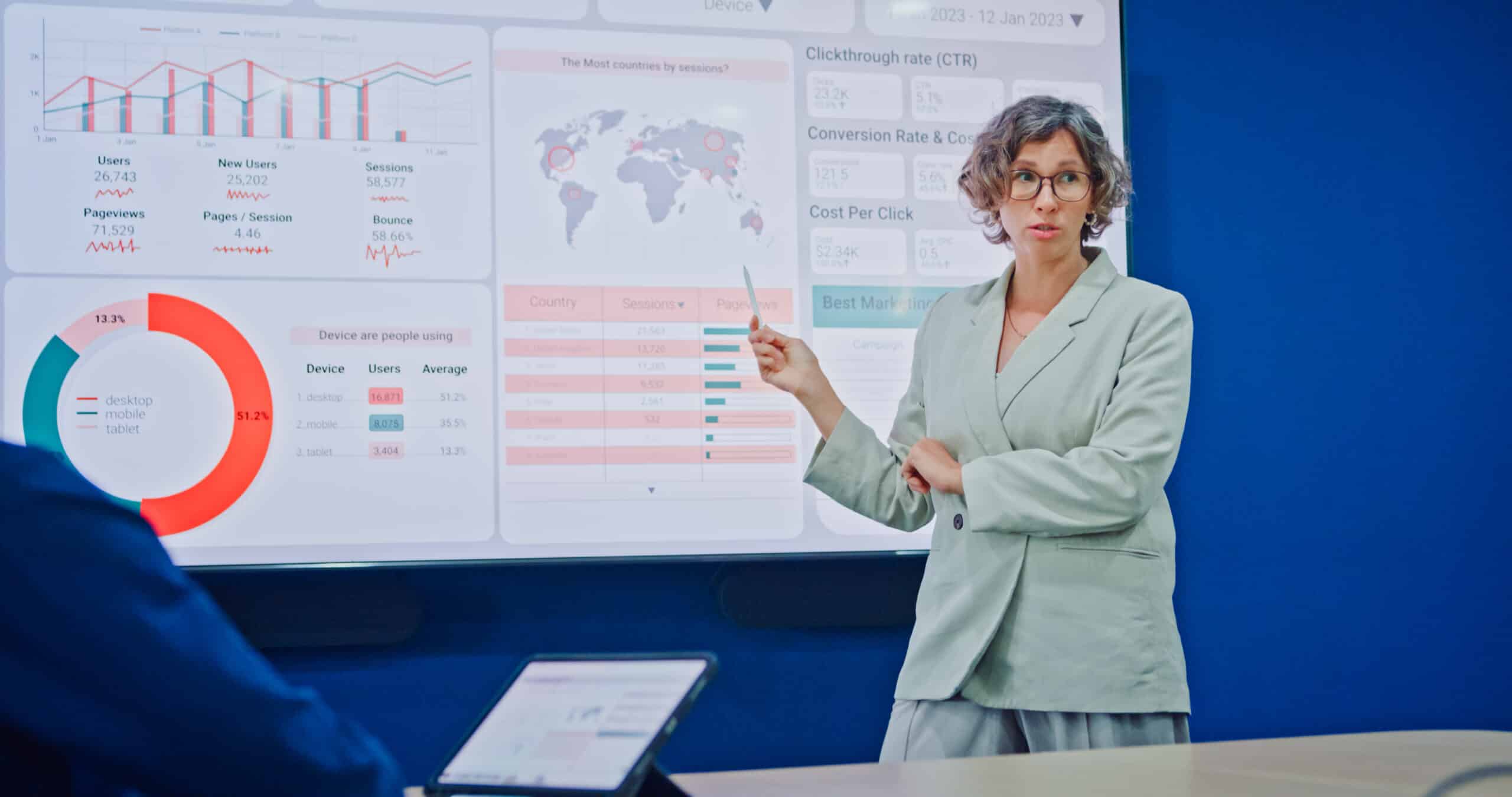
Technology Roadmap Consulting

P&C Global's Technology Roadmap Consulting Services

Technology roadmap consulting has moved from a planning exercise into a performance and measurement discipline, and the artifact a CIO carries into the investment committee now must now withstand scrutiny against AI cost curves, hyperscaler price reshuffles, and the operating-model shifts the business is putting on the table at the same time. CFOs are reweighting technology budgets toward platforms with measurable outcome economics; CIOs are pulling target-architecture choices into the same review where capital projects are scrutinized; engineering leaders are being asked to show why each capability earns its slot before the next funding tranche releases. The C-suite no longer accepts a multi-year plan as proof of progress, and the leadership team is expected to defend the program against the key performance indicator (KPI) line it has committed to defending.

P&C Global’s technology roadmap consultants treat the roadmap as a funded operating program, not a static architecture document. The work begins with a diagnostic of how the existing technology portfolio underperforms expectations — whether the gap is leakage from redundant platforms or under-capture of new capability demand — and ends with a value-capture layer the executive team uses to govern roadmap milestones in real time. Between those bookends, six decisions move in sequence — diagnose the technology baseline, set target architecture principles, prioritize the initiatives, plan the funding and dependencies, govern through an architecture council, and instrument delivery and adoption. The sections that follow set out the recurring pressures that derail multi-year roadmaps, the operator-led approach used to land them, and the outcomes the investment committee can hold the program against.

Technology Roadmap Challenges Facing Senior Operators

Across technology roadmap programs, six recurring pressures show up — capex compression, demand overload outpacing delivery, and architecture sprawl narrowing roadmap choices — and technology roadmap consultancy work only earns its keep when each one is tied to a concrete decision the leadership team will make in the next budget cycle. Roadmaps rarely fail at design—they fail at funding and execution. A multi-year plan may appear coherent in isolation but loses sequencing integrity when capital is reallocated, vendor economics shift, or business demand introduces unplanned capability requirements. This pattern is consistent across financial services, industrial, and technology sectors: the roadmap that survives the executive review is the one iengineered to absorb change without losing structural integrity.

Five people in business attire discuss Leadership Development at a table in a bright office setting.

Tech CapEx Pressure Compressing Roadmap Funding

Tech CapEx pressure and vendor pricing volatility compressing roadmap funding is the dominant pressure on technology roadmaps for the C-suite today. Hyperscaler price moves, subscription renewals, and AI-platform contracting are reshuffling unit economics within months, and last cycle's multi-year CapEx plan no longer fits operating reality. The CFO either receives a sequenced, defensible roadmap—or is forced to make funding decisions in its absence.

Three people sit at a table in an office, reviewing Mergers & Acquisitions Advisory documents.

Stakeholder Demand Overload Outpacing Delivery Capacity

Stakeholder demand for new capabilities outpacing delivery capacity is the demand-side pressure technology roadmap consulting services are asked to relieve every cycle. Business units bring more requests than engineering can absorb, and the business model transformation work in parallel piles new requirements onto the backlog.

Two businessmen in suits discuss M&A Advisory documents at a table in a modern office.

Legacy Architecture Sprawl Constraining Roadmap Choices

Legacy architecture sprawl and application redundancy limit the organization’s ability to execute new initiatives efficiently. Multiple platform generations, overlapping systems, and integration dependencies increase both cost and operational risk, while the absence of a structured rationalization sequence forces teams to repeatedly rediscover constraints.

Person sitting at a desk, stressed while reviewing M&A Advisory Services on a laptop.

Dependency & Delivery Risk Threatening Roadmap Predictability

Dependency risk and initiative load threatening delivery predictability is where most multi-year roadmaps quietly slip, and cross-initiative dependencies are mapped only after the budget locks instead of beforehand. Sharper sequencing rebuilds the dependency map first, with platform-spend economics anchored against the cost reduction program.

Two men in suits discuss business at a Mergers & Acquisitions Consulting Firm office.

Architecture Inventory Gaps Weakening Roadmap Sequencing

Architecture inventory and capability mapping gaps weakening sequencing is the quiet reason roadmap committees argue for an extra cycle every new initiative. Without a current capability map, an accurate application inventory, and dependency telemetry, the team sequences investment from interview rather than evidence — and a cleaned inventory spine sets the precondition for first-read IC approval.

Business colleauges in meeting

Investment Committee Friction Slowing Roadmap Decisions

Investment committee scrutiny and change authority ambiguity slow decisions is the governance pattern that frustrates CIOs the most. Funding committees ask for evidence the architecture team did not have time to produce, change-authority is split between the architecture council and a portfolio review board, and gating criteria stay inconsistent across initiatives in the absence of a single, named decision lens for each lever.

Our Approach to Technology Roadmap Consulting

Technology roadmap work follows a six-step execution arc that integrates strategic clarity with operating discipline, and P&C Global’s technology roadmap consultants structure the engagement so each step produces an artifact the architecture council can review and a baseline the investment committee is committed to defending. The cadence is deliberate: diagnose the technology baseline before redrawing the target architecture, lock the architecture principles before prioritizing the initiative set, finalize the multi-year funding plan before standing up the architecture council, and only then turn on the value-capture layer that governs delivery and adoption through the rollout window.

Group of people in a meeting room as IoT consultants present diagrams on a flip chart.

Technology Capability Diagnostic & Demand Baseline

At the start, the team establishes the technology capability diagnostic and demand baseline — a clean read on application portfolio health, capability coverage, demand backlog by business unit, latent demand for new capabilities, and where capacity constrains delivery. The diagnostic surfaces transaction decisions that technology due diligence picks up in parallel.

Woman presenting to colleagues in a bright office meeting room with a screen on the wall.

Target Architecture Strategy & Capability Thesis

With the baseline established, the team refines the target architecture principles and capability thesis into a thesis the architecture council can defend. Executive interviews and a capability scoring lens test which architecture principles still earn investment, which capabilities are genuinely strategic, and where the build-versus-buy line should sit. The result is a target architecture grounded in operational reality—not a static reference model.

Two women discussing IoT solutions and writing on a whiteboard in a bright office setting.

Initiative Prioritization Roadmap & Investment Sequencing

When strategy is being designed into a roadmap, the team completes the initiative prioritization, sequencing, and investment modeling. Initiatives are scored against the target architecture, sequencing built around dependency reality, and a technology roadmap consulting firm pairs the model with digital product cadence.

Smiling man with glasses holds a tablet outside a modern glass office, ready for cloud migration.

Multi-Year Roadmap Capabilities & Funding Enablement

While capabilities are readied, the team locks the multi-year roadmap, funding plan, and dependency mapping — phasing across capability tranches, funding cadence aligned to the CFO's planning calendar, dependency mapping with engineering and product, and gating criteria for each release. The program absorbs revisions without losing the sequence, and engineering gets a readiness plan tied to every milestone.

Architecture Council Operating Model & Change Governance

During execution, the team activates the architecture council, demand management, and change authority that govern the roadmap through the rollout window. Decision rights for re-sequencing and de-funding are documented before they are tested, and choices are pressure-tested as edge computing trade-offs reach the council.

Delivery, Adoption Outcomes Tracking & Roadmap Optimization

As outcomes materialize, integrated telemetry connects delivery predictability, adoption, and roadmap outcome refinement to a live dashboard the executive team holds the line on when capability tranches are reauthorized. Milestone adherence, dependency throughput, capability adoption by BU, and early markers of delivery slip feed an appropriate cadence the CIO and CFO co-own.


Outcomes Clients Can Expect

  • Lower total cost of technology (TCO) and stronger capital efficiency on the multi-year roadmap the executive team is asked to fund.
  • Faster time-to-launch on revenue-bearing initiatives as the roadmap sequences capability ahead of demand.
  • Higher workforce productivity from sequenced platform investments that retire toolchain friction first.
  • Improved roadmap milestone adherence and dependency throughput as gating criteria release each tranche on evidence.
  • Disciplined platform diversification and a stronger continuity posture across hyperscaler and vendor exposure.

Why Technology Roadmap Matters Now

The cost of delaying technology roadmap decisions has shifted materially because the assumptions that anchored last cycle’s plan are aging in months, not years. Hyperscaler price reshuffles have made cloud-cost assumptions stale within 12-18 months, and a roadmap that does not refresh against the new unit economics quietly overcommits the capex plan. AI workloads are forcing roadmap re-sequencing around inference cost, model availability, and data residency, with architecture choices the prior cycle did not have to make. CIO budgets are being reset around outcome-based metrics rather than modernization throughput today, and the roadmap committee is now expected to defend each capability against an outcome — not against a milestone. That accountability shift is why technology roadmap consulting services are now expected to defend each capability investment against the new unit economics, not against the prior cycle’s milestone plan.

Sequence Technology Roadmap with P&C Global

C-suite leaders working on technology roadmap consulting bring P&C Global in to design and run the program through to delivery and adoption outcomes — not after the slide deck has shipped — with senior teams accountable through sustained outcome against committed KPIs.

Frequently Asked Questions — Technology Roadmap Advisory

Success Stories

A dynamic showcase of P&C Global’s transformative engagements and the latest industry trends.

Demonstrated Outcomes. Significant Influence.

Witness the remarkable achievements we’ve enabled for ambitious clients.

Law Firm Consulting

Recruiting the Best Talent is Essential to Success

Client Outcomes Listing
Further Reading

Law Firm Enhances Performance for Next-Gen Client Advocacy

Client Outcomes Listing
Further Reading
Freshfields Bruckhaus Deringer logo with stylized eagle, symbolizing Leadership Development​.

At the Vanguard of Legal Thought Artificial Intelligence

Client Outcomes Listing
Further Reading
Baker Mckenzie

Charting New Horizons in Legal Excellence Through Digital Innovation

Client Outcomes Listing
Further Reading

Our Insights

Research & Insights
AI Agents & Autonomous Workflows: Redesigning Enterprise Execution
Further Reading
Research & Insights
Why Global 1000 Leaders Must Govern AI at the Enterprise Level
Further Reading
Research & Insights
Critical Lessons Learned to Combat the New Wave of Payment Fraud
Further Reading
By using this website, you agree to the use of cookies as described in our Privacy Policy